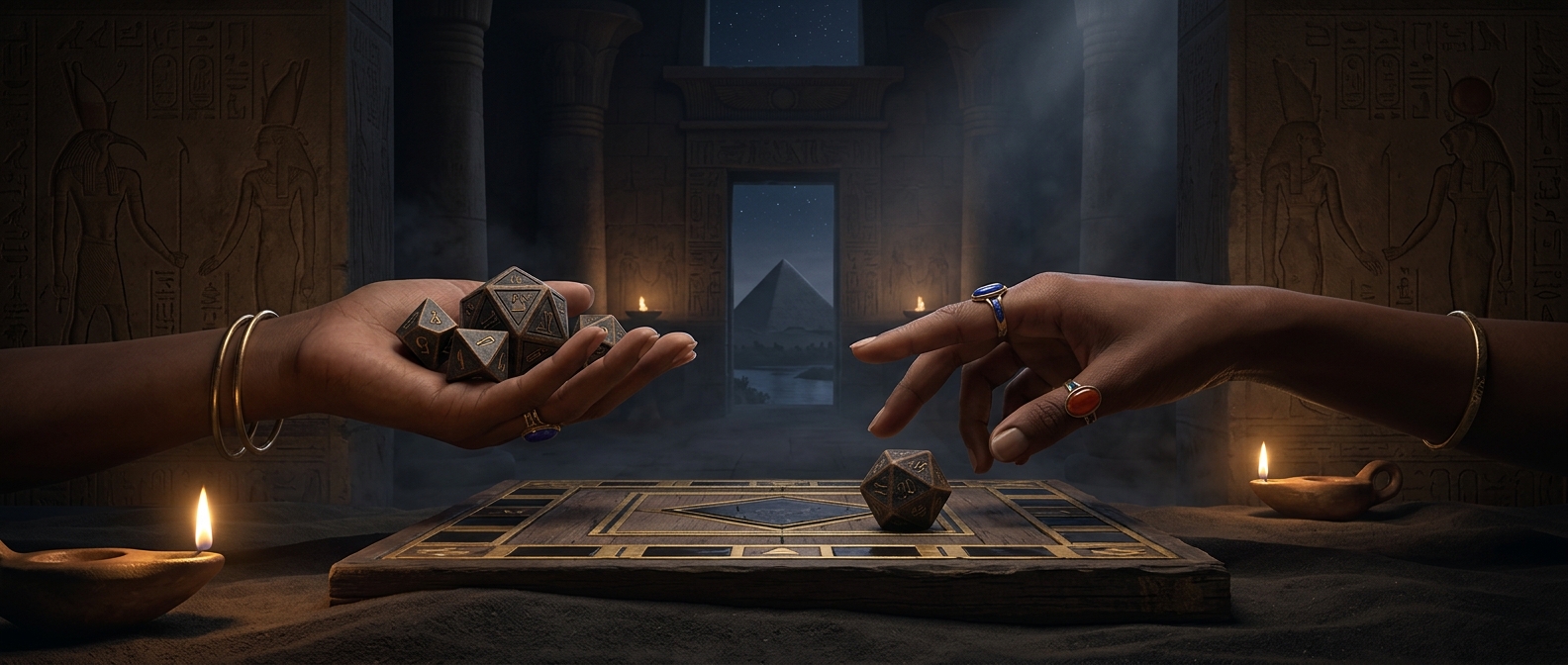
A Many-Faced Die in Ptolemaic Egypt
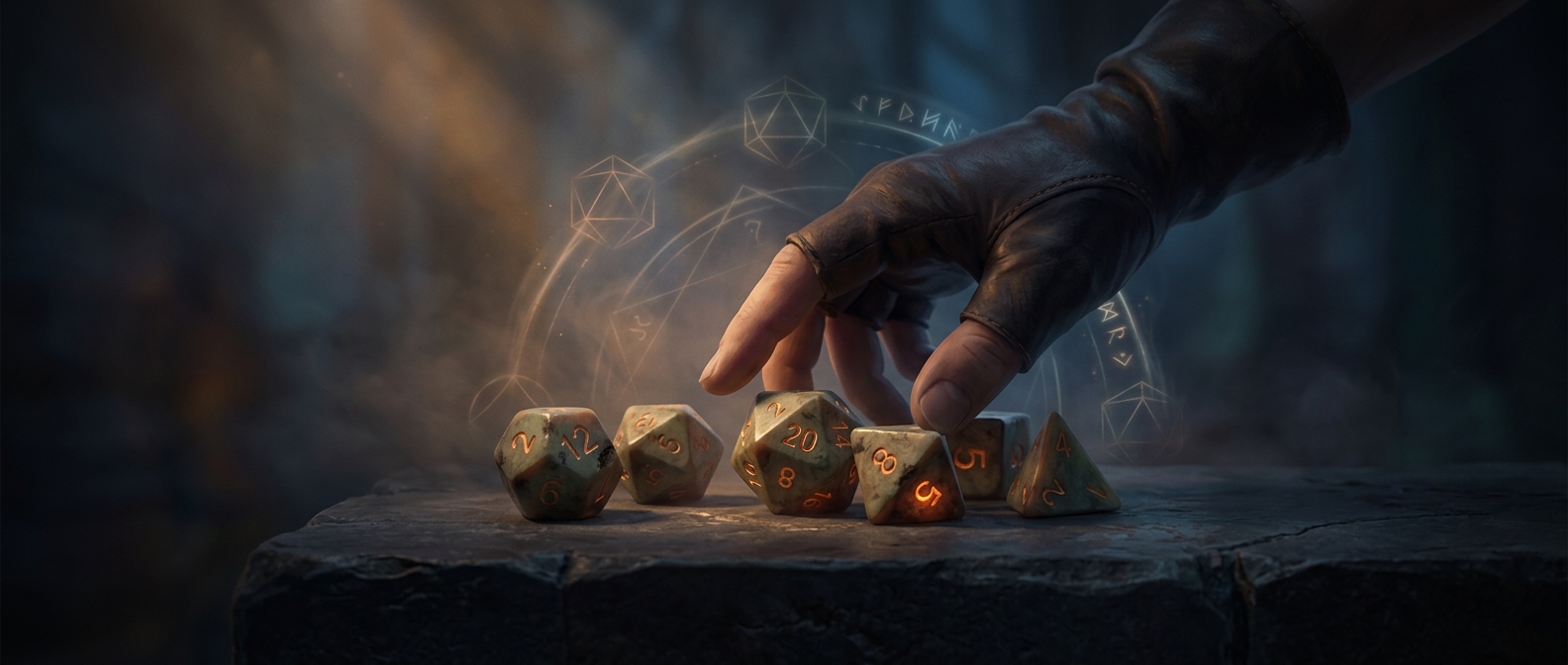
A 20-sided die is an icosahedron: a solid with 20 triangular faces. Making one meant shaping a small object into a far more intricate form than a cube, then marking its faces so a roll could produce one of many outcomes. Examples found in Egypt were made from materials including glass and serpentine, a greenish stone.
More Outcomes, More Questions
The surviving dice show that people in ancient Egypt had access to the same basic geometry used by modern 20-sided dice. But an object alone cannot reveal the rules of the game it belonged to—or even prove it was used for a game. Polyhedral dice could serve in games or divination, and without a clear account linking a particular die to a particular practice, its exact purpose remains uncertain.
That uncertainty is part of the artifact’s appeal: a familiar shape has survived, while the activity around it has not. Modern players can recognize the die instantly, but cannot safely assume that its ancient owner rolled it for the same reason.