Whist turned each trick into evidence
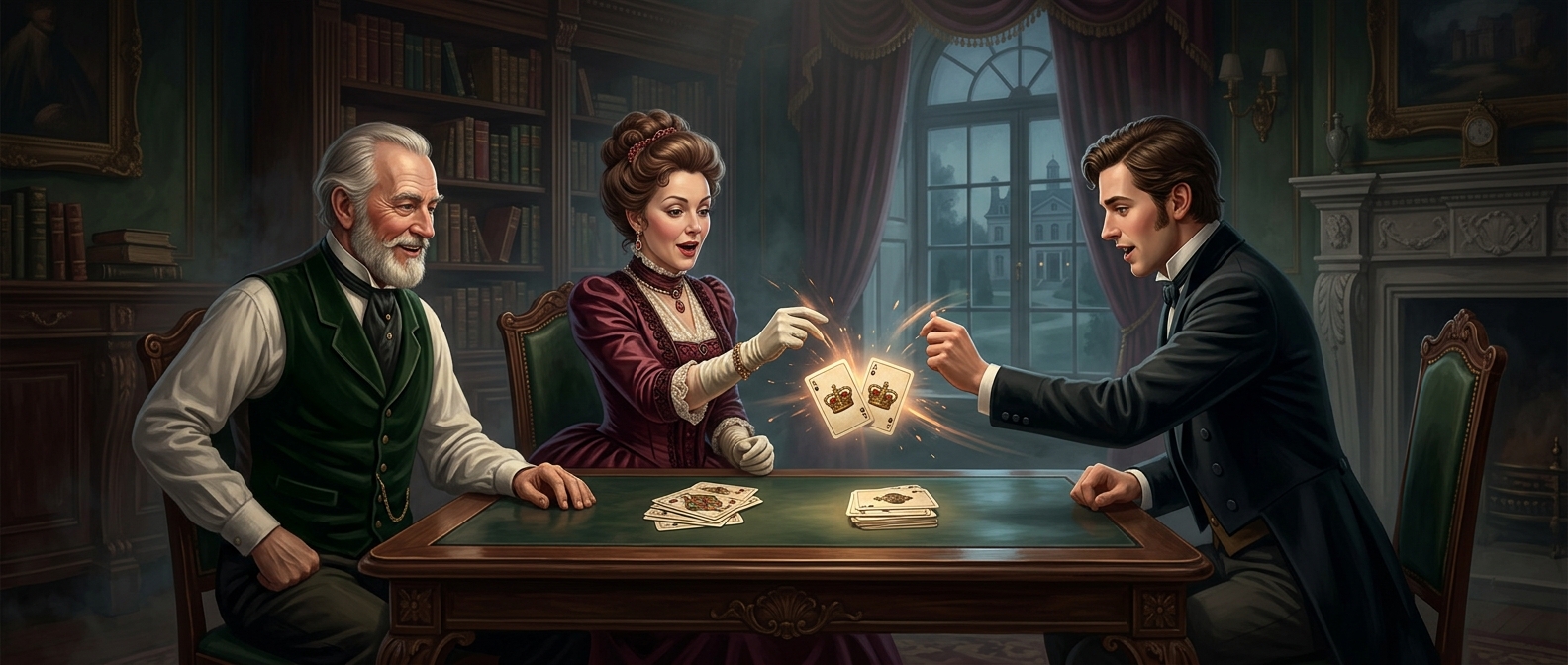
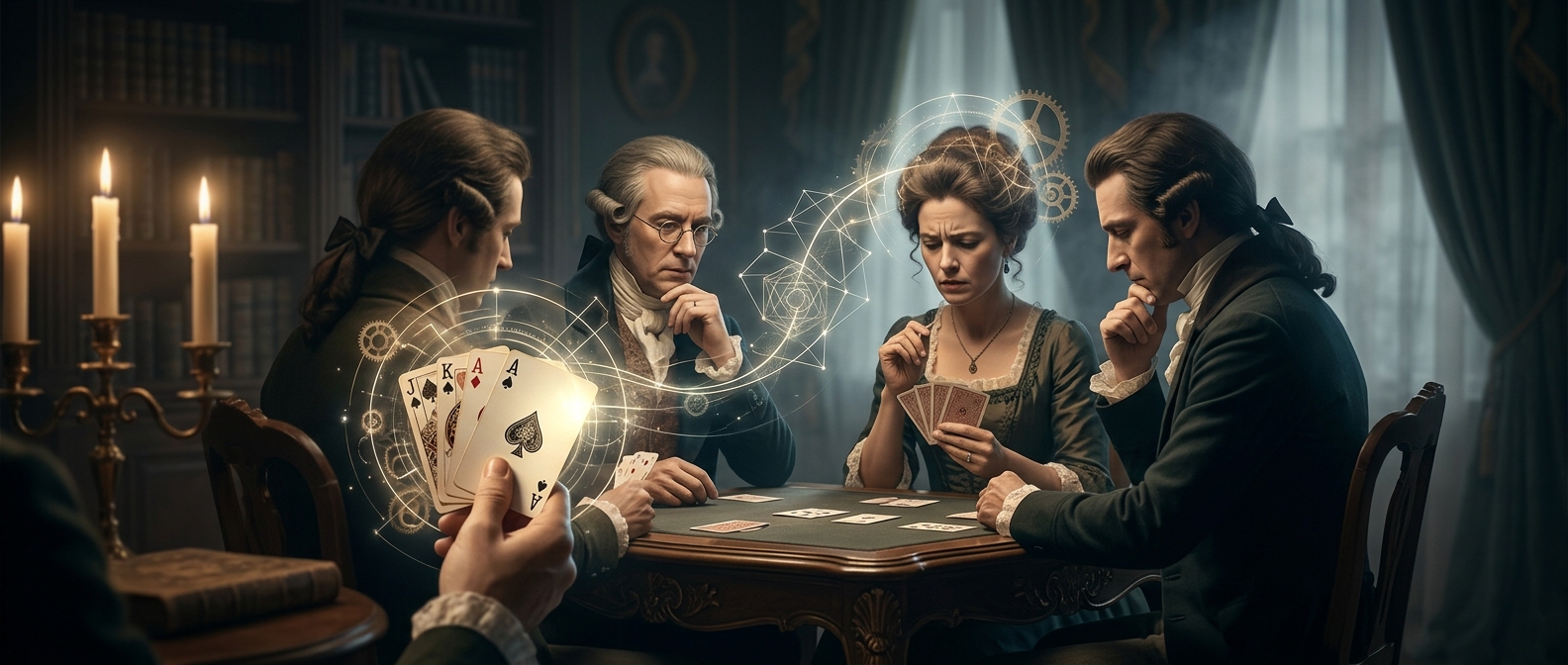
In whist, four players formed two partnerships, with partners sitting opposite each other. A player led one card, and everyone else had to follow that suit if able. The highest card in the suit led won the trick, unless a trump card—one from a designated stronger suit—was played. The winner led next.
That simple loop made the cards already on the table matter. If a player remembered that several high cards in a suit had been played, they could judge whether a lower card was now likely to win. If an opponent could not follow suit, that revealed they had run out of that suit—and might be able to trump it later.
Memory was useful because it shaped decisions
Players were not just trying to recall individual cards. They were building a picture of what remained: which suits were dangerous, which honors were still unaccounted for, and whether a partner might hold a card strong enough to take the lead. A forgotten card could distort that picture and turn a seemingly safe play into a gift to the other team.
Whist offered no bidding to announce a hand’s strength, and partners could not openly discuss their cards. Players had to communicate through their choices while respecting the rules of play. The challenge was to infer as much as possible from the sequence of cards without knowing exactly what anyone held.
A quiet game with a long mental trail
Because each card stayed visible after it was played, the game rewarded attention from the first trick to the last. A decision might depend on remembering not only what had just happened, but what an opponent had failed to play several turns earlier. The table became a running record that each player had to interpret in real time.