Why a dark joke needs a second pass
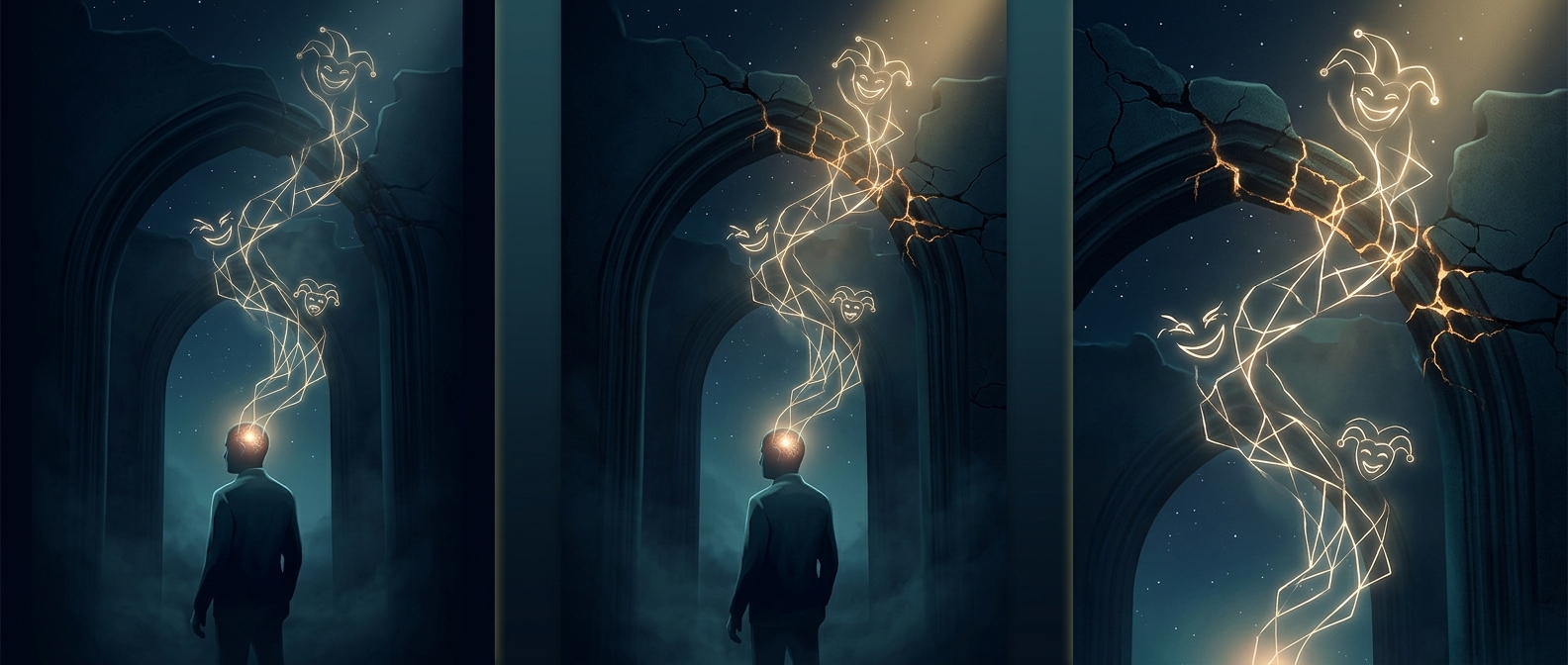
A dark joke often begins by making a grim interpretation feel unavoidable. Then a small twist supplies a different frame: the event is still disturbing, but the speaker is treating it as a setup for play rather than as a literal threat or expression of contempt. The listener has to keep both readings in mind long enough to notice how the second changes the first.
That shift is a kind of incongruity—a mismatch between what a listener expects and what the punchline makes possible. The mind first builds one interpretation, then revises it when a word or detail points elsewhere. With dark humor, the revision has an extra hurdle: the subject matter may provoke genuine discomfort even as the joke invites amusement.
The twist is not the whole joke
Understanding the wordplay is only part of the task. A listener also makes a quick judgment about the social situation: Is this a deliberately comic exaggeration, or is the speaker actually expressing hostility? Is the target being mocked, or is the joke poking at the grimness of the situation itself?
Those judgments depend on context—who is speaking, what is being joked about, and how the joke is delivered. If the darker interpretation feels too real or too cruel, the twist may not make the material feel harmless enough to laugh at. If the comic intent is clear, the tension can become part of the joke’s effect: the listener recognizes the danger implied by the setup while also recognizing that the punchline has redirected it.
Why reactions differ
People do not all draw the line between playful and unacceptable in the same place. Familiarity with the subject, mood, and the relationship between speaker and audience can change whether the joke feels clever, uncomfortable, or both. So a laugh is not simply proof that someone missed the darkness. It can mark the moment when the listener has understood the grim reading, found the comic frame, and decided the two can coexist.