Why low-stakes play can feel like a real break
When someone is burned out, even leisure can start to resemble work: choose the best activity, make the most of the time, and come away feeling restored. That turns rest into another task to perform. Play offers a different structure. Its value lies in doing something for its own sake, not in producing a measurable result.
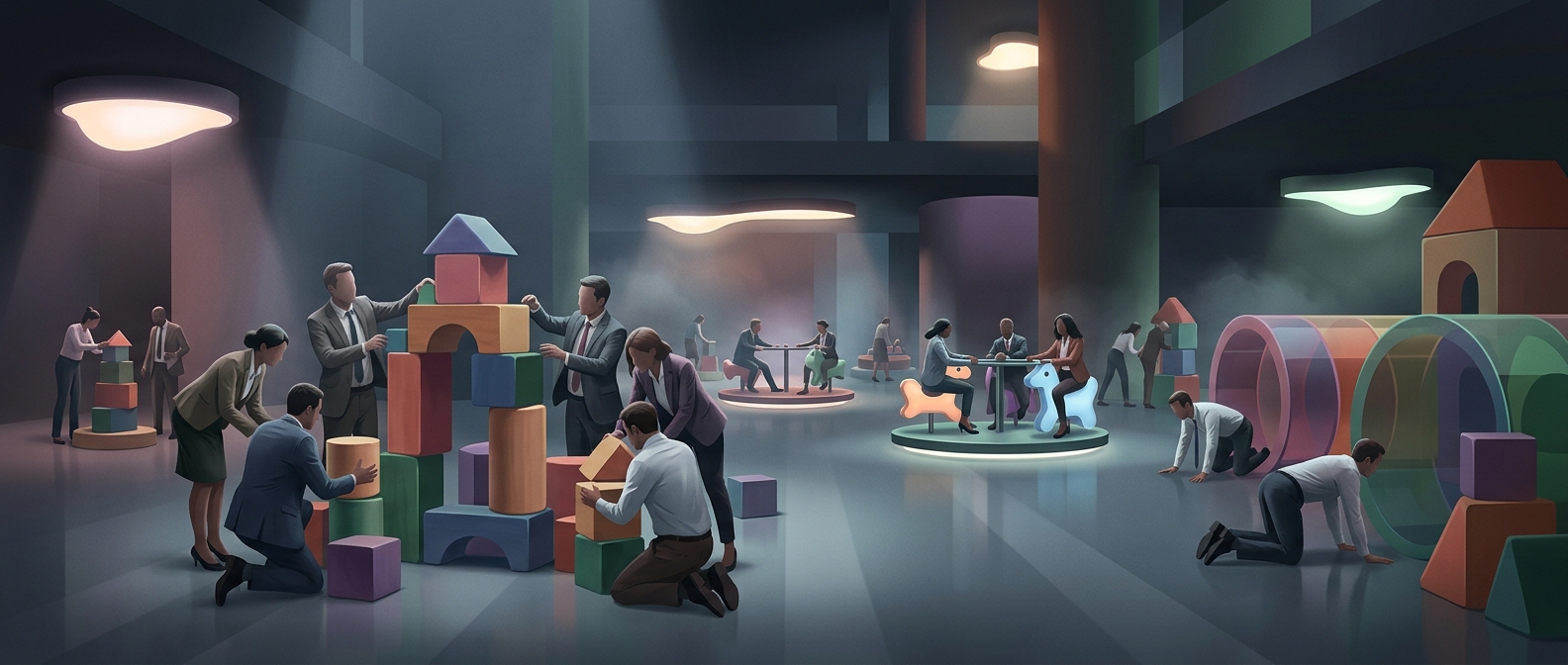
Climbing, bouncing, or building with loose materials gives attention a simple place to go: the next foothold, the wobbling landing, the shape taking form. The activity is absorbing without demanding a plan for the rest of the day. The relief comes partly from dropping the need to justify the hour.
The venue removes the hidden work
A dedicated play space also handles practical decisions that can make spontaneous fun feel like a project. The room and equipment are already there; visitors do not have to set up an activity at home, invent rules, or clean up a mess afterward. Paying for entry buys access to that prepared setting—and a clear beginning and end.
That boundary matters. For an hour, the ordinary pressure to turn time into progress can be set aside. The appeal is not necessarily a return to childhood or a cure for burnout. It is a chance to move, experiment, and be a little ridiculous without having to turn any of it into an accomplishment.