A cape has to move without getting in the way
A cloth cape looks simple in a still image. In a moving game, it is a constantly changing surface attached to a fast-moving character. Batman can turn, crouch, fall, or spread the cape to glide; the fabric must respond while remaining connected to his body and avoiding obvious intersections with it.
That last problem is called collision handling: the game checks how moving surfaces meet, then adjusts them so the cape does not visibly pass through Batman. Without it, the cloth can look less like fabric and more like a stiff shape—or disappear into the character during a turn.
A hybrid of animation and physics
The solution combined a large library of crafted movements with simulated motion. The animations supplied specific shapes and transitions for different actions, while the physics gave the cape a responsive flutter rather than making every fold move in lockstep with Batman.
Those approaches have to cooperate. A simulation can make cloth feel loose, but it also has to behave predictably when the character changes pose or the player takes control. A designed animation can guarantee a readable silhouette, but too much rigidity makes the cape feel like a board. The work was therefore not just about making fabric look realistic; it was about making it convincing across the many states a game character can enter.
Why the detail mattered
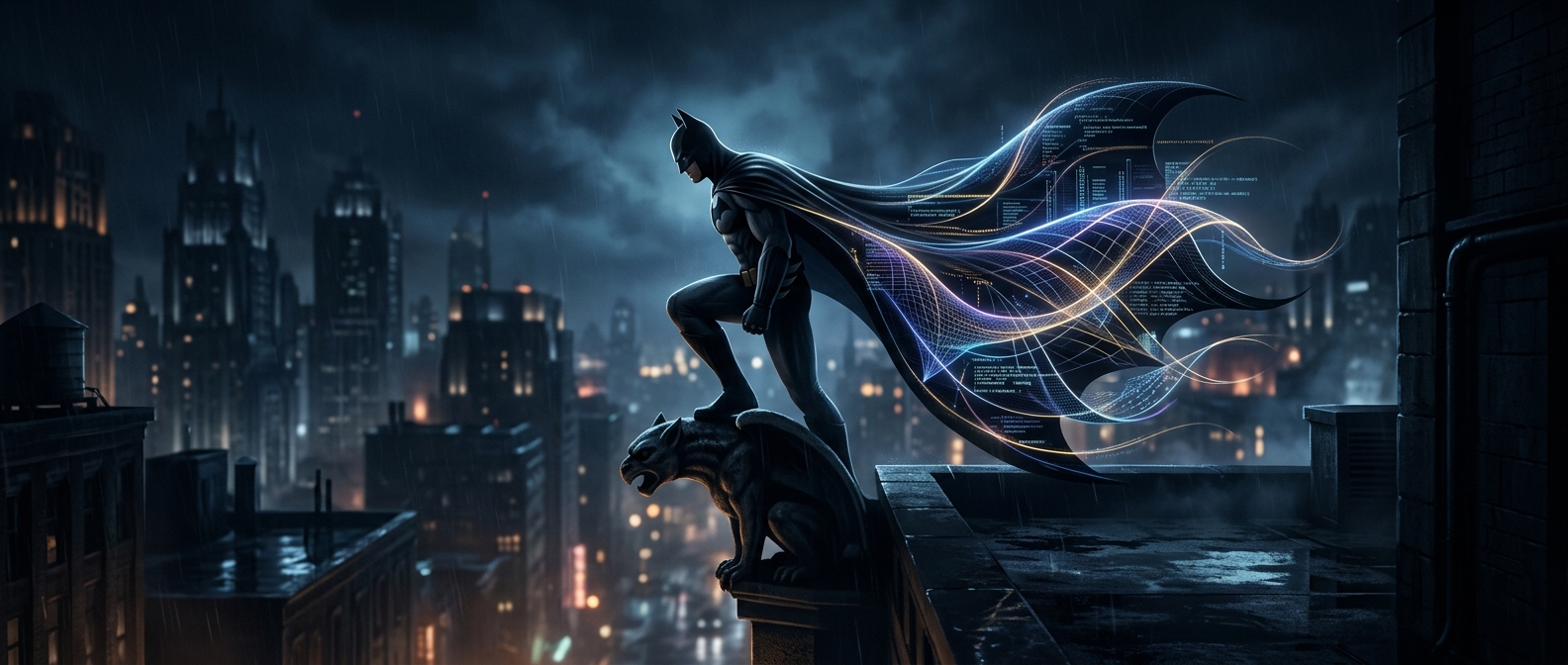
Batman’s cape is both costume and visual signature. It changes his outline, frames his movement, and becomes especially prominent when he glides. If it snagged, clipped through him, or moved unnaturally, the player would notice the mismatch immediately—even while concentrating on the action.
The scale of the effort reflects a common challenge in game animation: a detail that seems decorative in a screenshot can become a demanding system once it must respond to a player’s every move. In Arkham Asylum, the cape had to feel alive without ever stealing control of the character.