Why glowing embers do not behave like a hot pan
A fire’s visible glow can make every part of its surface seem equally dangerous. But temperature is only part of the story: a foot is injured by heat that actually moves into its skin, and different materials deliver that heat at different rates.
Charcoal is full of pores and gaps, so it conducts heat less effectively than dense materials such as metal. A loose layer of ash also acts as insulation. The result is a surface that may be extremely hot yet transfer less heat during brief contact than its appearance suggests. This is a matter of physics, not a special property of the walker.
Contact time changes the outcome
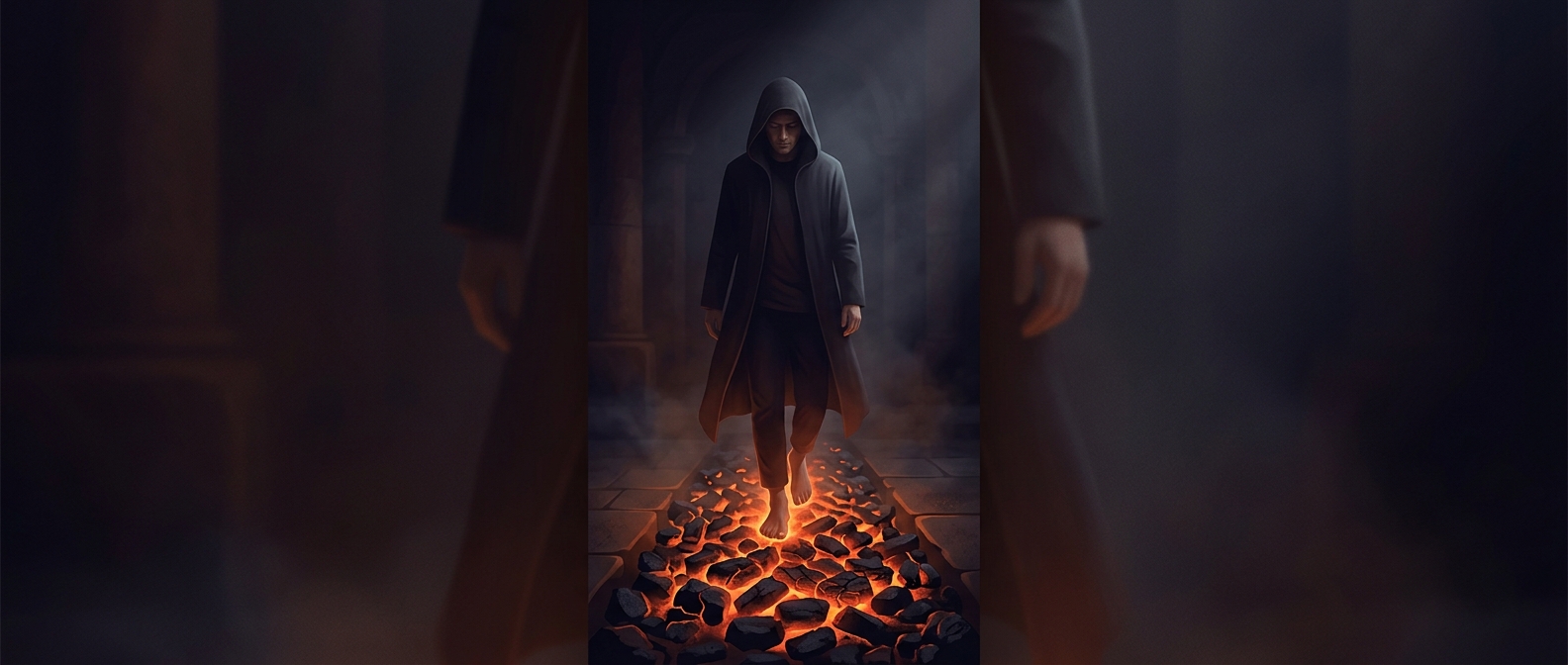
During a step, only some parts of the sole touch the embers, and each contact lasts a short time. Heat begins moving into the skin, but the limited contact can end before enough energy builds up to cause a burn. In heat-transfer terms, how long the contact lasts matters alongside how hot the surface is.
A pause changes that balance. The same patch of skin stays in contact longer, allowing more heat to move into it. And the conditions are not uniform: a compacted, hotter spot, a sharp coal, or a stray piece of more conductive material can create a dangerous point of contact. Firewalking can therefore result in burns even when the bed is mostly charcoal and ash.
A narrow margin, not a safe trick
The effect depends on the materials and the briefness of contact; it does not mean embers are harmless or that skin is protected from high temperatures. The striking lesson is that heat transfer is not simply a reading on a thermometer: a glowing bed can look uniformly fierce while its uneven surface delivers heat unevenly, step by step.