Why an Implant Is Built in Two Parts
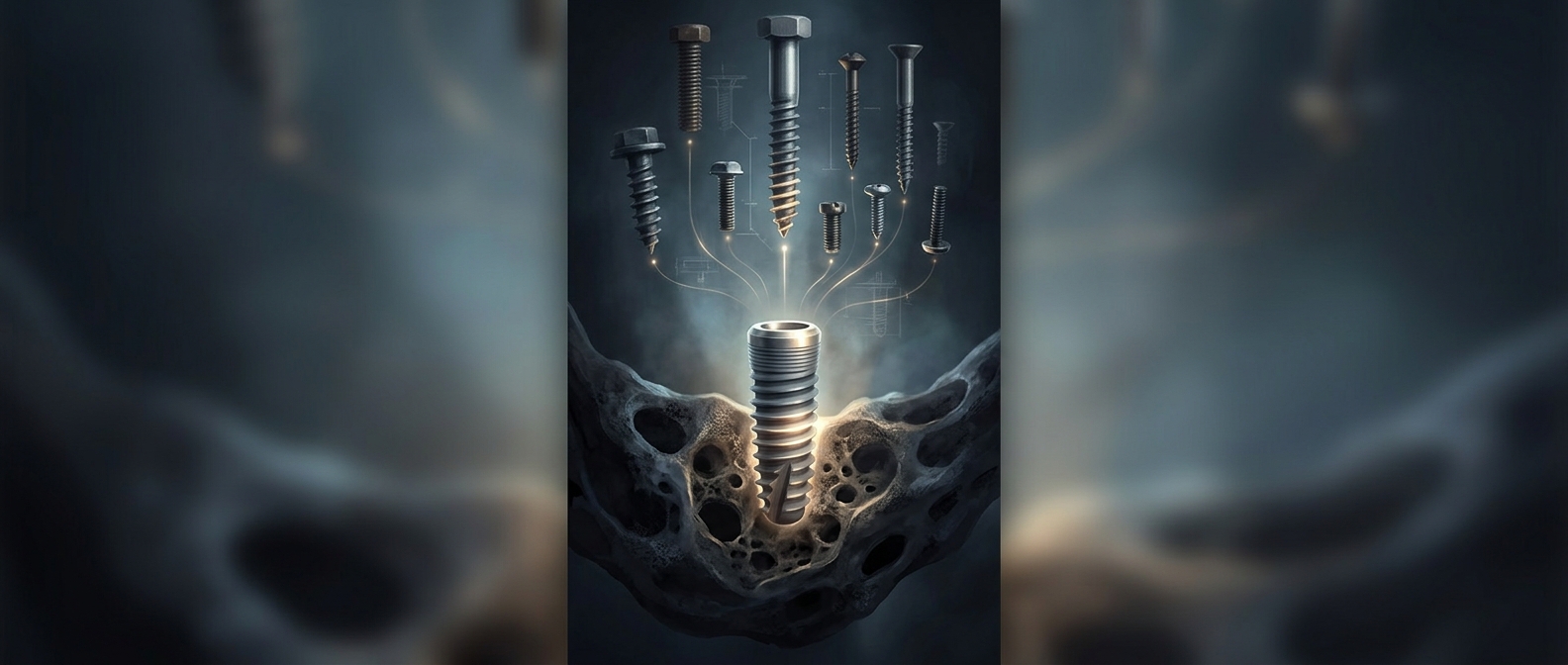
The screw-shaped piece is an anchor, not a replacement tooth. A dentist places it in the jawbone, where its threaded surface gives the surrounding bone a place to grow against. This gradual bonding is called osseointegration: the bone becomes closely attached to the implant, helping it withstand the repeated forces of chewing.
That bond takes time. The implant is often left undisturbed while healing proceeds; only after it is stable can the visible replacement tooth be attached. The crown—the porcelain part shaped to look like a tooth—connects to the implant through a small connector. Separating the anchor from the crown lets each part do a different job: one secures the restoration, the other meets the bite and resembles a natural tooth.
The Cost Is Also in the Process
Because the implant must heal before it can reliably support a crown, treatment commonly unfolds over multiple appointments rather than as a single installation. Planning and placement, healing, and fitting the final tooth are distinct steps. The screw itself is only one part of the work; the crown and the clinical care needed to position and restore it also contribute to the overall expense.
The design reflects a practical tradeoff: a fixed anchor can support a tooth without relying on neighboring teeth for support, but it requires surgery and patience while bone bonds to the metal. The result is not a screw left exposed in the mouth. It is a hidden foundation that lets the visible crown take the force of a bite.