Why a glow stick is hard to assess at a checkpoint
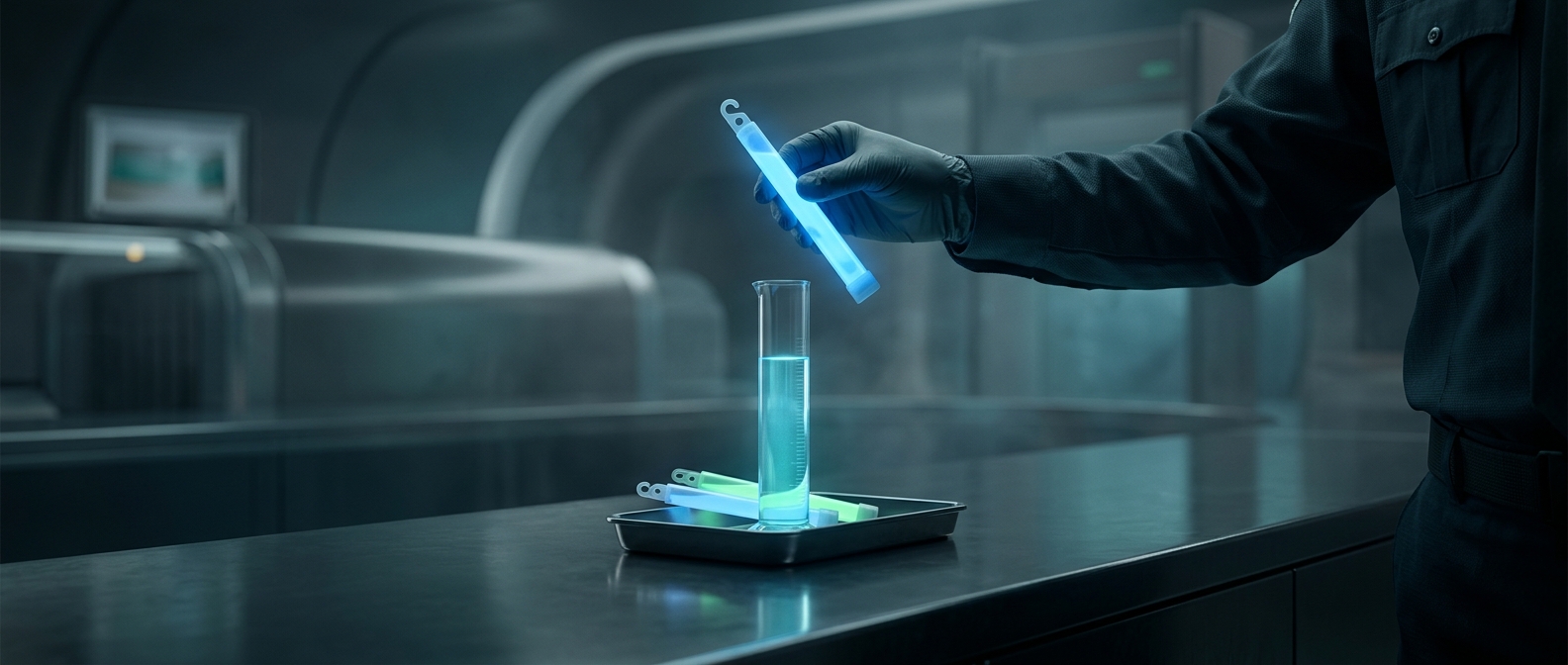
A glow stick looks simple from the outside, but its light comes from chemicals sealed inside. In many designs, bending the tube breaks a small glass vial, letting its contents mix with the surrounding liquid. The reaction produces light without a flame, battery, or electrical switch.
That construction creates a screening challenge: an officer cannot open the tube to identify its contents without destroying it, and an X-ray image cannot establish the identity of every liquid inside. The concern is not that glowing plastic is inherently dangerous. It is that a sealed object can conceal substances that security staff need to assess.
What that means for travelers
A glow stick may therefore draw extra scrutiny or be treated under rules governing liquids or potentially hazardous materials. The outcome can depend on the airport’s security procedures and on whether the item is in carry-on or checked baggage; a sealed tube is not automatically handled the same way everywhere.
The practical lesson is to check the relevant airport or airline guidance before traveling with one, especially if it is part of a larger novelty item or costume accessory. A cheap wand that is easy to buy at a party can still be difficult to verify once it reaches a checkpoint—because its chemistry is designed to stay hidden until the tube is activated.