Why an Uncovered Blade Is a Baggage Hazard
A loose razor blade is not dangerous because it is large; it is dangerous because its cutting edge is exposed and the blade can move. Inside a packed bag, pressure from other items or a jolt during handling can push that edge against fabric, a hand, or something being unpacked. Thin blades can also be difficult to notice before someone reaches into a pocket or toiletry kit.
That makes the risk different from a razor whose blade is enclosed in a cartridge or protected by a guard. The protective parts limit accidental contact; a bare replacement blade has no built-in barrier between its edge and whatever it touches.
Why Carry-On Screening Treats Them Differently
In U.S. airport screening, loose razor blades are generally not permitted in carry-on bags. The concern is not that a blade will somehow damage an aircraft in flight. It is that an exposed cutting edge is an accessible sharp object in a crowded, security-controlled setting—and that it can injure someone before or during screening if it is handled carelessly.
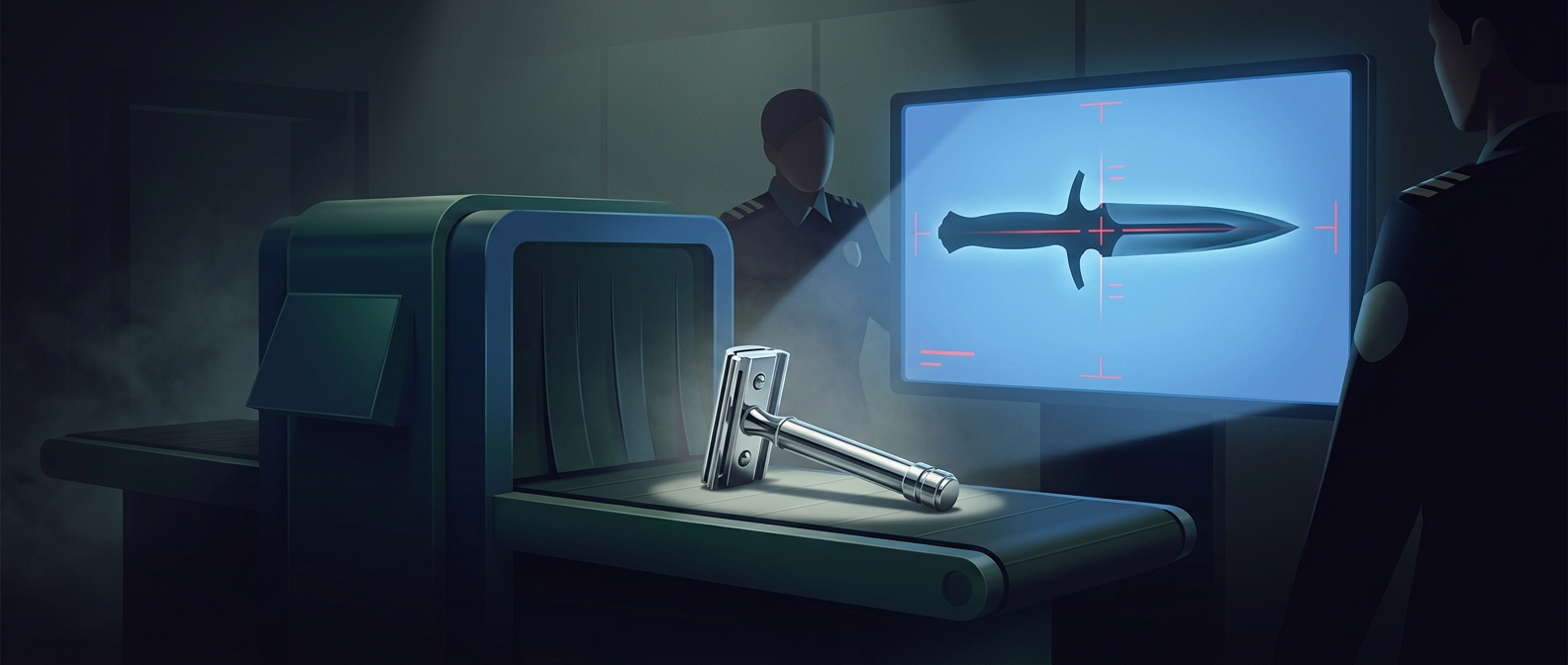
A safety razor’s handle does not automatically make a loose blade safe to carry: if the blade is removable and traveling separately, its edge is still exposed. For air travel, put loose blades in checked baggage and keep them secured in their original dispenser or another rigid, closed container. The key distinction is physical protection: a blade that cannot shift into contact with someone is much less likely to turn an ordinary bag search into a cut.