Why a Torch Lighter Is Treated Differently
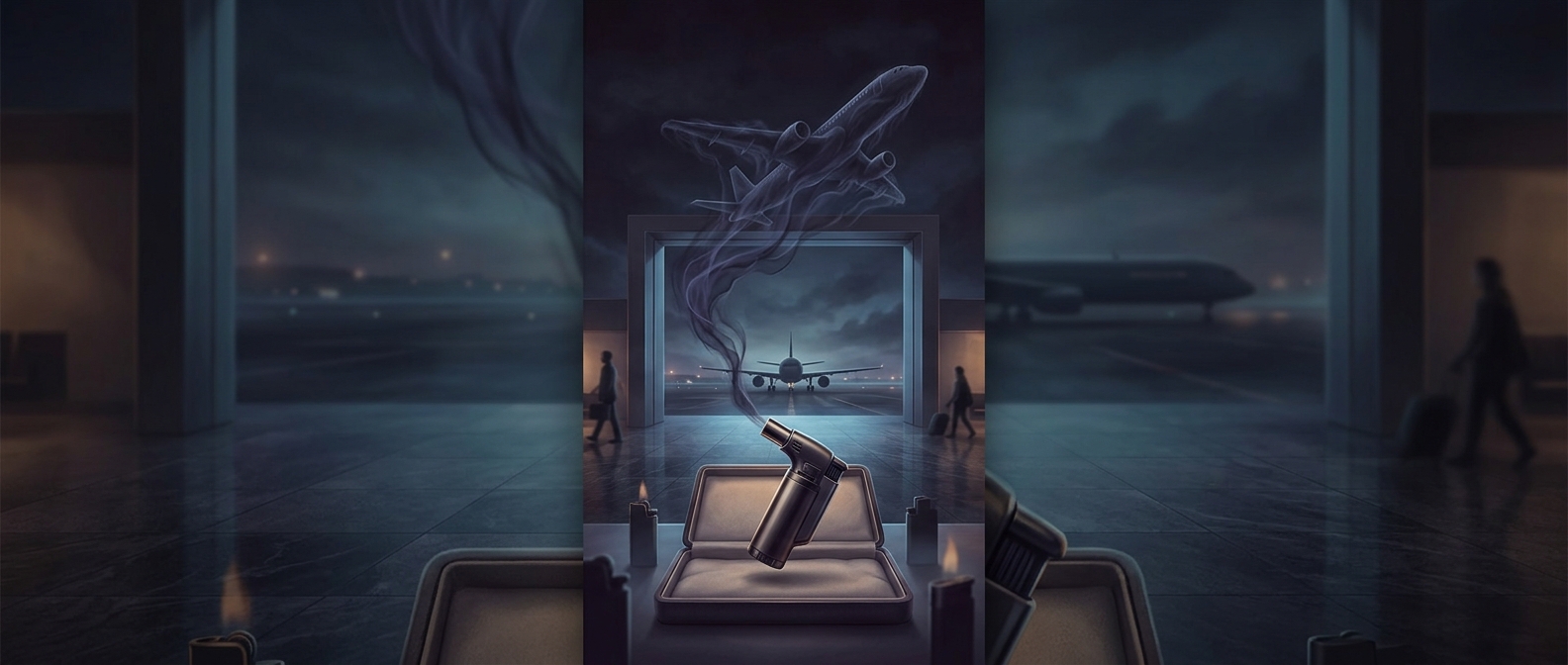
A torch lighter is built to deliver a forceful, narrow jet of flame rather than the softer flame of an ordinary cigarette lighter. That design makes it useful outdoors, but it also makes the flame effective at heating a small area quickly—an unwanted capability around luggage, clothing, and other materials that can catch fire.
The concern is not only whether the lighter could start a fire. It is also what happens if it does. A fire inside a packed suitcase may be hidden beneath layers of belongings, where smoke or heat can go unnoticed until it has spread. In the cabin, a compact ignition source can still create an emergency before crew members can locate and control it.
Why “It’s Just a Lighter” Doesn’t Settle It
Transport rules distinguish among devices by how they work and the hazard they pose, not simply by their everyday name. Some ordinary lighters may be allowed under applicable airline and aviation rules, while torch-style models are specifically prohibited. Their wind-resistant flame and concentrated heat make them a different kind of ignition tool, even when the device is small enough to fit in a pocket.
That is why a torch lighter can be useful on a windy campsite yet have no place in a passenger’s baggage: the feature that makes it dependable outdoors is precisely what makes it an avoidable fire risk aboard an aircraft.