The geometry behind a scissor lift
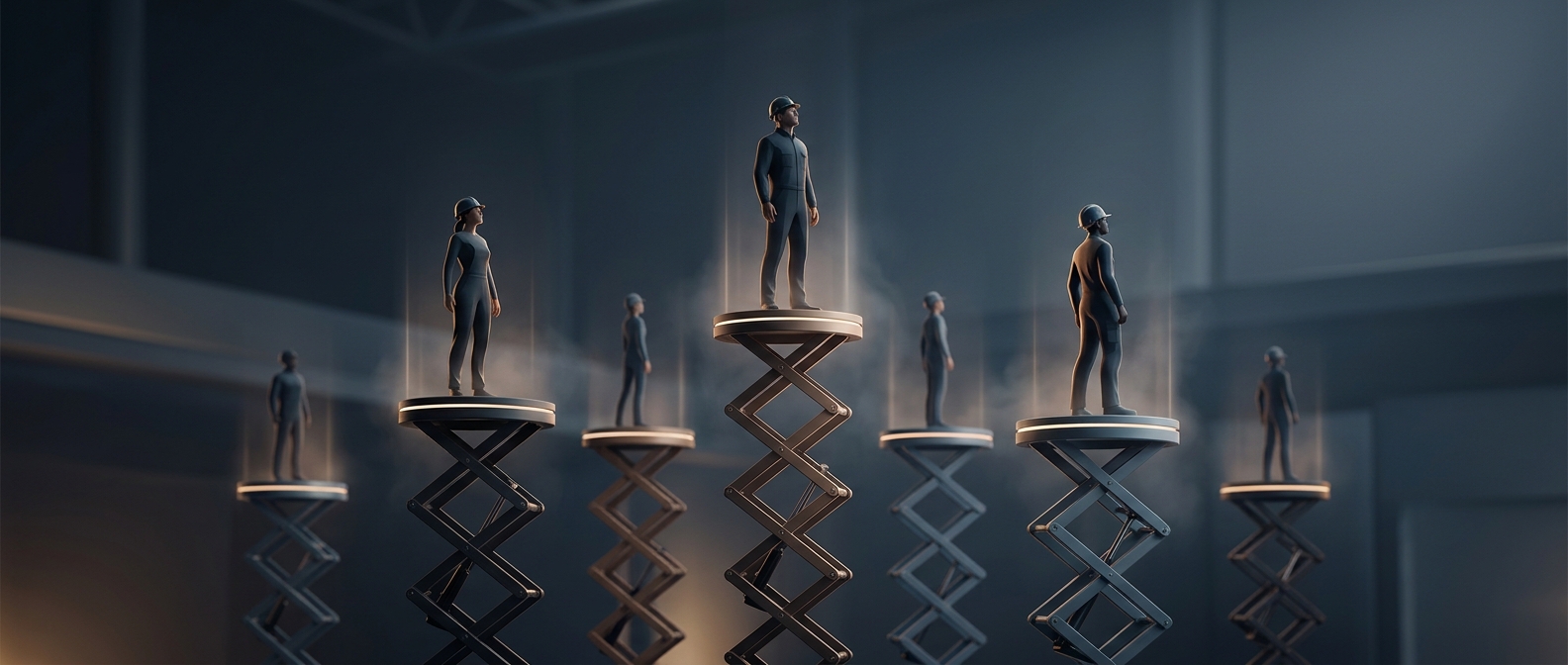
A scissor lift gains height by changing the shape of its crossed supports. The arms pivot where they meet, while a hydraulic cylinder pushes their lower ends apart. As the arms spread, the X-shaped links rotate upward and carry the platform with them.
The cylinder’s push is horizontal, but the platform’s motion is vertical because the arms constrain how the linkage can move. The platform is attached to the upper ends of the supports, so it rises without needing a tall mast to telescope upward. Crossed arms on more than one level can stack the same motion to reach greater heights.
Height comes with a force tradeoff
The linkage also explains why these machines need sturdy, carefully designed parts. When the arms are relatively flat, a small increase in their angle can produce a large rise in the platform—but spreading them takes substantial force. As they become more upright, the geometry changes, and the cylinder can move the platform differently for the same extension.
That shifting leverage shapes the lift’s hydraulics and structure. The arms, pivots, base, and platform must withstand both the worker’s weight and the forces generated as the linkage moves. The broad base helps keep the machine stable, but it cannot make uneven or unsuitable ground safe.
Scissor lifts are useful where workers need a compact platform that travels straight up, such as beside a ceiling or a building façade. Their distinctive tradeoff is visible in every rise: the machine stays within its footprint by unfolding a powerful set of supports beneath the worker.