How a Compact Machine Reaches Overhead
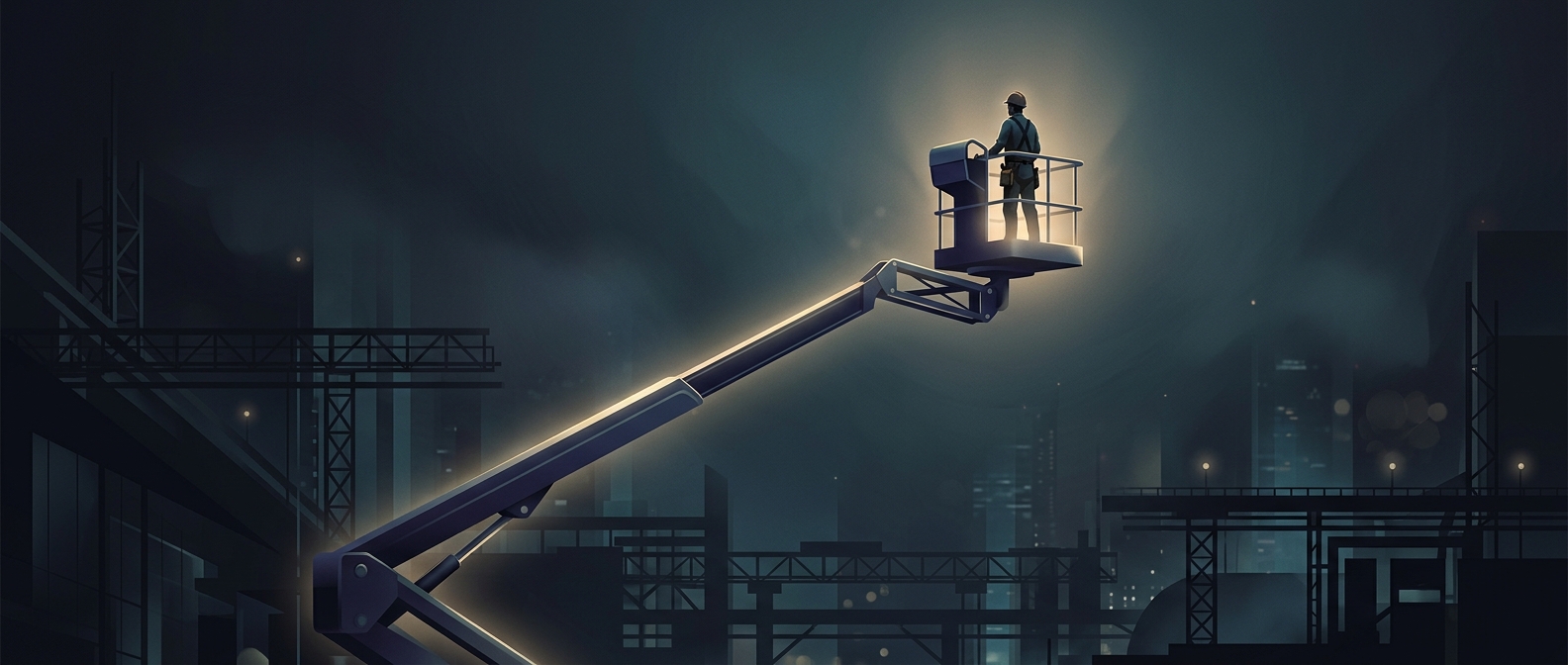
A cherry picker turns force from a small hydraulic system into controlled movement at the end of a long arm. A pump pressurizes hydraulic oil and sends it into a cylinder. The pressure pushes a piston, extending or pivoting a section of the boom. Valves meter the flow, so the operator can raise, lower, and position the basket rather than simply release it all at once.
The boom’s reach creates a balancing problem. A worker and tools at the tip act like a weight on a long lever: the farther the basket extends, the more force it puts on the machine’s base. That is why lifts have rated limits for both basket load and how far the arm can reach. The safe working area is narrower at some angles than others.
Control Matters as Much as Power
The operator moves the basket in small increments because a long boom can magnify even a modest movement at its base. Sensors and control systems on many lifts monitor conditions such as boom position or whether the machine is level, and may restrict movement when it approaches its operating limits. Depending on the model and ground, stabilizers can widen the support footprint and help keep the base steady.
The practical advantage is not just height: the basket can be placed beside a work surface, letting someone repair a streetlight or trim a tree without climbing a ladder. The same reach that makes the machine useful also makes careful positioning essential—every extra stretch shifts more of the load outward, where the base has less leverage to resist it.