Why a Cardboard Box Has a Wavy Middle
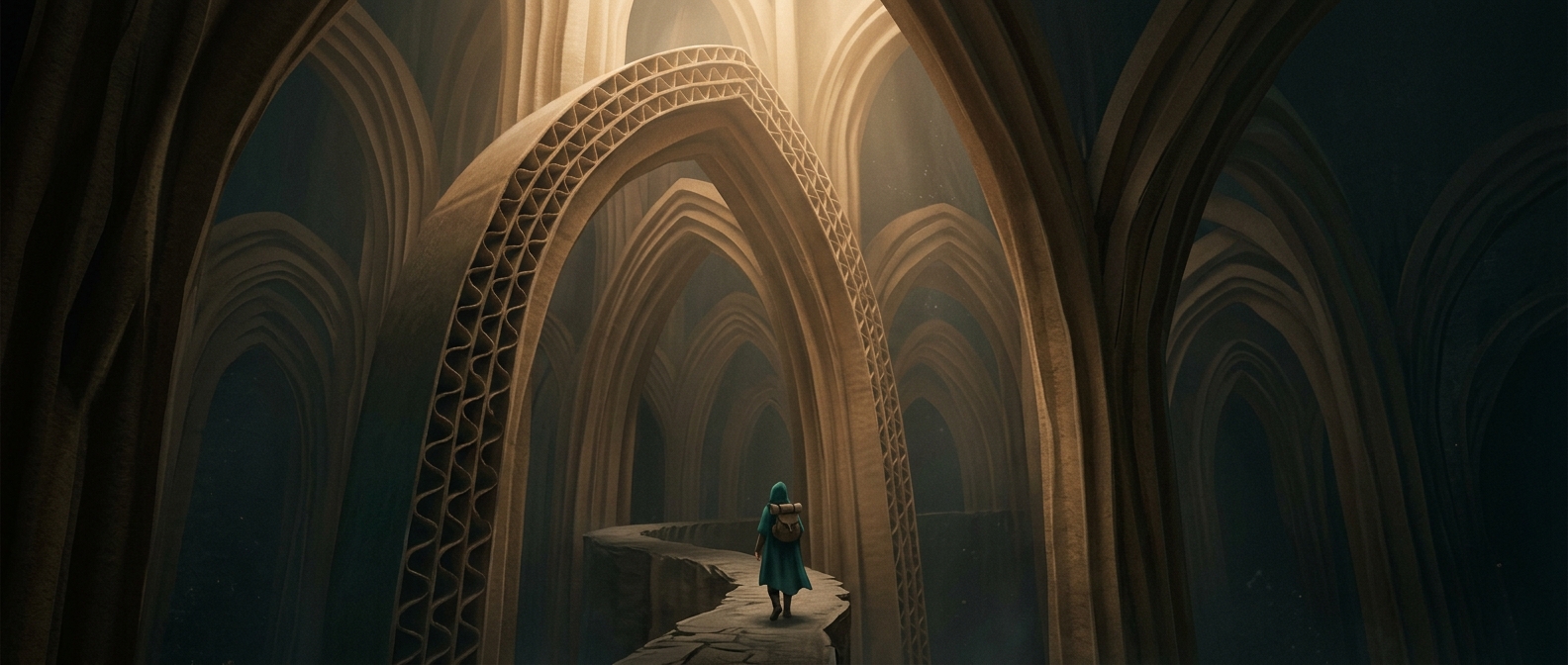
Corrugated cardboard is a layered structure: flat paper liners surround a fluted sheet, the paper formed into repeated waves. Seen from the side, each wave makes an arch between the liners. That shape gives the middle layer depth without requiring a solid slab of paper.
How the Flutes Carry a Load
When a box is stacked, the load presses down on its top and bottom panels. The flutes help hold those liners apart, much as a row of small columns and arches would. Their curved walls resist buckling, while the bonded layers work together to keep the panel stiff. If a force strikes the box, the structure can deform slightly and distribute some of that force across a wider area instead of concentrating it at one point.
The protection depends on the whole package, not just the waves: paper strength, flute size, adhesive, box design, and the direction of the force all matter. Corrugation is a useful compromise—stiff and protective, yet light enough to ship and fold flat before assembly.
A Structural Shape That Saves Material
A solid sheet could be made thicker to gain stiffness, but that would add weight and paper. Corrugating a thin sheet creates a deep, air-filled structure that resists crushing with relatively little material. The same basic principle appears in arches and other shaped structures: geometry can do work that extra mass otherwise would.
So the next time a box keeps a heavy appliance from pressing through its side, the support is not a hidden block of packing material. It is a carefully shaped layer of paper, repeated across the panel.