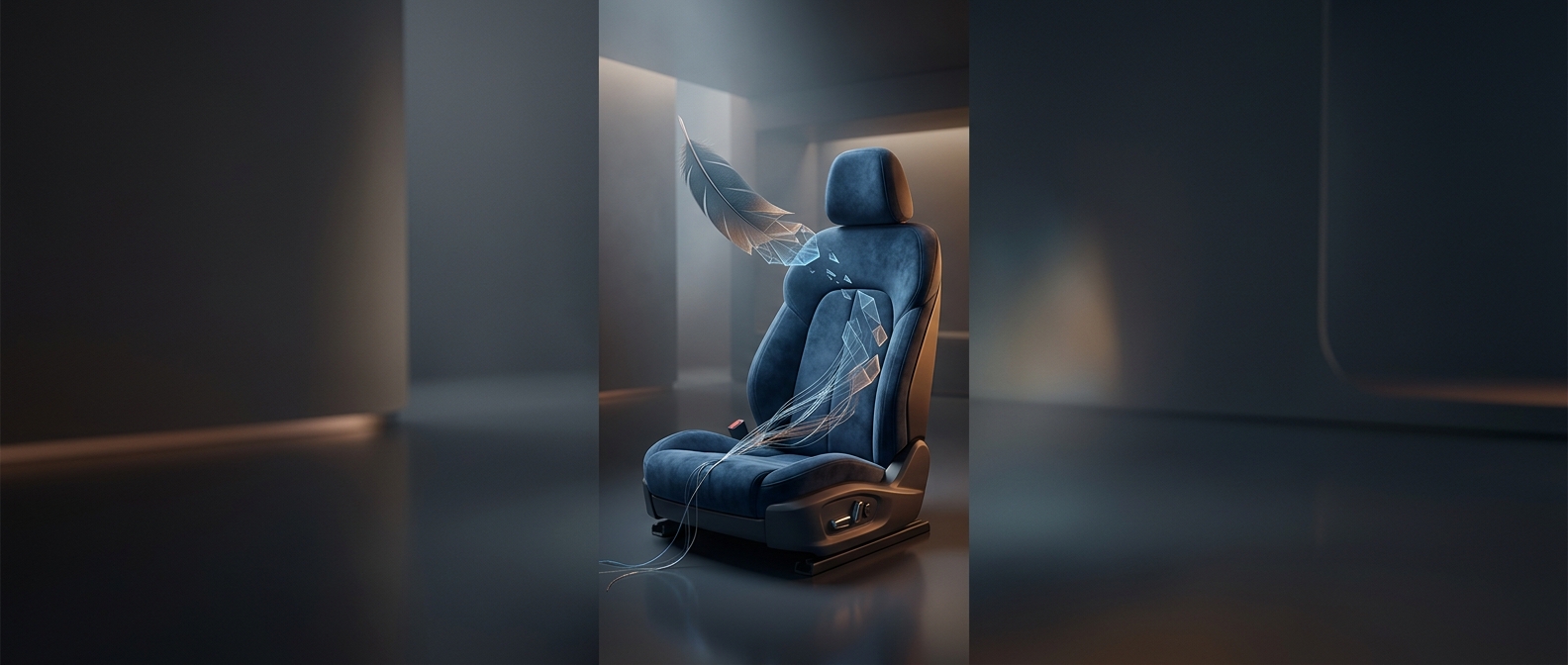
How a synthetic material gets a suede-like surface
Suede’s soft feel comes from a surface of tiny, raised fibers rather than a smooth, glossy finish. Alcantara recreates that effect with synthetic materials: polyester and polyurethane are processed into a fine, dense surface, then finished so the fibers catch light and feel soft to the touch. The result resembles suede without being animal hide.
That surface structure also explains why the material can take up moisture from hands. Sweat can settle among the fibers instead of simply beading on a slick surface. A brushed feel, however, is not the same as being easy to keep clean: oils and grime can also collect in the nap, the raised fibers that give the material its texture.
Why that matters inside a vehicle
On a steering wheel or seat, the soft, slightly textured surface changes how a driver’s hands meet the controls. It can feel more secure than a hard, smooth finish, while offering a different look from leather. But the same texture that gives it that feel can show wear or soil with repeated contact, so it calls for appropriate care rather than being treated like an impervious plastic surface.
The key distinction is that Alcantara imitates suede’s surface, not its source. Its characteristic feel comes from engineered fibers—and those fibers shape both its appeal and its upkeep.