How One Cabin Can Hold Several Temperatures
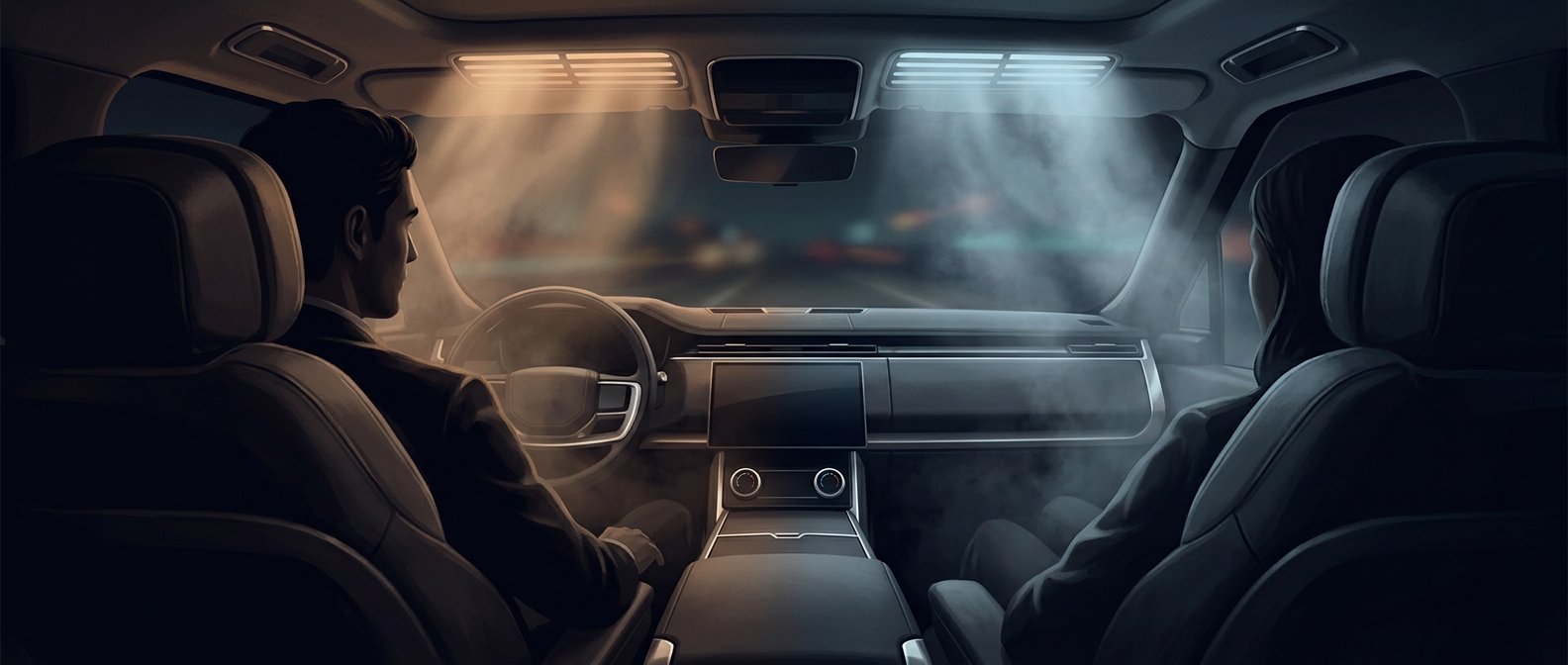
A vehicle’s air conditioner and heater supply air at different temperatures; the zone controls decide how much of each reaches a particular part of the cabin. Inside the ventilation system, movable doors—often called blend doors—guide air through or around the heater, then direct it into separate ducts. Front and rear controls can adjust those paths independently, so the rear seats need not receive the same air mix as the front.
That does not mean each seat has its own miniature air conditioner. The zones share the vehicle’s heating and cooling equipment, and the system has to divide its airflow among them. In some vehicles, rear climate control also has its own ventilation hardware; the exact arrangement varies.
Comfort Is a Distribution Problem
The design solves a familiar mismatch: sunlight through a side window, a warm engine tunnel, or simply different preferences can make one part of the cabin feel unlike another. A single thermostat setting treats the interior as one space. Multiple zones instead let occupants choose different targets, while the system adjusts air temperature and delivery to move the cabin toward those settings.
The tradeoff is complexity: more controls, ducts, and moving parts than a single-zone system. But the practical payoff is simple. One passenger can ask for warmer air while another keeps the cabin cooler—without requiring everyone to negotiate around one thermostat.