Why a tiny brush can make a long, clean line
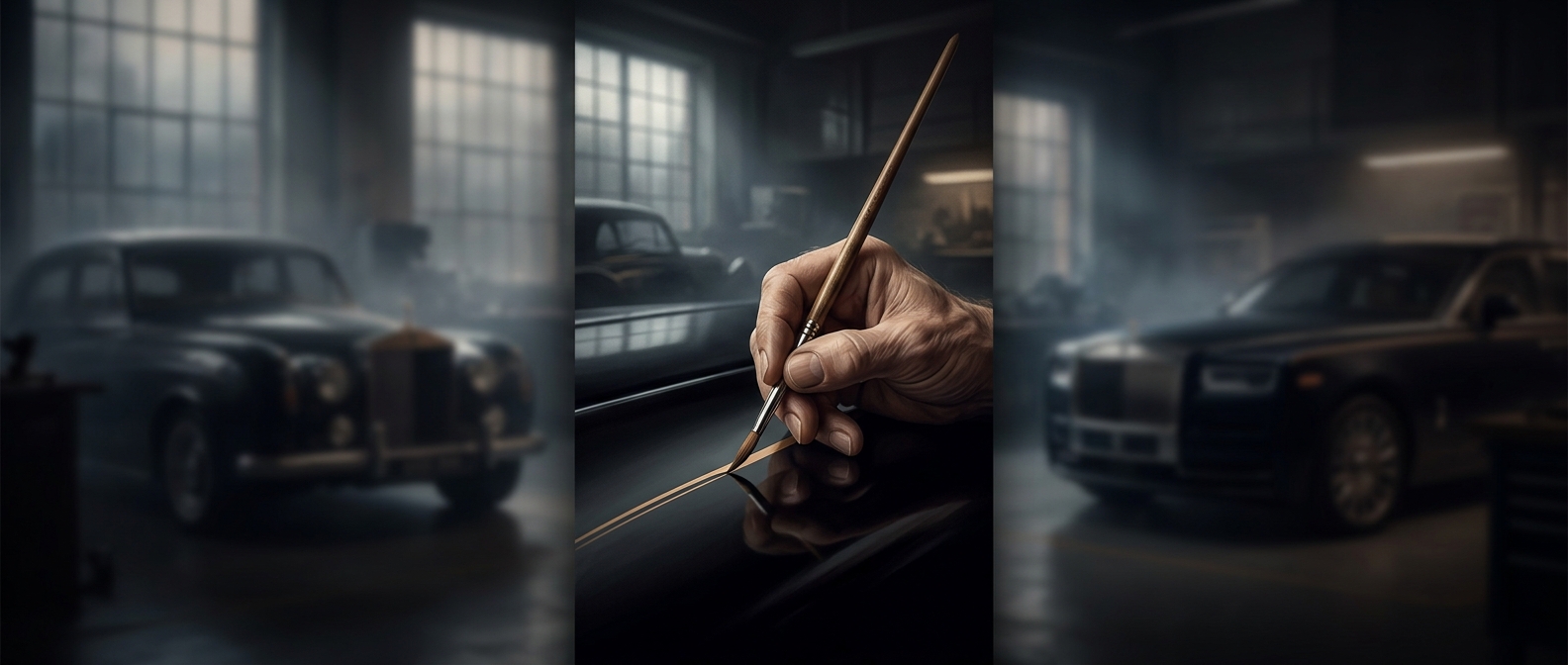
A pinstripe looks simple because it is so narrow. In practice, its neatness depends on keeping the paint flowing while the artist’s hand moves over a large, curved surface. A squirrel-hair brush helps by carrying a small reserve of paint between its fine hairs and tapering to a point, so the artist can draw a controlled line without repeatedly stopping to reload.
The hairs also bend under light pressure. That flexibility lets the brush follow changes in the bodywork’s contour while maintaining contact with the surface. Too much pressure can spread the line; too little can interrupt it. The painter has to balance pressure, speed and paint flow as the brush travels.
The skill is in keeping the stroke continuous
A pinstripe is not merely decoration placed on top of a finished car. Its precision makes small variations conspicuous: a wobble, a change in thickness or a break in the paint can spoil the effect. Working in one steady stroke helps the line read as a deliberate, consistent detail rather than a series of corrections.
That is why the brush’s size is misleading. The tool is small, but it gives the painter little room to disguise hesitation. Across a broad expanse of polished bodywork, a fine line turns control of a few hairs into a visible mark.