Why a piston ring has to be more than a ring
A piston moves up and down inside an engine cylinder, compressing a fuel-and-air mixture before it burns. Thin metal rings fitted around the piston help seal the tiny gap between piston and cylinder. They also help control oil on the cylinder wall. If a ring does not fit or hold up properly, pressure can leak, oil can enter places it should not, and the engine can lose performance.
That makes piston rings small parts with demanding jobs. Their shape, material, and consistency matter: a design that works in one sample is not enough if the next batch varies or wears poorly. A major automaker’s quality requirements therefore tested the manufacturing process as much as the idea itself.
Rejection turned into a materials problem
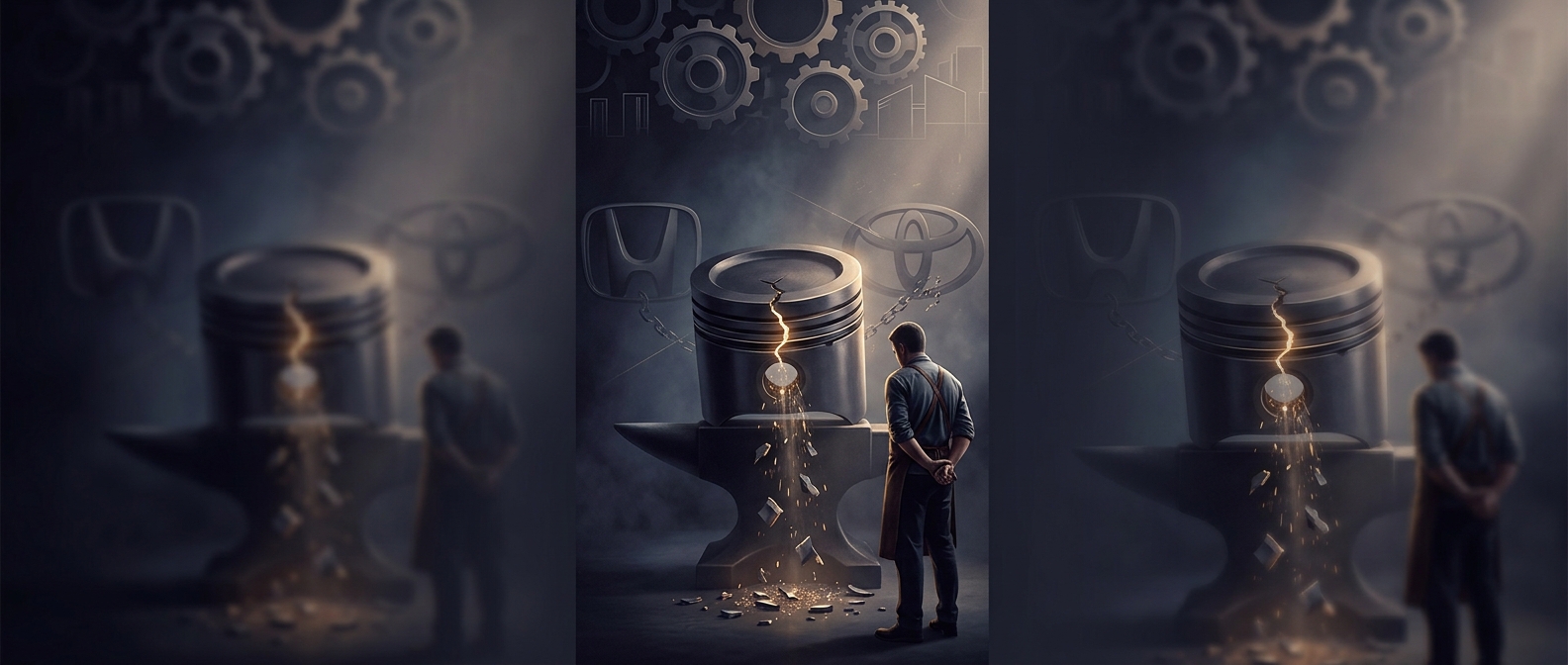
Toyota rejected Soichiro Honda’s early rings because they did not meet its standards. Instead of treating the decision as a verdict on the entire idea, Honda studied metallurgy—the science of metals and how their composition and treatment affect their properties—and improved the design.
That shift matters because a piston ring must be hard and durable enough to withstand repeated heat and friction, while still fitting closely enough to seal. Improving it meant confronting the material and production challenges behind its performance, not merely changing its appearance.
The contract was the real test
Honda later won the contract, turning an initial failure into a route to a customer that demanded dependable parts. The rejection had exposed the gap between making a component and making one to industrial standards; studying metallurgy helped him close it.
In engine manufacturing, a tiny ring can influence how well the whole machine works. Honda’s breakthrough began when a failed part became a specific engineering problem he could study and solve.