A Fare That Kept Running in Traffic
A taximeter changed more than how a cab’s price was displayed: it changed what counted as a fare. With a negotiated price, a passenger and driver had to agree in advance—or settle a disagreement at the end. A meter replaced that bargaining with a running calculation tied to the ride.
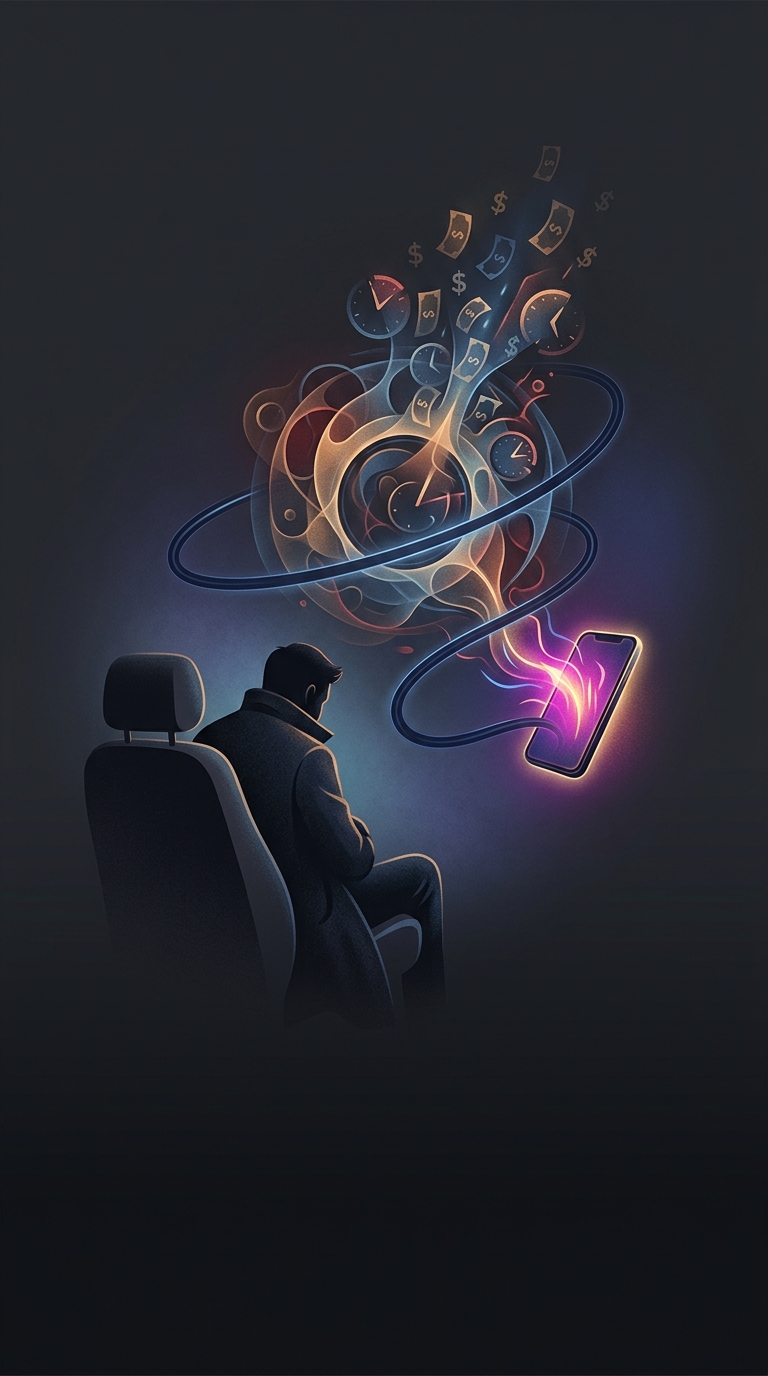
The two inputs addressed different parts of a trip. Distance measured how far the cab traveled; elapsed time accounted for periods when it made little progress, such as waiting at a stop. That mattered to drivers, whose time and vehicle were still occupied even when the wheels were not turning. The meter made those costs visible to the passenger as they accrued.
Why Put a Meter in a Motor Cab?
Motor vehicles made hired rides faster and more flexible, but they did not eliminate uncertainty about the price. A mechanical meter offered a common rule that could travel with the cab: instead of relying on a driver’s estimate or a passenger’s memory, both could see the fare advance on the same device.
The mechanism also made a new kind of service easier to operate. A cab could be hired for an unfamiliar route without first settling every detail of the price. The machine did not make every fare feel cheap, but it made the calculation more legible—and gave passengers a way to follow the total while the ride was still underway.