Why a Fan Blade Wants to Fly Outward
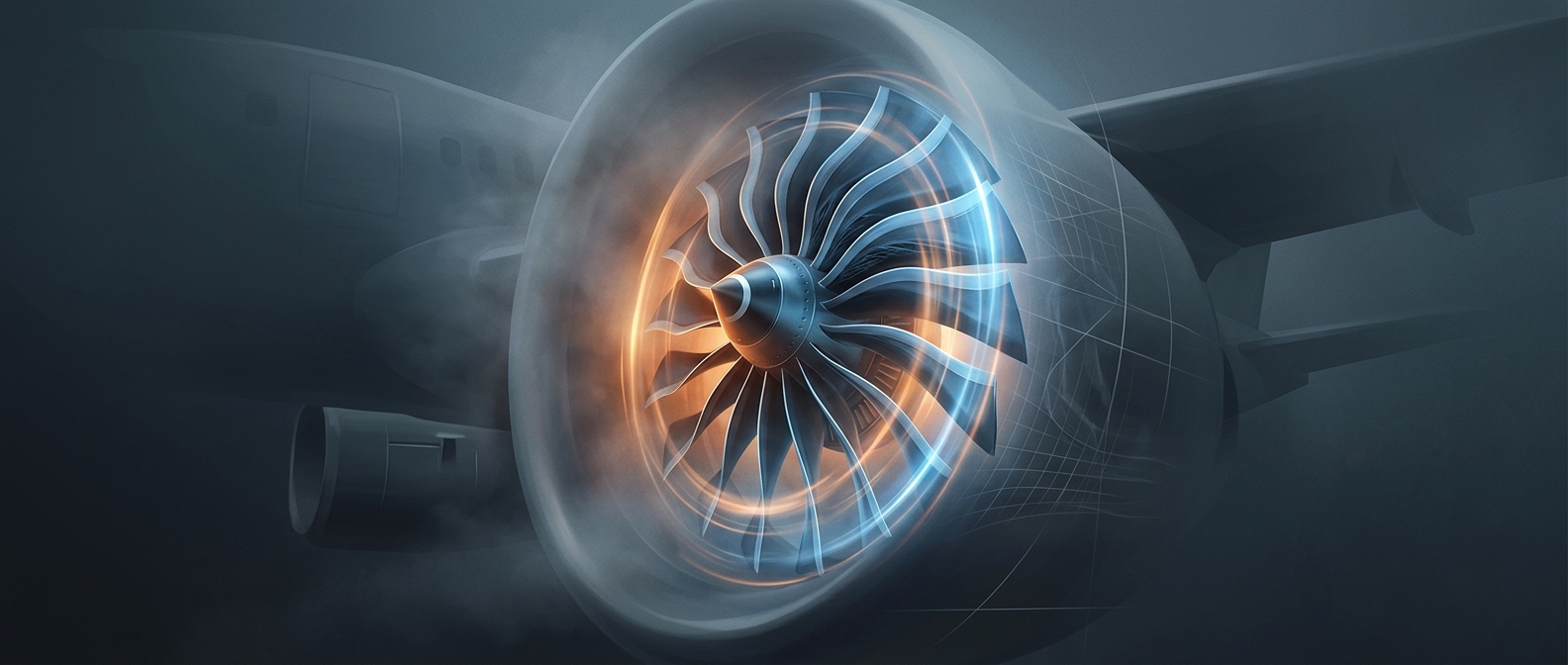
A jet engine’s front fan is a rotating row of airfoils attached to a central hub. As the engine turns, each blade continually changes direction, following a circular path. That change in direction requires an inward force; the blade’s material supplies it through internal tension and the way the blade is anchored. The faster the rotation, the greater the force needed to keep the blade on its path. A blade’s outer portion is especially demanding because it travels in a larger circle than the portion near the hub.
Strength Begins With Shape and Material
Fan blades must be light enough to avoid adding unnecessary load to the rotating assembly, yet strong enough to carry the pull created by their own mass and by the air they push. Their curved, tapered shapes help distribute stresses rather than concentrating them at one point. The root—the section that attaches to the hub—has to transfer the blade’s load into the rotating disk, so its geometry and fit matter as much as the broad visible surface.
Many modern large-engine fans use hollow, composite blades: strong fibers embedded in a supporting material form a lightweight structure. Other engines use metal blades. The choice depends on the engine’s design and operating demands; in either case, the blade and its attachment are engineered as parts of one rotating system.
The Hub Is Part of the Safety Story
The hub and disk hold the blades in position while transmitting their loads into the shaft. Engineers also account for vibration, temperature changes, and the forces of airflow, not just steady rotation. A small flaw or imbalance can matter because the assembly spins rapidly and each revolution repeats the loading.
That is why a fan is not simply a set of strong blades on a strong center. Its materials, shape, attachments, and balance must work together. The practical payoff is that the engine can move a large volume of air with a comparatively compact rotating assembly—while keeping each blade’s outward pull contained at its root.