Why a Toy Gun Can Stop a Checkpoint
An X-ray image is a view of what is packed inside a bag, not a label identifying each object. A realistic toy can have the same overall outline as a firearm, and nearby items may obscure details that would distinguish plastic from metal. From a quick look at the screen, the shape can therefore raise the same immediate question as a real weapon: what is it, and is it safe?
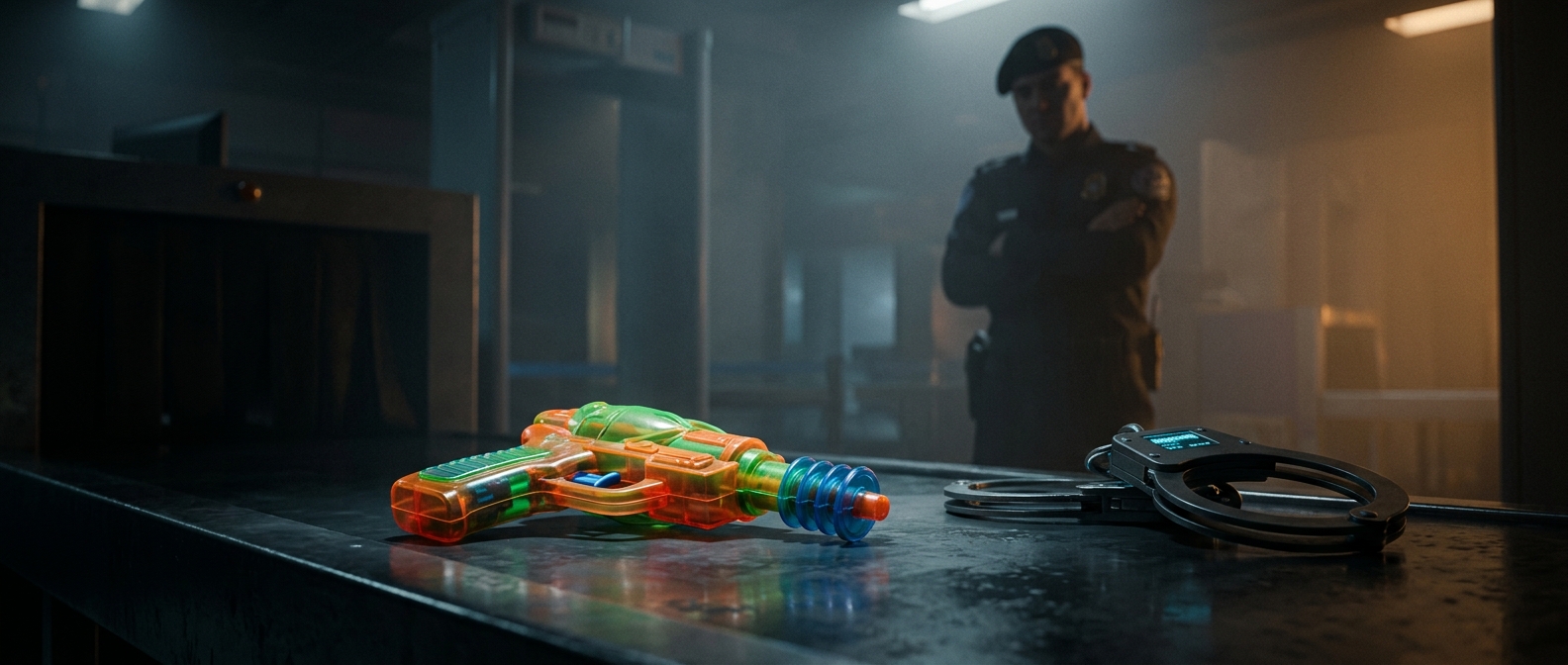
That uncertainty matters because airport screening is designed to resolve possible threats before a bag moves on. An officer may pause the screening and arrange a closer inspection. If the object is being carried openly or its possession raises further concerns, the response can involve law enforcement; how far it goes depends on the circumstances and local procedures.
The Delay Comes Before Identification
A toy’s material does not make its outline irrelevant. Screening staff must first identify what they are seeing, rather than assume that a weapon-shaped object is harmless. The distinction may become clear only when the item is examined outside the X-ray image.
That can mean extra checks, missed connections, or a more serious encounter than the traveler expected. A realistic replica is easiest to explain when it is not a surprise at the checkpoint—especially because, on a crowded screen, its shape can speak before its plastic does.