A bag-by-bag alternative to conveyor belts
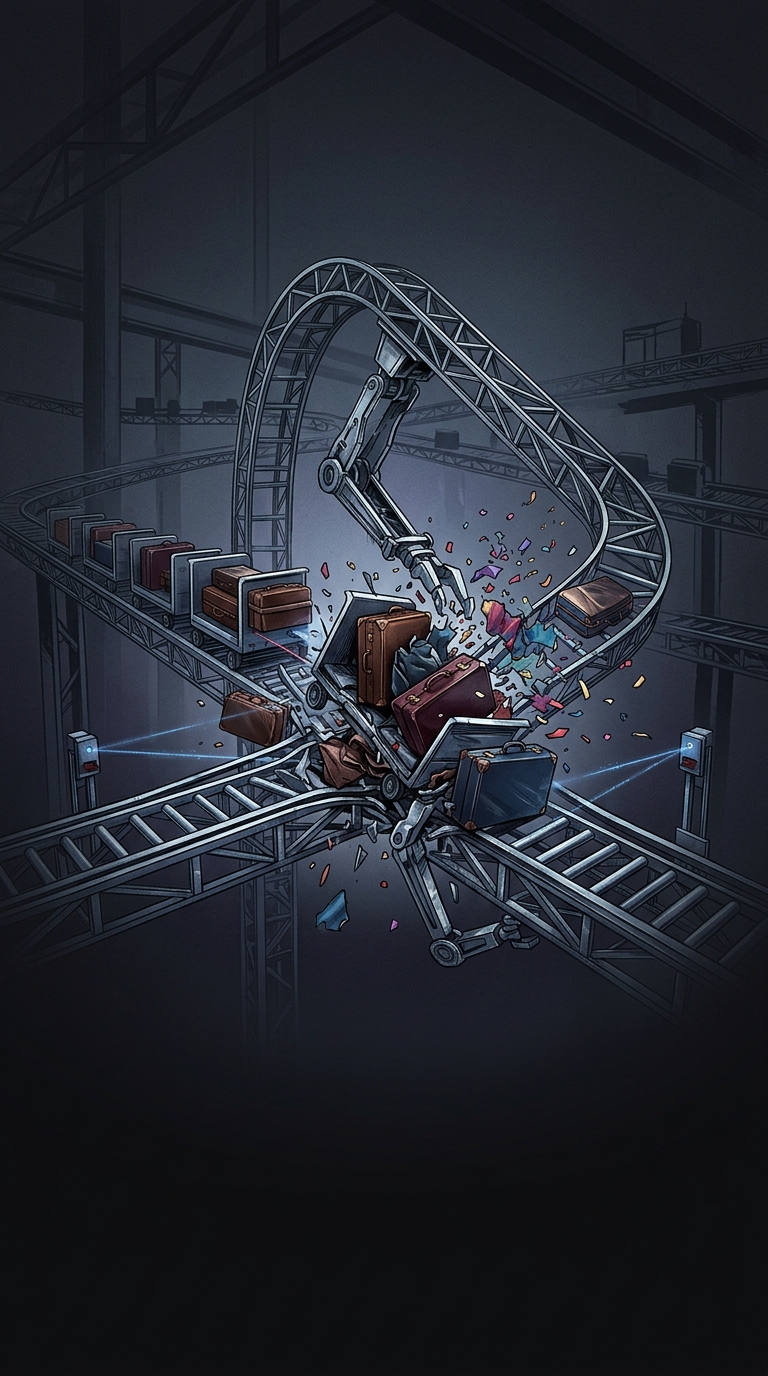
Denver’s automated baggage system was designed to move each bag in its own motorized cart rather than carry many bags together on a continuous belt. Scanners identified a bag’s destination, and controls directed its cart along a network of tracks toward the appropriate aircraft area. In principle, this could route bags quickly without the repeated handoffs and long conveyor runs used in conventional systems.
But the design made every cart, track junction, scanner, and control decision part of one tightly connected operation. A bag could reach its destination only if it was read correctly, stayed in its cart, and passed through the route without a mechanical or software snag.
Why a fast route became a rough ride
A conveyor belt supports luggage across a broad surface. A small cart offers less margin: a bag must sit securely as the cart accelerates, changes direction, and passes junctions. Speed is useful only when the load stays under control. Bags that shifted or fell could obstruct the track or require workers to retrieve them, turning a quick automated journey into a delay for other luggage.
The challenge was not just the machinery. The system had to handle bags of different sizes and shapes while coordinating many moving carts and destinations. Testing and fixing one component could reveal problems elsewhere, because a change in routing or timing affected the larger network.
The cost of making the whole airport depend on it
The system was meant to serve Denver’s new airport on a far broader scale than a single conveyor line. That ambition increased the consequences of trouble: a jam or routing failure could disrupt the flow of bags across the operation, while a conventional system could keep some routes working independently.
Denver’s experience became a cautionary example of automation’s tradeoff. A network of individually routed carts can be flexible, but it also creates many points where luggage, hardware, and software must cooperate perfectly. The most futuristic feature was also the system’s vulnerability: one misplaced bag could become a problem for the whole route behind it.