A walking stick with a second purpose
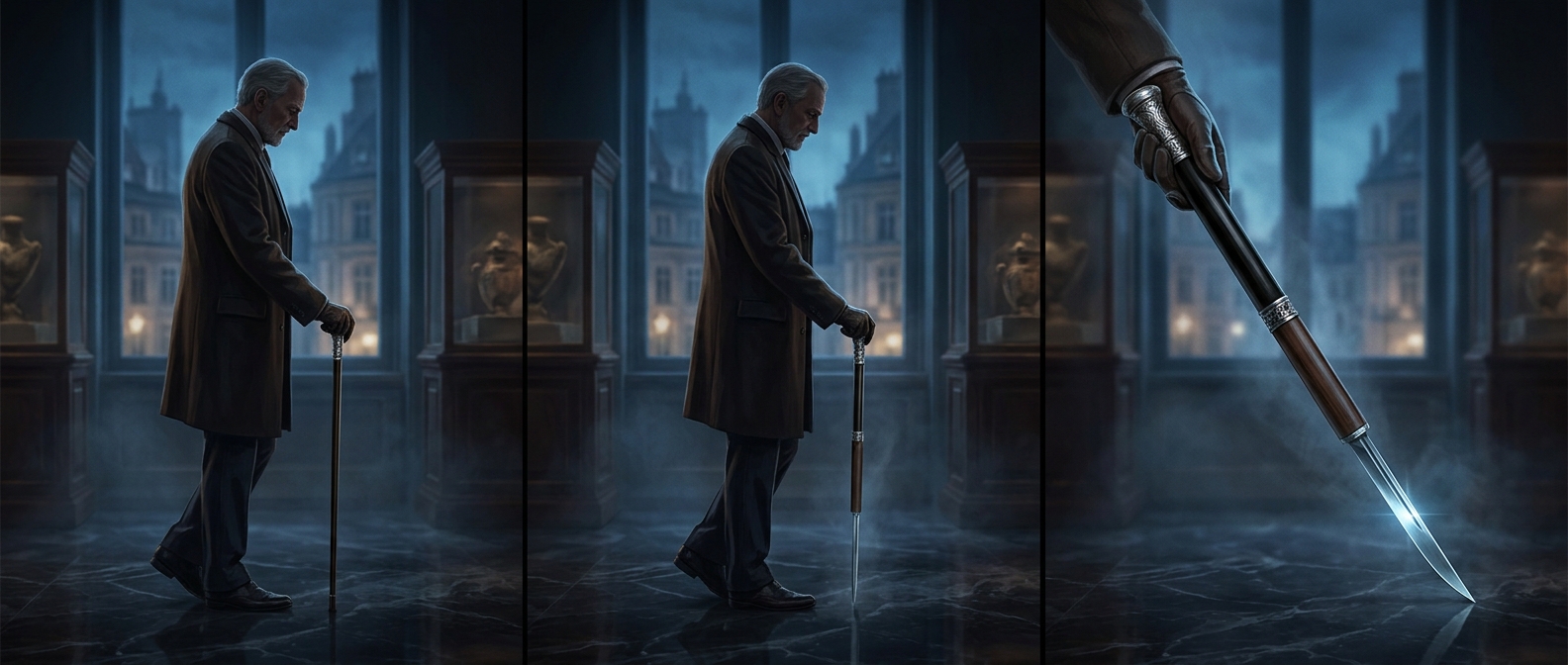
A sword cane combined two objects: a cane’s outer shape and a narrow blade fitted inside its shaft. The handle served as the sword’s grip; the blade slid out of the hollow cane when the user drew it. At a glance, the object could pass as an ordinary accessory rather than an openly carried sword.
Why concealment mattered
For a gentleman dressed for public life, a cane was already a familiar finishing touch. Hiding a blade inside it let him carry a weapon without wearing one conspicuously at his side. The design offered the appearance of respectable formality and the possibility of self-defense in the same object—a quiet response to the fact that public dress and personal security could overlap.
That concealment came with a tradeoff. A sword cane was not simply a sturdy walking stick with extra weight: its shaft had to accommodate the blade, and its handle had to work as a weapon’s grip. It could help someone steady a step, but it was also built around a purpose ordinary canes did not have.
The accessory that could change roles
The striking feature was the transition: a polished cane could become a blade with a pull of the handle. Its threat depended partly on being overlooked. What looked like a marker of gentlemanly dress could therefore carry a very different meaning once drawn.