A Chest That Tests Spyro’s Movement
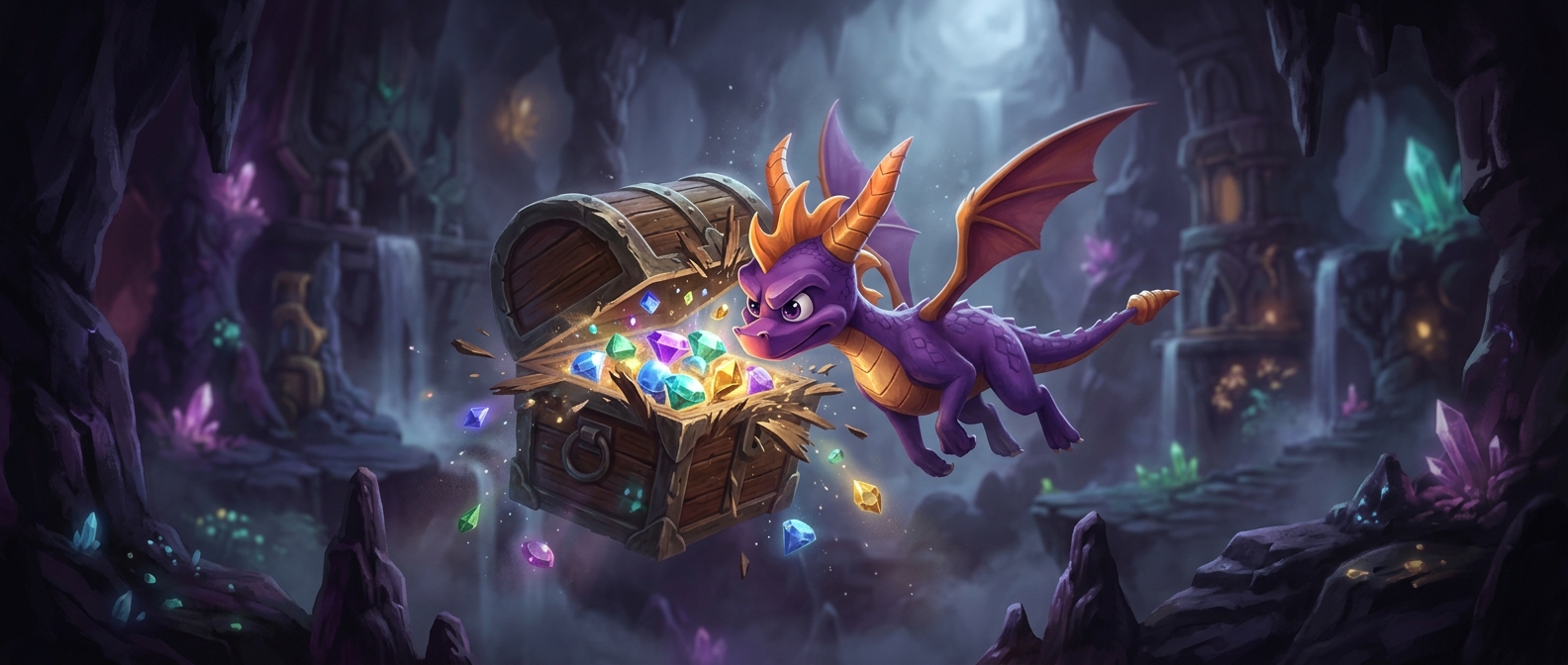
The metal chest is more than a container: it asks the player to use the right move. Spyro can charge by lowering his horns and rushing forward, turning his body into a way to break certain objects. Against a metal chest, that forward burst replaces the slower, more deliberate act of picking a lock.
That makes the obstacle readable at a glance. The chest’s material signals that a different approach is needed, and the impact gives immediate feedback: use the charge and the barrier gives way; use the wrong move and it stays shut.
A Reward Built Into the Route
Putting gems inside the chest ties the movement puzzle to exploration. Players have a reason to notice objects along a path, judge whether Spyro can reach them at speed, and try the charge rather than simply run past. The reward is not only what spills out; it is also the small satisfaction of recognizing how the level expects Spyro to move.
This is a compact example of how an action game can teach through the environment. Instead of stopping to explain a rule, it presents a distinctive obstacle and lets the player learn by trying a move. The next metal chest becomes a clue: build up speed, aim, and let momentum do the work.