Why Bananas Fill the Course
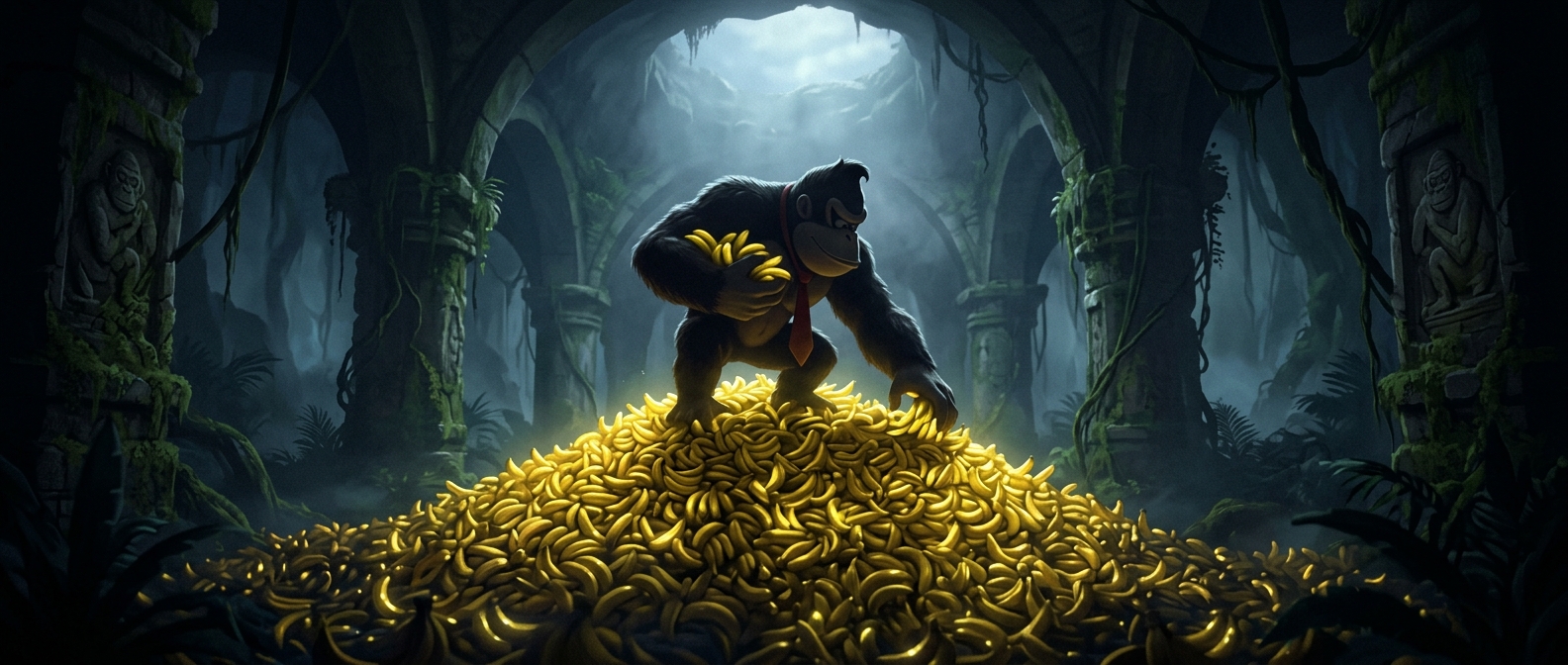
In Donkey Kong platform games, bananas do more than decorate the scenery: they turn a dangerous route into a string of small decisions. A line of fruit may trace the arc of a jump, draw attention to a ledge, or tempt players toward a riskier path. The reward is visible before the leap, so players can judge whether the detour seems worth it.
That makes each banana a bit of guidance as well as a prize. Instead of stopping to explain a route, the game can use a trail to suggest where to move. A player who follows it still has to time jumps, avoid hazards, and land safely; the fruit points the way but does not remove the challenge.
A Small Reward That Changes the Pace
Collectibles also give players something to accomplish between larger goals, such as reaching the end of a stage or rescuing a captured companion. Gathering a few bananas offers quick feedback, while a dense cluster can make an apparently empty stretch feel worth exploring. In games where enough bananas earn an extra life, collecting them can also provide a practical payoff for careful play.
The design balances invitation and danger: the game makes a reward easy to see, then places it where getting it may require a leap over a ravine or a detour through hazards. The bananas make exploration feel like a choice with an immediate payoff, not just time spent wandering. That is why a simple trail of fruit can steer a player across a level without a single spoken instruction.