Why a familiar street can seem to belong to another century
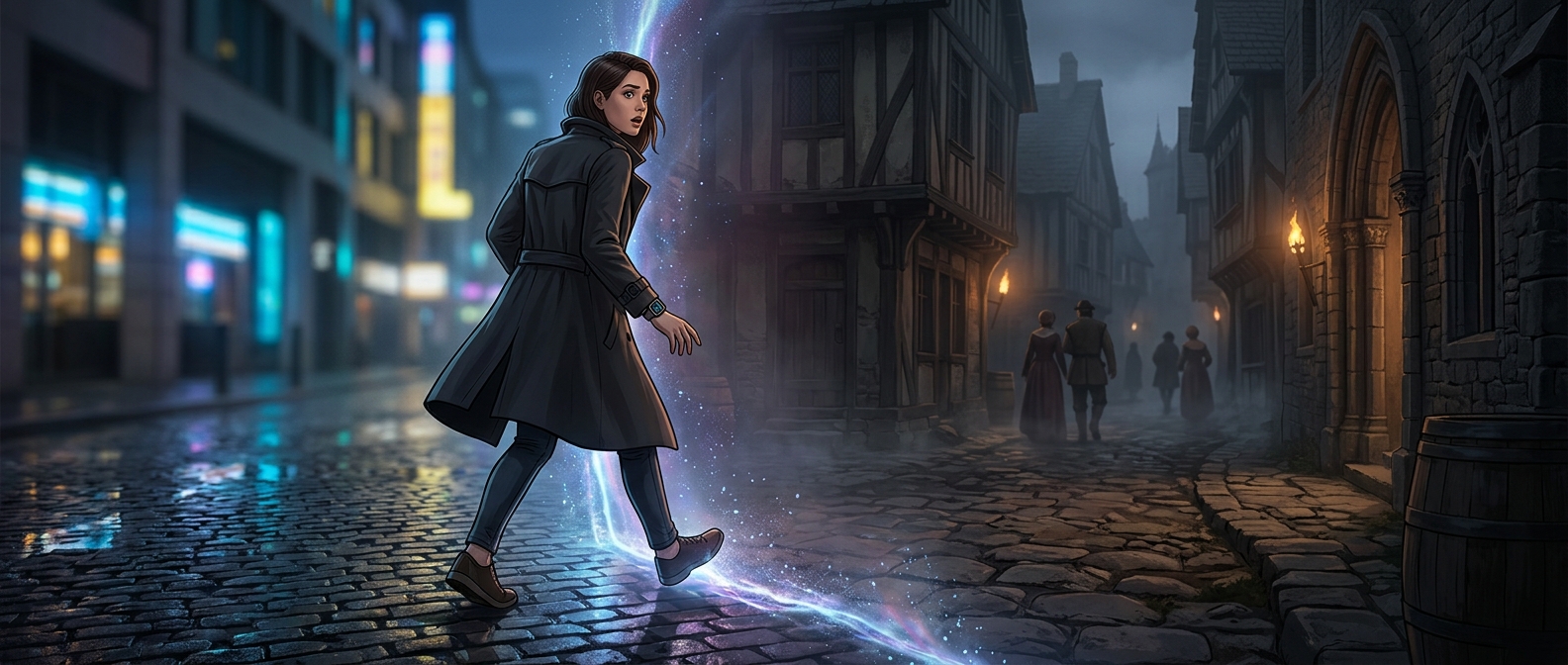
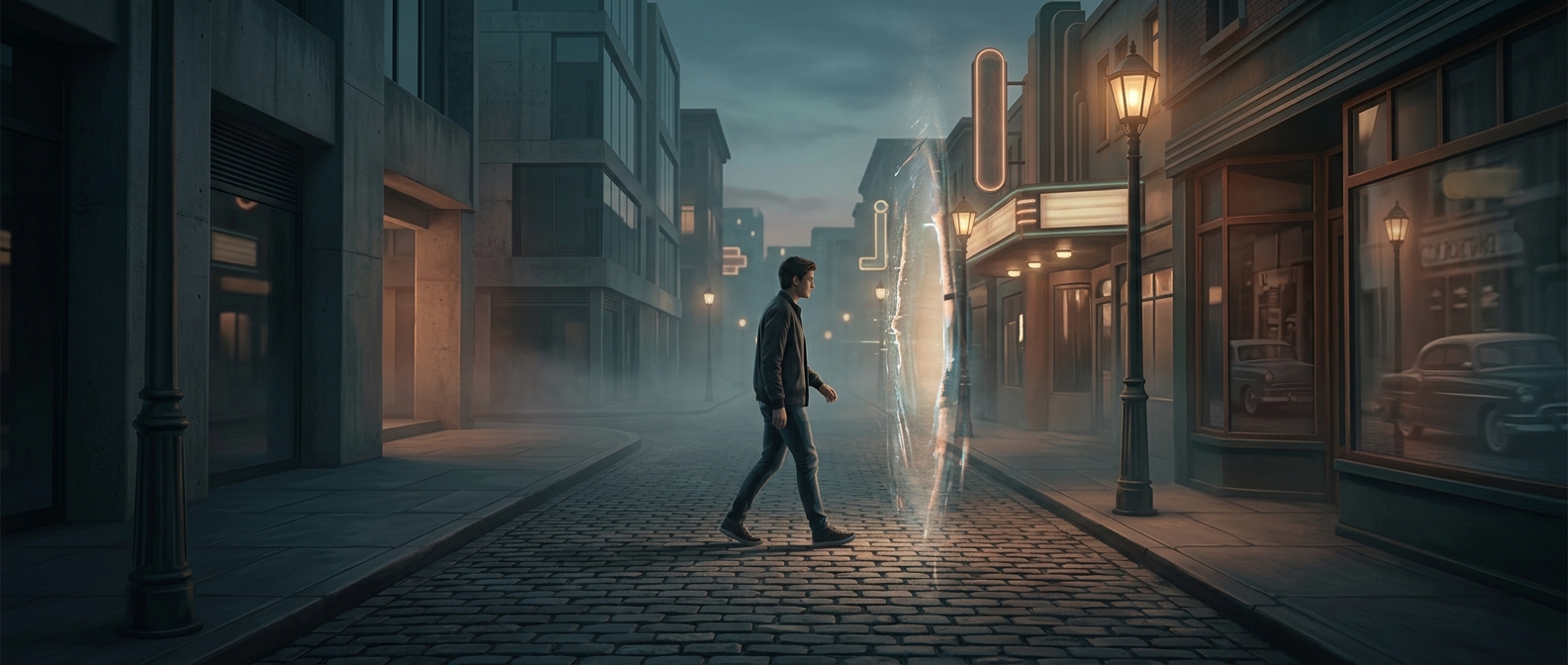
Stories of temporal anomalies often begin with an ordinary change of scene: a traveler turns a corner and encounters old-fashioned clothes, cobblestones, or a carriage instead of modern traffic. The briefness is part of the effect. The witness seems to cross into another time without choosing to, then returns before the encounter can be examined at length.
The past is made recognizable through details
These accounts rely on objects that quickly signal a historical setting. A horse-drawn carriage implies a different pace of life; cobblestones and period clothing make the change visible. A few concrete details do more narrative work than a lengthy explanation of how time supposedly shifted. The setting feels like a complete earlier world, even when the story describes only a passing glimpse.
The motif also turns a familiar place into a threshold. A street is no longer just a route through town: for a moment, it seems to connect the present with a vanished way of living. That transformation gives the story its mystery while keeping the imagined journey close to everyday life.
A fleeting encounter leaves room for wonder
Because the past appears only briefly, the account can preserve uncertainty about what happened without supplying a mechanism. Its central image is not a traveler mastering time, but someone unexpectedly seeing the present give way to a different era. The ordinary street becomes memorable precisely because, in the story, it does not stay ordinary.