A cheap way to prove a book did not sell
For many paperback returns, the cover served as more than packaging: it was the part a store sent back as evidence. The shop removed it and returned it through the publisher’s or distributor’s returns process, which could qualify the unsold copy for credit. The remaining book was not a saleable return. It was marked for destruction or recycling instead.
That arrangement made economic sense when shipping a whole low-priced paperback back cost more than the book was worth. A cover was lighter and easier to handle than a complete copy, while leaving the pages behind avoided transporting a bulky item with little resale value. The precise procedure can vary, but the logic is the same: verify the return without paying to ship every unsold book back.
Why the pages become “pulp”
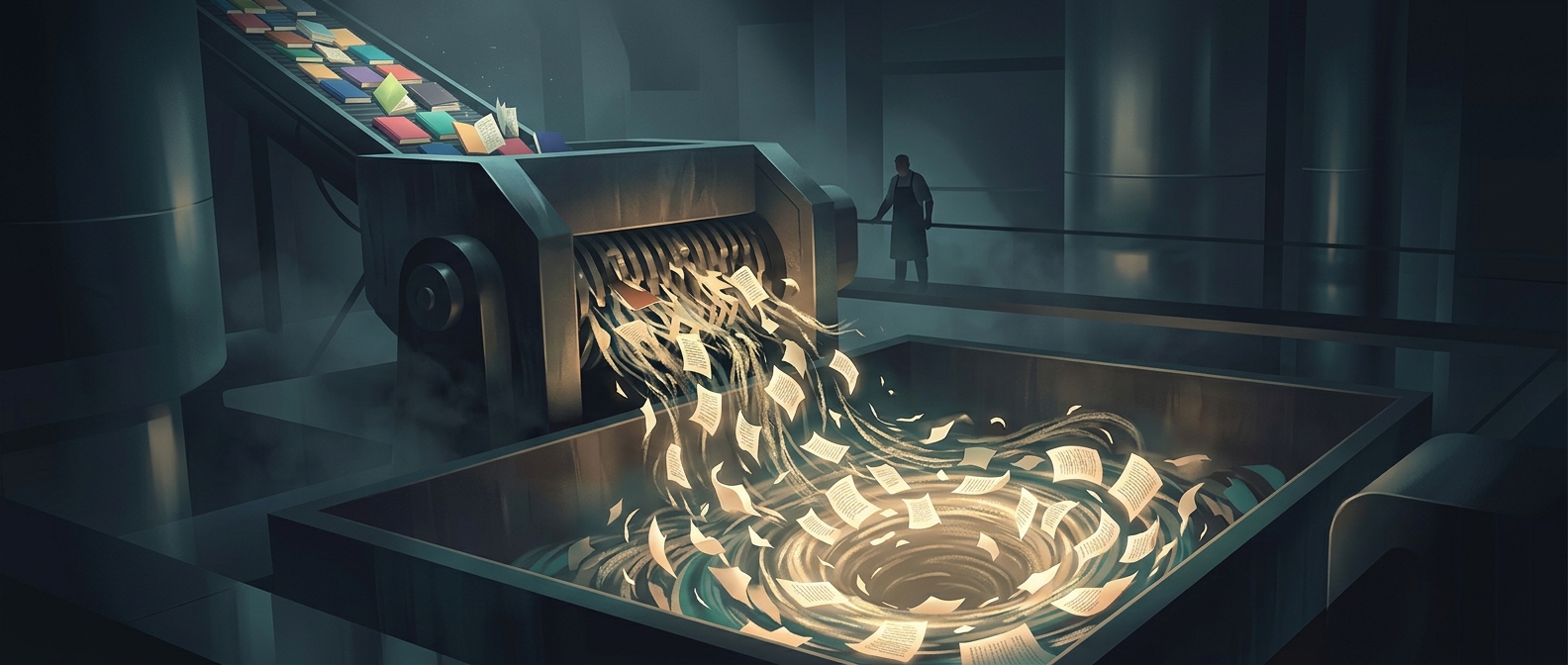
“Pulp” is shorthand for the stripped book’s interior pages, headed for paper recycling rather than another reader. At a recycling facility, paper is broken down into a wet fiber mixture that can be processed into new paper products. The cover and the pages may be handled separately because their materials differ; coatings, inks, and adhesives can complicate recycling.
The tradeoff is stark: a book may be readable and physically intact, yet the returns system treats it as waste because recovering its retail value is not worth the handling and shipping. The torn-off cover is both proof of a failed sale and the point at which the book’s route changes from bookstore inventory to recycling.