Why an open question can carry a book
A solved crime has a built-in destination: the reader learns who did it and how the case was resolved. An unresolved tragedy has no such endpoint. Its unanswered questions—what happened, which leads mattered, and why the evidence did not settle the issue—can give a true-crime book its central thread.
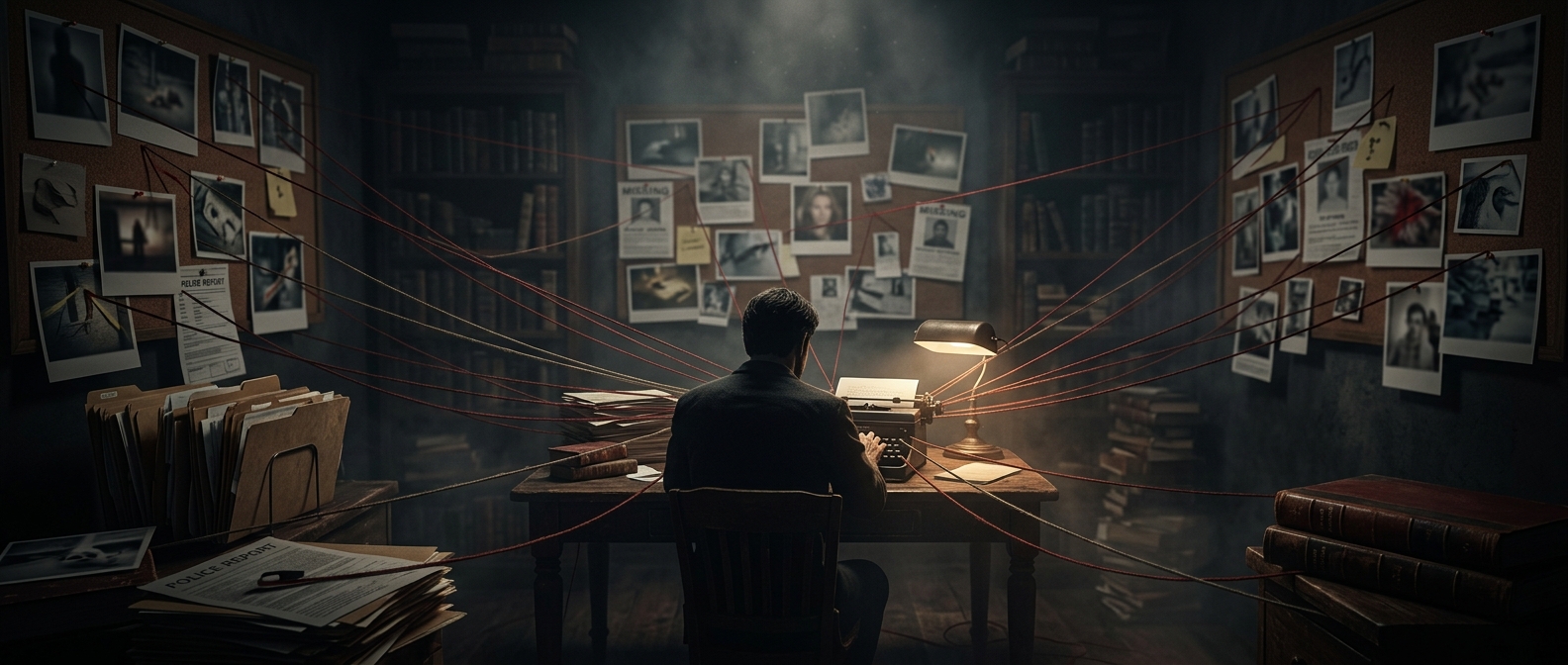
That uncertainty is not a story by itself. To sustain a book, an author has to build a careful account from what can be established: the known timeline, the investigation’s documented steps, and the points where the record goes quiet or competing explanations remain. Police records may help reconstruct that process, but gaps in the file cannot safely be treated as proof of a hidden answer.
The tension—and the responsibility
An open case creates suspense naturally, but it also makes restraint essential. A plausible theory can feel satisfying to readers without being supported by evidence. Responsible reporting distinguishes confirmed facts from speculation and avoids presenting real people as suspects without a sound basis. It also keeps the people harmed by the tragedy in view, rather than turning their uncertainty into a puzzle detached from their lives.
The result is a different kind of narrative payoff. The book may not solve the case; it can instead show how investigators and families have lived with what remains unknown. The unanswered question keeps readers turning pages, while the record sets the limits of what the story can honestly claim.