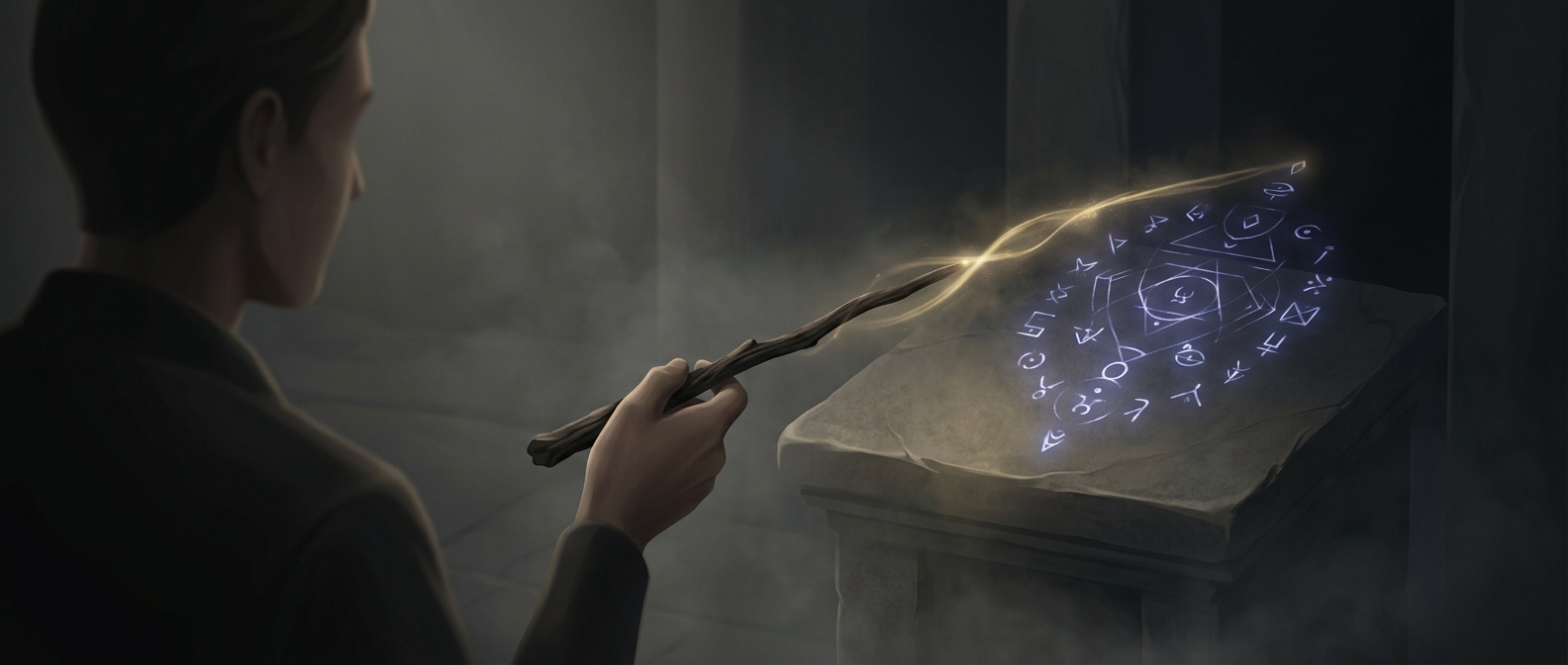
Why a Branch Can Become a Wand
A wand does not need a special material or hidden power to serve its role in a ritual. Its significance comes from how a practitioner uses it: choosing a stick, holding it deliberately, and assigning it a purpose. That change in attention can make an ordinary gesture feel set apart from everyday action.
A Physical Focus for Intention
Rituals often give an abstract aim a visible form. A practitioner may point a branch toward a space, object, or direction while concentrating on what they mean to do. The stick gives the hand a clear target and the intention a concrete gesture to accompany it. In that sense, it works much like an underline in speech: it marks what matters without needing to create the meaning on its own.
The effect is personal and symbolic. The branch can help someone sustain focus, remember the purpose of the ritual, or signal that a deliberate act is underway. Its role depends on the practitioner’s beliefs and the ritual’s conventions, not on a universally established property of wood.
Why Use Something Ordinary?
A found branch makes the act accessible: the tool can be selected from the surroundings rather than purchased or specially made. That ordinariness can also be part of the point. Once chosen and used with care, a familiar object becomes a ritual instrument through the attention and meaning attached to it. The gesture is still a pointing motion—but within the ritual, it becomes a way to give intention direction.