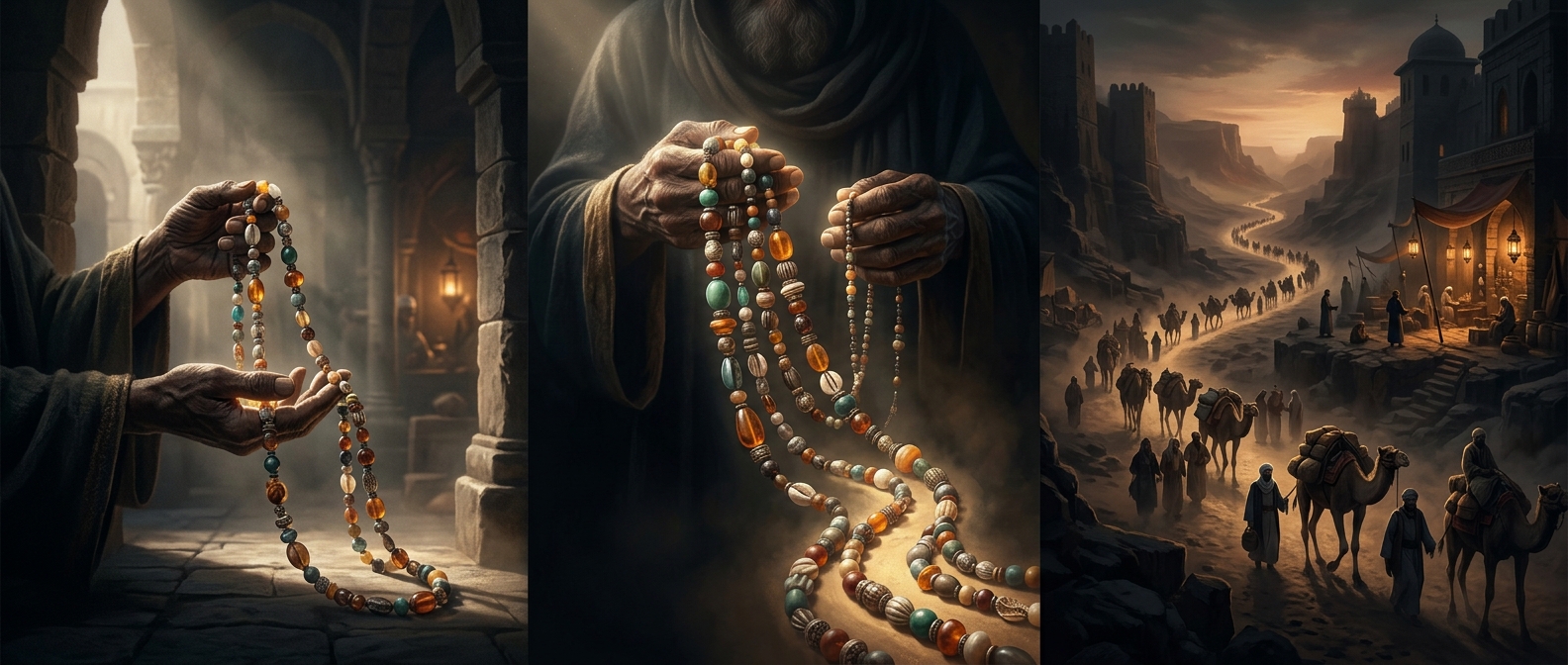
How shell beads became records of obligation
In northeastern North America, Indigenous peoples made beads from shells—especially the purple and white parts of quahog clams—and threaded them into strings or belts. Their value came not only from the material but from the skilled work of shaping, drilling, and arranging each bead. A belt’s pattern and the occasion on which it was given helped people remember what had been agreed and who was responsible for what.
That made a belt more than a written message. In societies where important commitments were affirmed in public and preserved through oral tradition, presenting a patterned belt could make an agreement tangible. People could return to it in later discussions as a shared record of a treaty, alliance, condolence, or other obligation. The beads did not carry a universal, self-explanatory code; their meaning depended on the people, history, and circumstances surrounding the exchange.
When a record also became wealth
Belts and strings could also pass between people as gifts or payments. Their craftsmanship, established meanings, and usefulness in exchange made them valuable. But that did not mean every community treated them like ordinary coins, or that their role was identical everywhere. Wampum—the name often used for these shell beads and beadwork—could carry political and social meaning at the same time as economic value.
European settlers later adopted wampum in trade, and in some colonial settings it circulated as a medium of exchange. That commercial use did not erase its Indigenous significance. The same object could help settle a transaction and embody a relationship or promise. Its power lay in that combination: wealth you could transfer, and a commitment others could recognize and recall.