Why a Hotel Key Card Can Stop Working
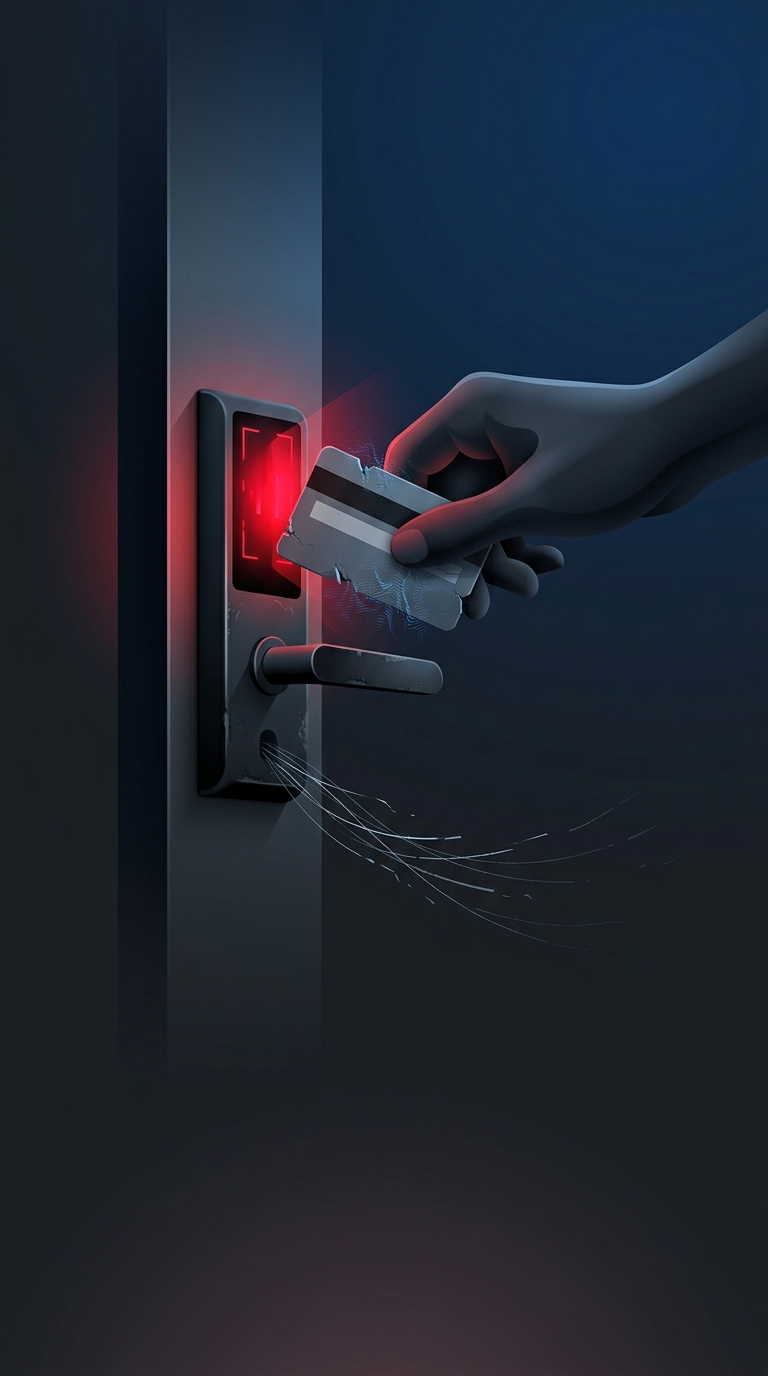
A traditional hotel key card stores access information in a magnetic stripe: a narrow band of magnetic material whose pattern is read by a lock. The lock checks that information against the room’s current access settings. If the stripe is damaged or the stored data no longer matches, the card may be rejected—even if it looks perfectly fine.
A phone in the same pocket is not usually enough to erase a card. Ordinary smartphones do not produce the kind of strong, sustained magnetic field that typically wipes a stripe. A powerful magnet, repeated contact with magnetic closures, or physical wear can pose more of a risk. Just as often, the problem is not the stripe at all: the card may have been encoded incorrectly, its access may have expired, or the lock’s reader may be finicky.
Why Replacing the Card Often Works
At the desk, staff can issue a fresh card and encode it with the guest’s room access and valid dates. That resets the card side of the problem, but it does not fix a worn reader or a lock with a depleted battery. If the replacement fails too, the issue may be with the door rather than the card.
Many hotels also use contactless cards, which communicate with a lock by radio instead of relying on a magnetic stripe. Those cards can still fail—for example, if they are damaged or access has changed—but their failure mechanism is different. The familiar stripe-card hassle is therefore a legacy of one access technology, not an unavoidable property of every hotel key.
The practical consequence is small but immediate: when a card stops opening the door, a quick re-encode is often enough, while repeated failures are a reason to ask staff to check the lock itself.