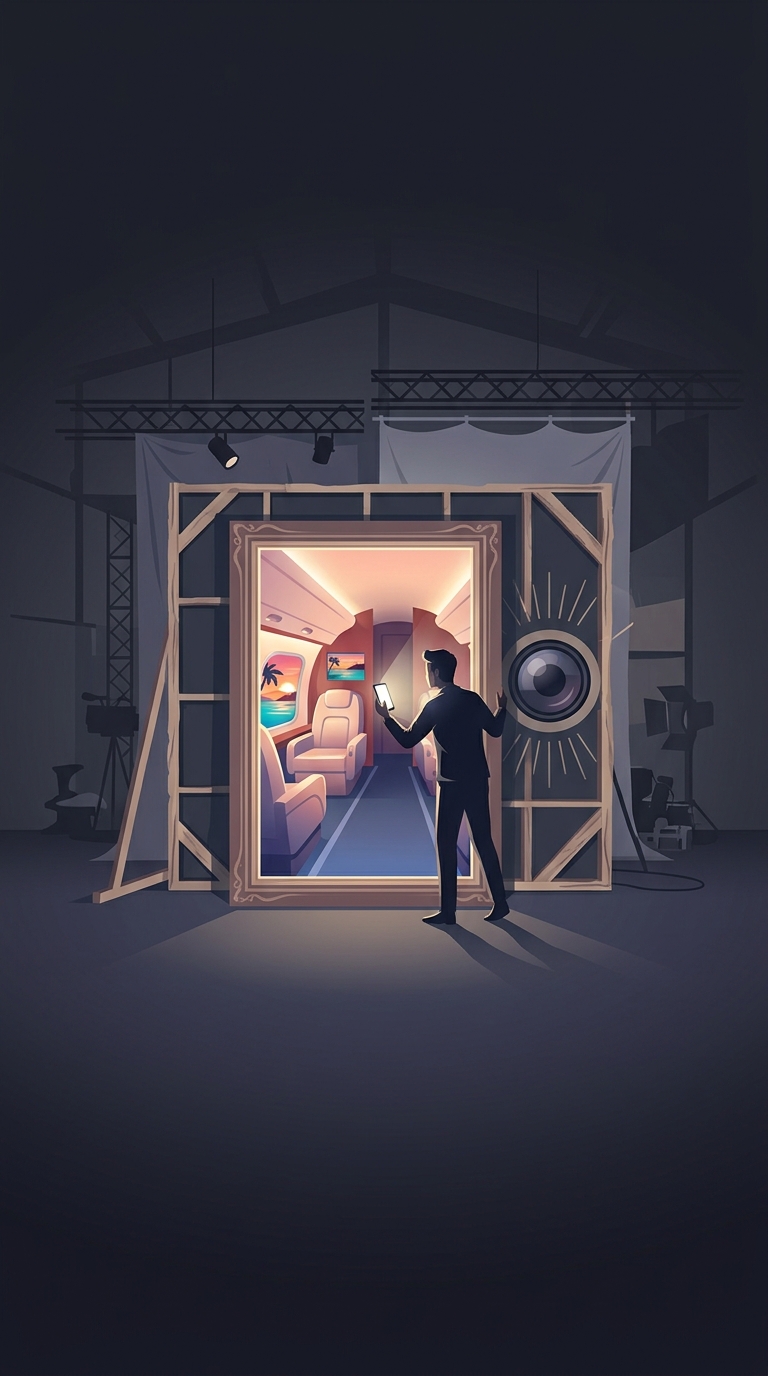
How a Studio Can Stand In for a Private Jet
A convincing travel image does not need a convincing aircraft. It needs a tight frame: a few cream-colored seats, a window, polished trim and a glass that suggests champagne. In a rented jet-style set, those details supply the visual shorthand for private travel while the studio walls, crew and ordinary building around them stay outside the shot.
That is the basic production trick. The set creates the appearance of a luxurious cabin; camera angle and careful composition keep attention on the parts that support the story. A photograph or short video can show the staged interior without showing a runway, a destination or even a functioning plane.
Why the Image Travels So Well
Social platforms reward scenes that communicate quickly. A private-jet cabin signals wealth and exclusivity at a glance, making it useful for creators who want a post to look like a glimpse into an expensive trip. Renting a designed interior can provide that look without arranging a flight, and the set can be used for a brief shoot rather than a journey.
The result is a mismatch between what the image shows and what viewers may infer. The seats and props are real objects, but they do not establish that the person is aboard a private aircraft or traveling anywhere. A carefully framed setting can make a location feel like evidence of a lifestyle, even when it is only a backdrop.
What the Frame Leaves Out
This kind of set works because viewers usually see a cropped image, not the full scene or its production context. A cabin-like corner can be enough to suggest a whole aircraft; the absent details are precisely what the camera does not include. That makes the image easy to mistake for documentation of a trip when it is actually a staged scene—and easy to share as if the two were the same.