The crossing works because traffic gets a turn to disappear
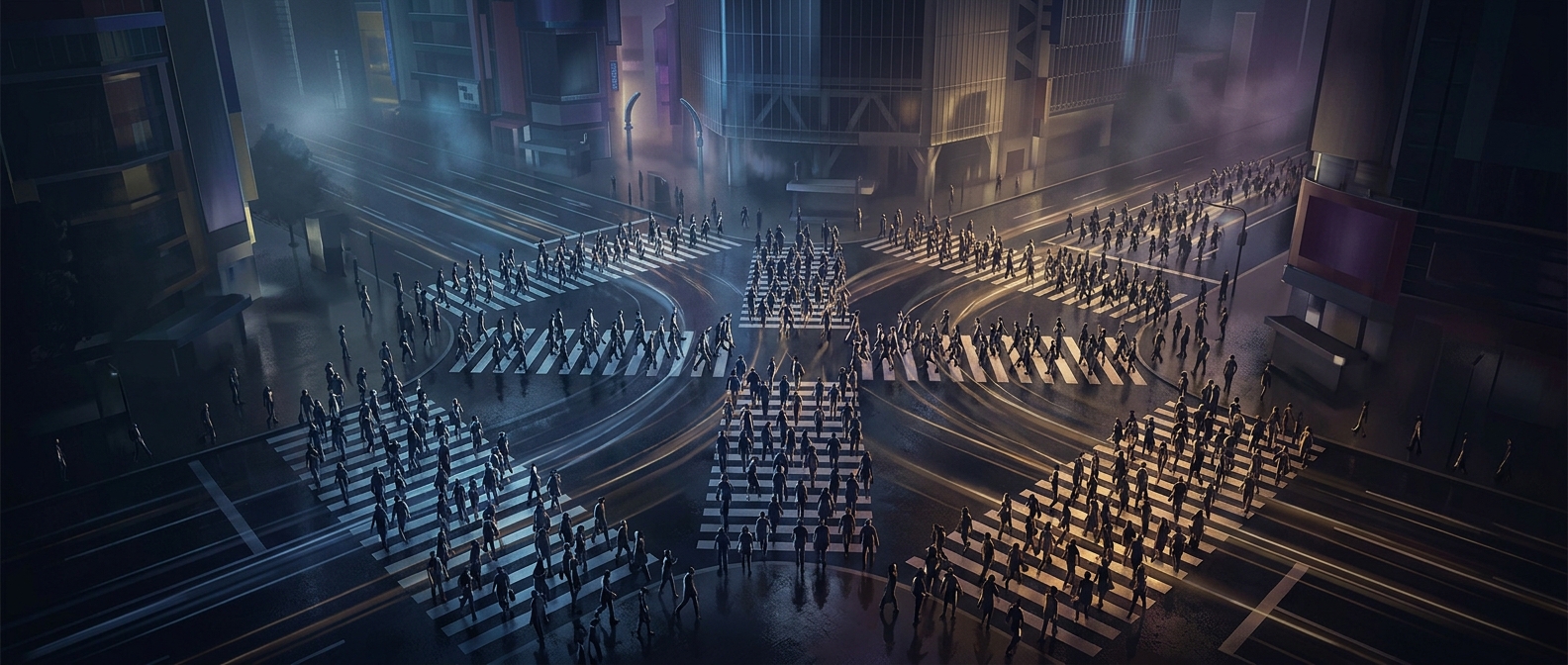
Shibuya’s scramble crossing is coordinated by its signals: vehicle traffic is stopped in every direction while pedestrians get the right of way. That full stop is the crucial design choice. People can cross straight ahead or diagonally without having to watch for cars turning through their path, turning a busy intersection into a temporary pedestrian space.
The crowd does not move as one solid mass. Each person follows a route, adjusts pace, and leaves room when paths converge. Because everyone is moving at once, walkers continually make small corrections—slowing, angling around someone, or slipping through an opening. The result can look like a tangle from above, but at ground level it is a collection of individual decisions made in a shared space.
A brief surge, then the street resets
The crossing’s rhythm depends on the signal change. When the pedestrian phase ends, walkers clear the intersection and vehicle traffic resumes; the next pedestrian phase brings another wave. That separation lets a large crowd use the same pavement without mixing with moving cars, while the limited crossing interval encourages people to keep moving rather than stop in the middle.
The striking part is not that thousands follow a single path, but that they do not need to. A clear signal gives everyone the same window; the crowd supplies the choreography. In a few minutes, the intersection switches from roadway to shared pedestrian space and back again.