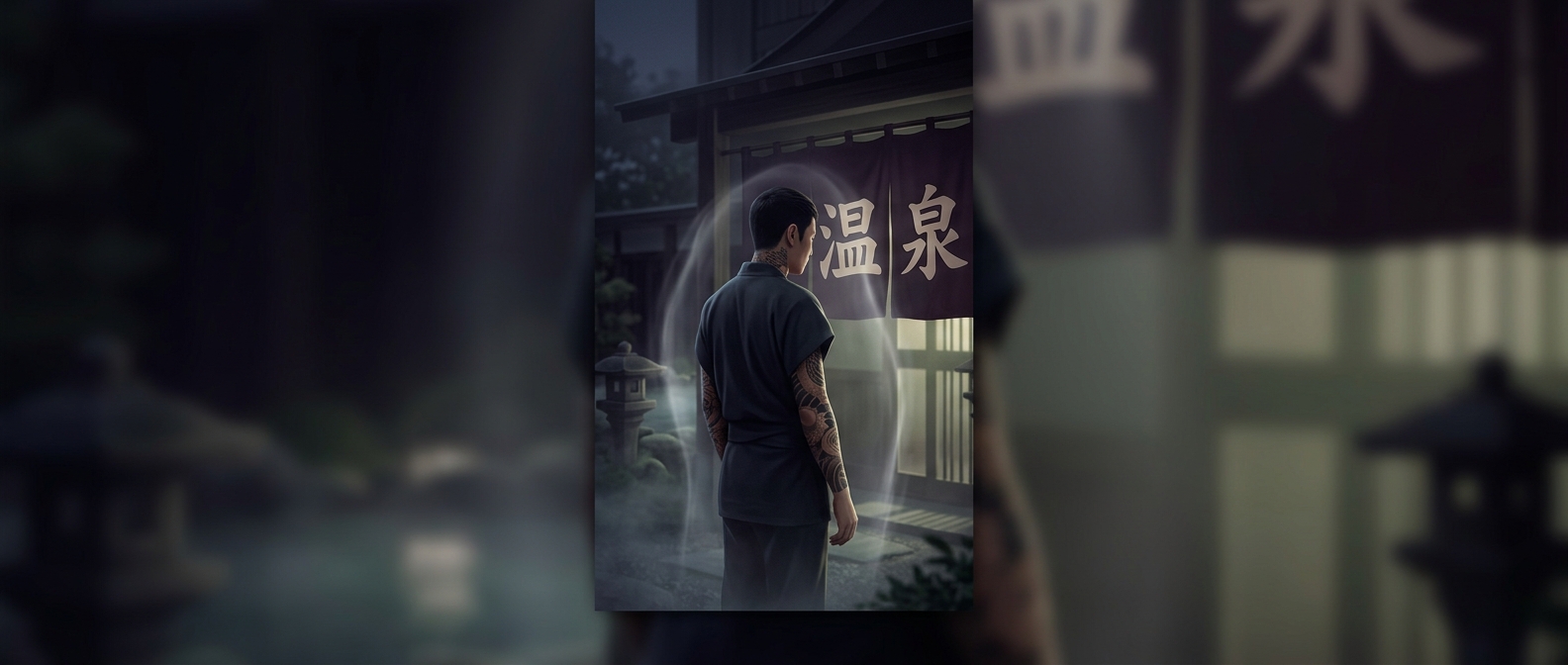
A private mark in a shared bathing space
At an onsen, or Japanese hot spring, bathing is usually communal: guests wash and soak in the same open pools. The setting depends on a sense of shared comfort and decorum, so a facility may treat visible tattoos as a problem even when it has no reason to think a particular guest is connected to organized crime.
The association grew from the visibility of traditional full-body tattoos among some members of the yakuza, Japan’s organized-crime groups. Over time, a quick visual rule—no visible tattoos—became a way for bathhouse operators to avoid alarming other guests. The rule can therefore catch people whose tattoos have nothing to do with the yakuza, including visitors with small or recently acquired designs.
Why policies can differ from one bathhouse to another
There is no single policy that every hot spring follows. Each facility sets its own conditions, and a tattoo that is acceptable at one may be refused at another. Some places allow guests to cover smaller designs with skin-colored patches; others may restrict entry regardless of whether the tattoo is covered.
That makes checking the specific facility’s policy more useful than assuming all Japanese baths have the same rule. A small tattoo can matter not because of its meaning to its owner, but because the bathhouse is applying a broad rule in a shared public space.