Why Following an NPC Feels Like Work
Many games give the player only a few movement speeds: a deliberate walk and a much faster run. A non-player character (NPC)—a character controlled by the game—can move at a speed between those two. That lets the NPC seem to stroll at a natural pace, but it leaves the player without a matching input.
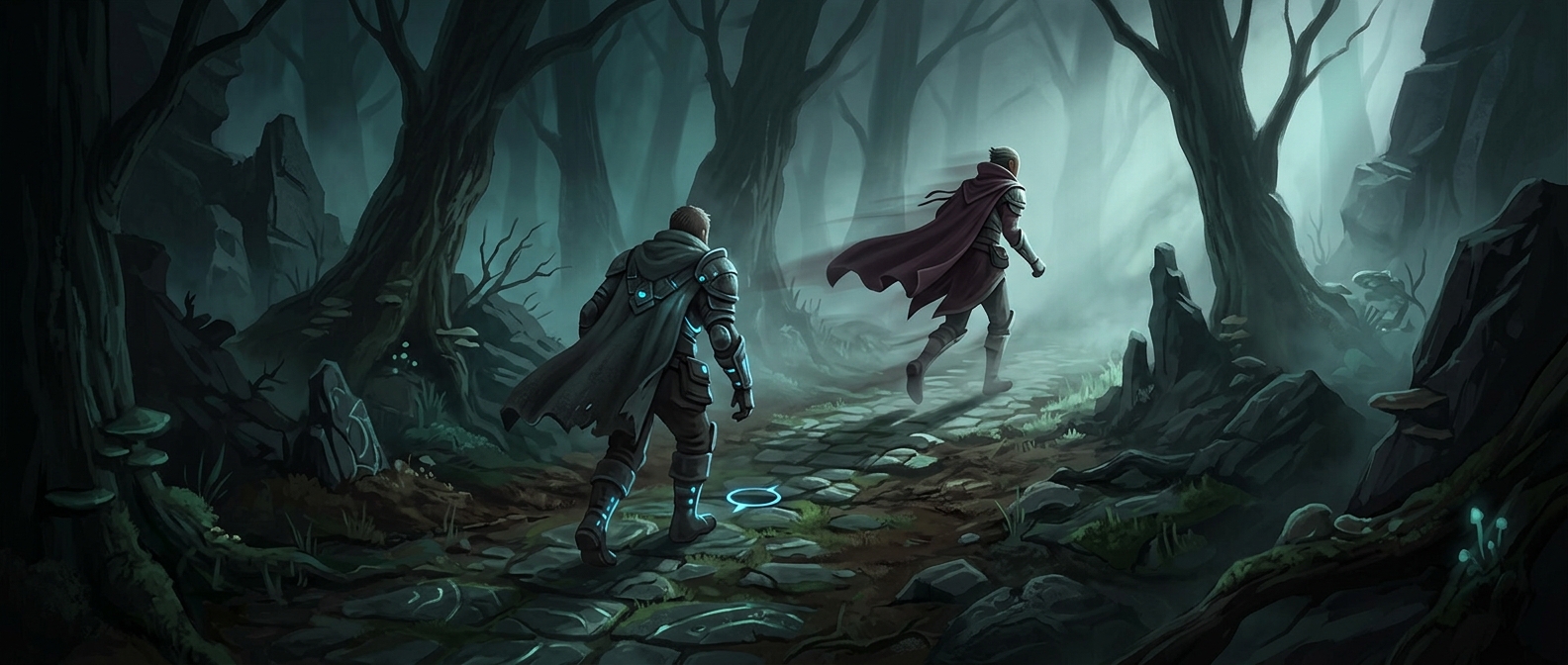
The mismatch turns a simple follow-along into constant adjustment. Run to catch up, ease off before overtaking, then start again when the NPC pulls ahead. During dialogue, that small control problem competes with the conversation: instead of watching the scene, players monitor distance and regulate their movement.
A Believable Pace, an Awkward Control
The NPC’s speed may serve the scene. A measured walk gives the character time to speak, keeps them visible, and avoids the unnatural look of sprinting through a conversation. But the player is operating under different constraints: their movement may switch abruptly between fixed speeds rather than smoothly matching the NPC.
The problem is most noticeable when the game asks players to follow without taking control of the scene. It can make a quiet walk feel oddly demanding—not because the destination is difficult, but because maintaining the right distance becomes a repeated task.
A small movement option, such as letting the player match the NPC’s pace, can remove that friction. Without it, a character’s ordinary stroll becomes an unintended test of stop-and-go control.