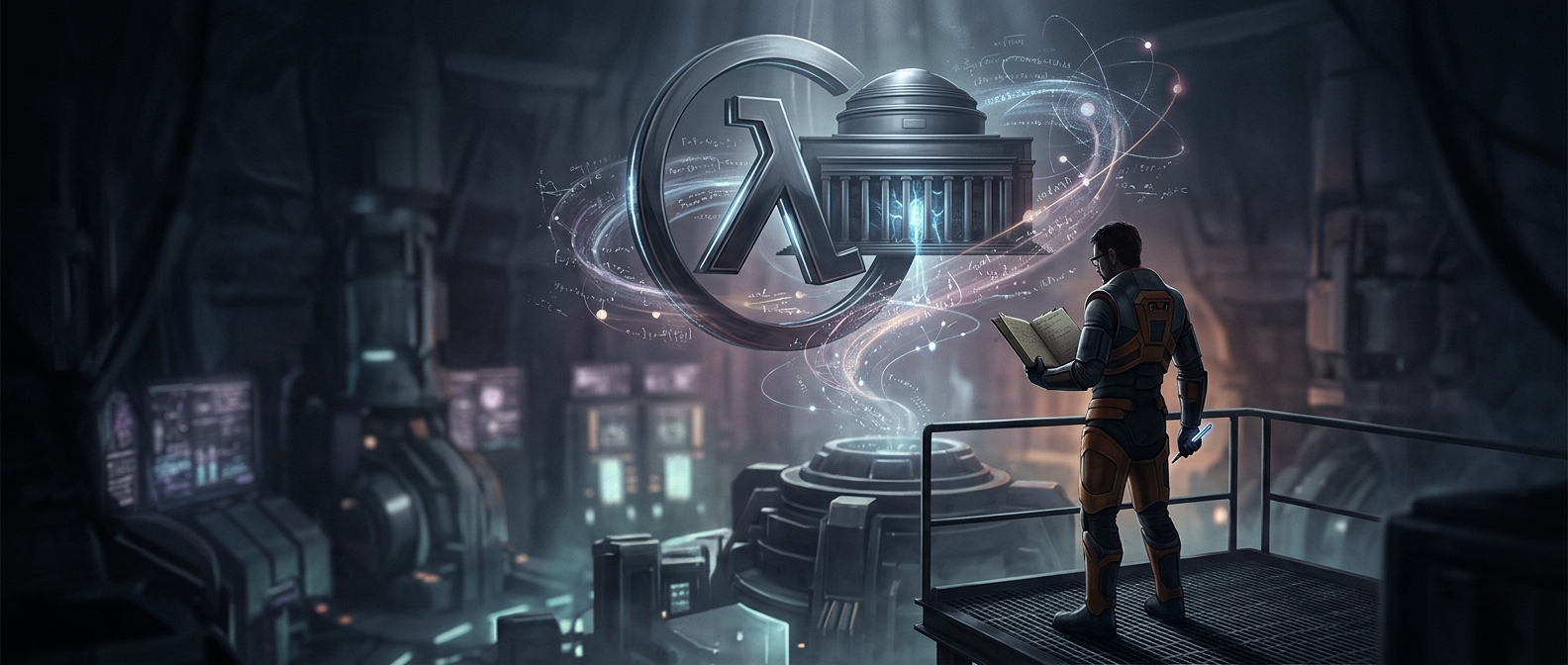
A scientist built for a hands-on emergency
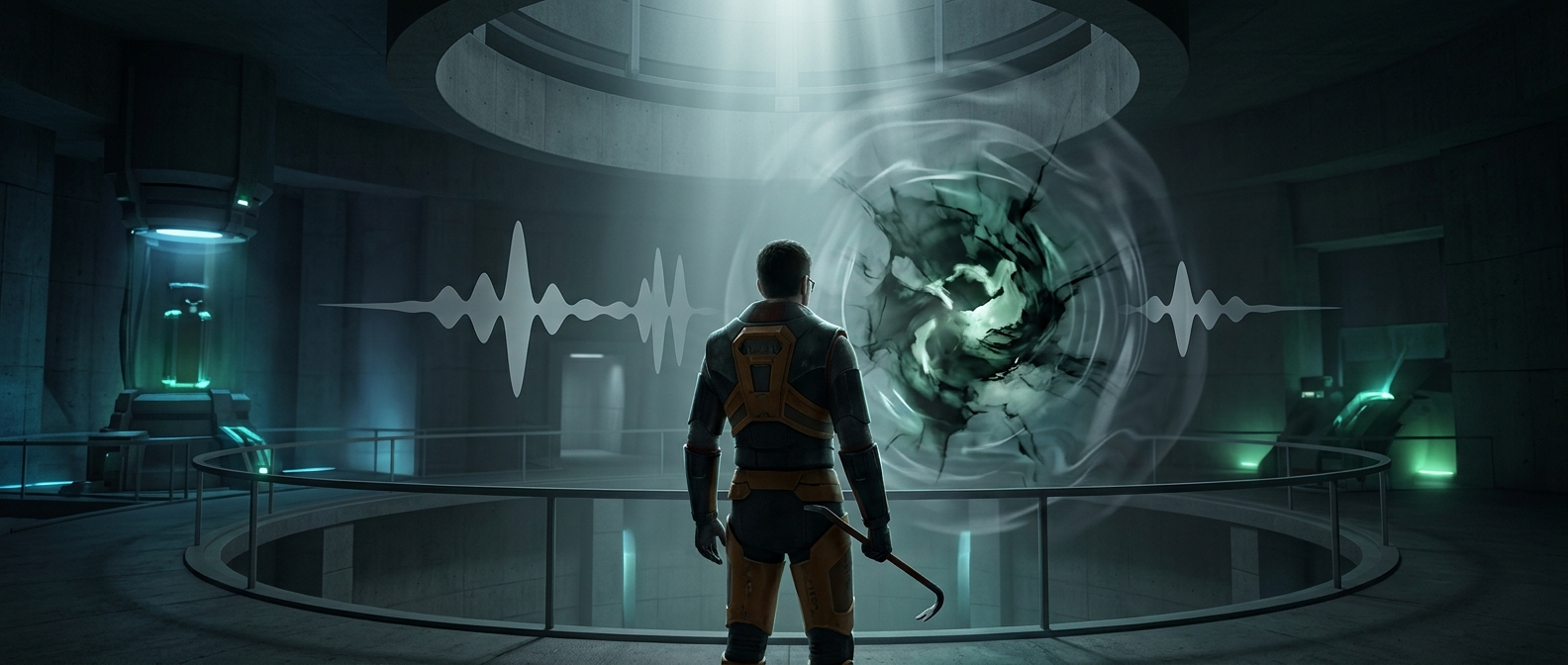
Gordon Freeman’s doctorate establishes him as a trained physicist, but Half-Life does not make scientific expertise a superpower. When an experiment at the Black Mesa Research Facility goes catastrophically wrong, Freeman has to move through the wreckage with whatever the environment offers. His education gives the story a scientific setting; survival depends on practical improvisation.
Why the crowbar fits the game
The crowbar is more than a memorable weapon. It lets the player break obstacles and deal with nearby threats using one simple, reliable tool. That matters in a game where progress often means examining a room, spotting what blocks the route, and acting on it. Boxes can be moved or smashed, switches must be found, and machinery and hazards shape the way forward.
This turns the player’s attention toward the environment rather than toward Freeman’s résumé. The doctorate makes his ordinary vulnerability part of the contrast: he may understand theoretical physics, but a ruined corridor still has to be crossed one obstacle at a time.
The point is the mismatch
That gap between professional identity and immediate need helps make the disaster feel physical. Freeman is not solving the crisis from a laboratory bench; the player is navigating it in first person, with limited tools and no neat boundary between puzzle and danger. A crowbar is hardly the instrument a physicist would choose to explain a scientific catastrophe—but it is exactly the kind of tool that makes the next step playable.