Denali’s height is more than a summit number
A mountain’s elevation tells how high its summit sits above sea level. Relief measures how far it rises above the land around it. Denali reaches 20,310 feet above sea level, but its surrounding terrain is low enough that the mountain gains roughly 18,000 feet from its base to its summit. That makes it look exceptionally tall even beside peaks with comparable summit elevations.
“Near sea level” describes the low country around the mountain, not foothills that literally begin at the ocean. Denali stands deep inland in Alaska’s Alaska Range, where broad lowlands meet a steep wall of mountains. The contrast is what makes the peak seem to spring abruptly from the landscape.
A steep rise, sharpened by ice
Denali’s great height reflects the uplift of the Alaska Range, while glaciers have helped carve its sharp ridges and deep valleys. Ice does not create the mountain’s elevation, but it sculpts the slopes into a dramatic, exposed profile. The mountain’s mass also changes the air around it: moist weather can build quickly against the range, and high winds and cold make the upper mountain far harsher than its lower elevations suggest.
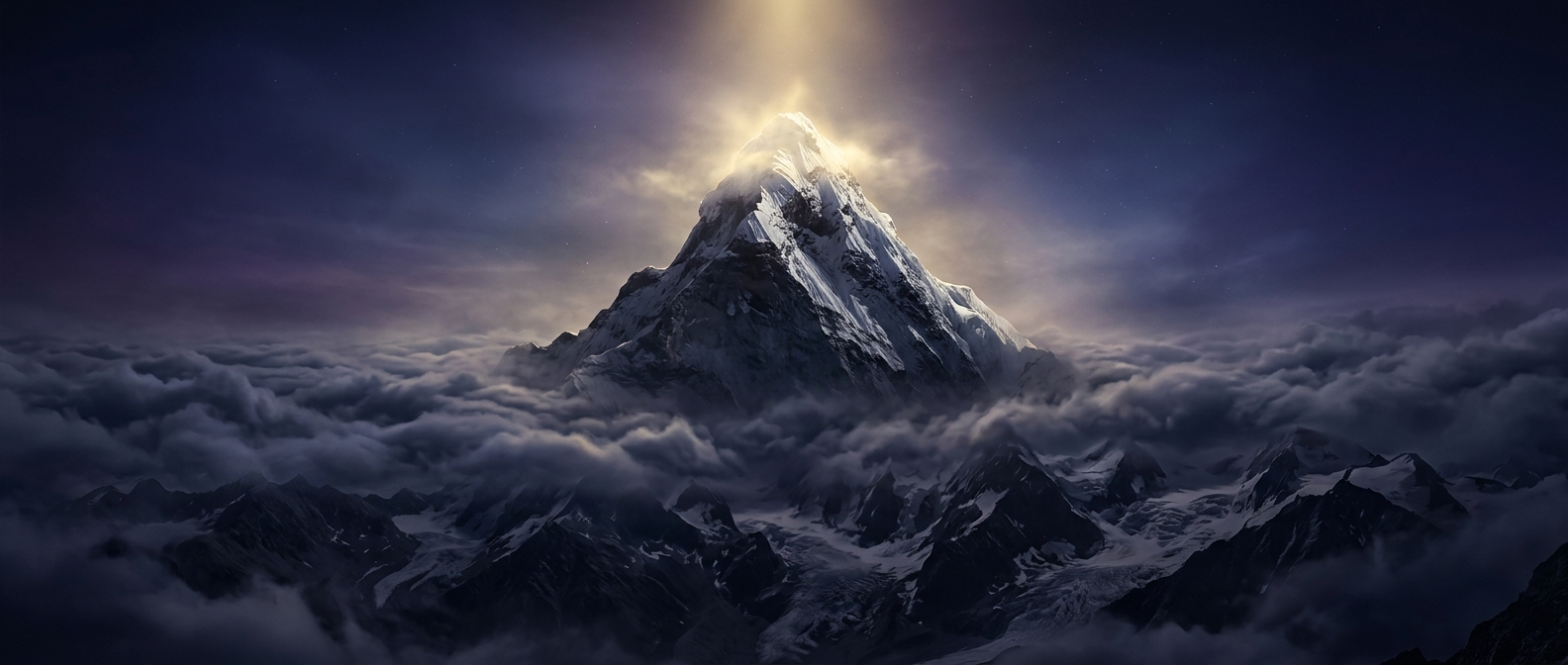
For travelers, the important distinction is between seeing a high summit and seeing a mountain with enormous relief. Denali’s summit is often hidden by clouds, but when it clears, the view reveals a peak rising steeply above a comparatively low landscape—a striking change in height, not merely a high point on an already elevated plateau.