Airplane Mode Gives the Charger Less to Compete With
A phone charges fastest when most of the power coming in can go toward filling its battery. But a phone left fully connected is also spending power: its cellular radio may search for a stronger signal, Wi-Fi and Bluetooth may stay active, and apps can keep syncing or checking for updates. When the phone is in a weak-signal area, maintaining a connection can be especially demanding.
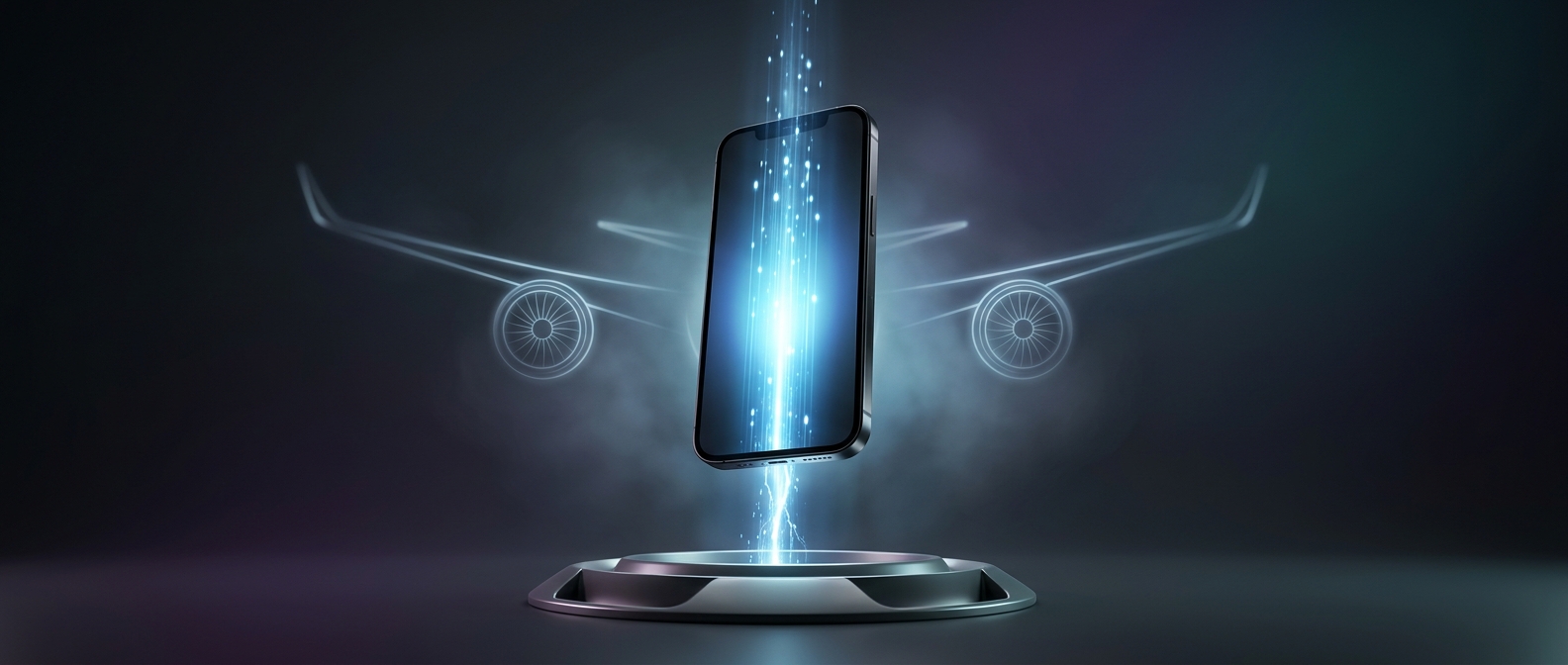
Airplane Mode switches off the cellular connection and typically disables other wireless radios as well, though Wi-Fi and Bluetooth can often be turned back on separately. With fewer background tasks and connections, the phone uses less power while plugged in. That leaves more of the incoming power available for charging.
Why the Time Saved Varies
The effect depends on what the phone was doing before. A device constantly searching for signal or running active apps may gain more than one that was already idle. The charger and phone also limit how quickly energy can enter the battery, so reducing background use cannot push charging past those limits. It is a way to reduce competing power use, not a way to make the charger deliver more power.
That is why airplane mode can noticeably shorten a charge in some situations, but it does not guarantee that every phone will charge in half the time. The practical trick is simple: switch it on before plugging in, and leave it on while the phone charges. The phone will be less reachable until the mode is turned off.