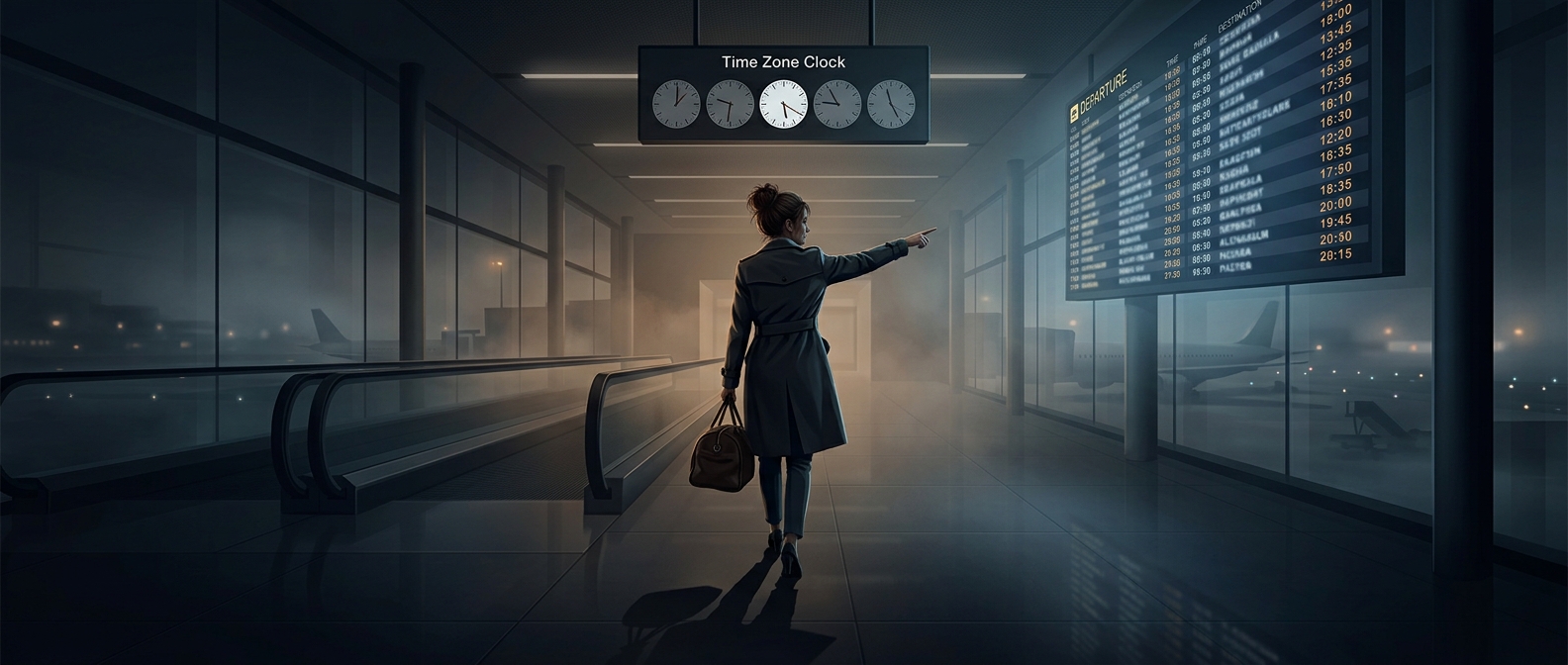
Your body keeps time on a different schedule
Jet lag is a mismatch between the clock on the wall and the timing system inside your brain. That internal clock helps coordinate sleep, alertness, digestion, and body temperature across roughly a 24-hour cycle. After a long flight, the destination may be well into its afternoon while your body is still running on the old time zone.
That difference can make an ordinary lull feel like a shutdown. Alertness naturally rises and falls during the day, and when a local afternoon overlaps with your body’s biological night—or a pronounced dip in its alertness cycle—staying awake can suddenly require real effort. A busy lobby or a determined plan cannot instantly move that underlying rhythm.
What actually shifts the clock
The brain’s clock adjusts mainly in response to environmental cues, especially light. Light reaching the eyes signals whether it is “morning” or “evening” to the body, helping shift the timing of sleep and wakefulness over successive days. The direction and timing of that light matter: light at one point in the body’s cycle can move the clock differently from light at another.
Meals, activity, and a regular local sleep schedule can help make the new day feel more organized, but they do not erase the mismatch on command. Until the internal timing catches up, a traveler may feel sleepy at an inconvenient local hour and unexpectedly alert when everyone else is ready for bed. The stubborn afternoon slump is not a failure of willpower; it is the old time zone still showing through.