How a Mouth Becomes a Percussion Section
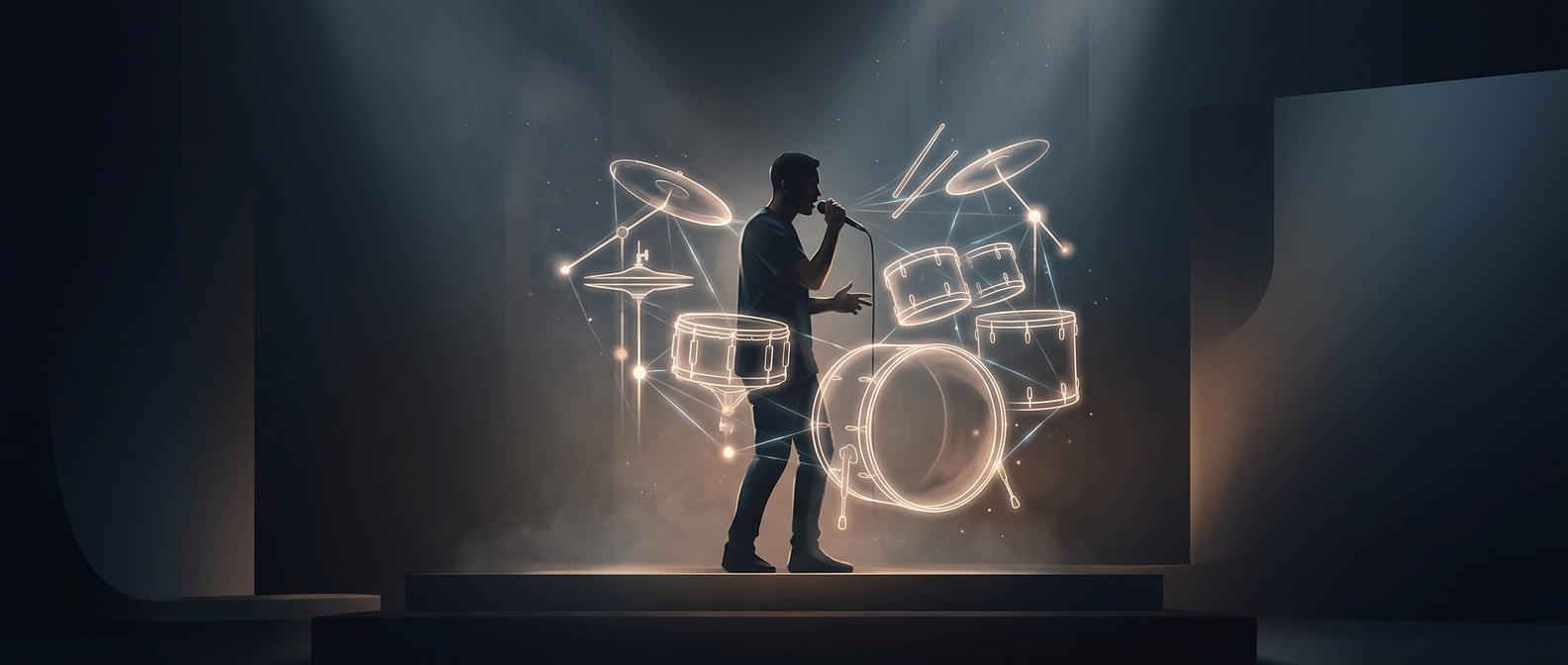
A drum kit is recognizable less by the material it is made from than by the different kinds of sound it produces: a low thump, a sharp crack, and a bright, brief hiss. Beatboxing recreates those contrasts with the mouth and voice. A kick-like sound can come from a quick burst of air shaped by the lips; a snare-like sound often combines a forceful consonant with a sharp release of breath; and a hi-hat-like sound can be made with a tight, sibilant “ts” or “tss.”
The trick is not simply saying syllables that resemble drum hits. Small changes in lip tension, tongue position, and airflow alter the sound’s attack—the instant when it begins—and its resonance, the way it rings or dies away. Those details give each sound a distinct place in the rhythm.
The Beat Has to Keep Moving
Once the sounds are separated, the performer can arrange them into a repeating pattern. A low kick anchors the pulse, while snare-like hits mark accents and high, short sounds fill the spaces between. Because each sound comes from a different mouth movement, the beat depends on coordinating lips, tongue, and breath in quick succession.
That coordination also explains why a pattern can sound like a full kit without reproducing every instrument literally. Listeners recognize the roles of the sounds and how they fit together, even though the tones come from a human vocal tract rather than drums and cymbals.
Adding a Bass Line
Some beatboxers add a pitched, humming tone beneath the percussion. This creates a second layer: the mouth shapes crisp rhythmic sounds while the voice sustains a lower note. The contrast between a steady bass tone and quick percussive bursts makes one performer sound as if they are handling both rhythm and accompaniment at once.
The result is an arrangement built from one instrument—the performer’s body—with each layer distinguished by timing, pitch, and texture.