How wheat acquired three genomes
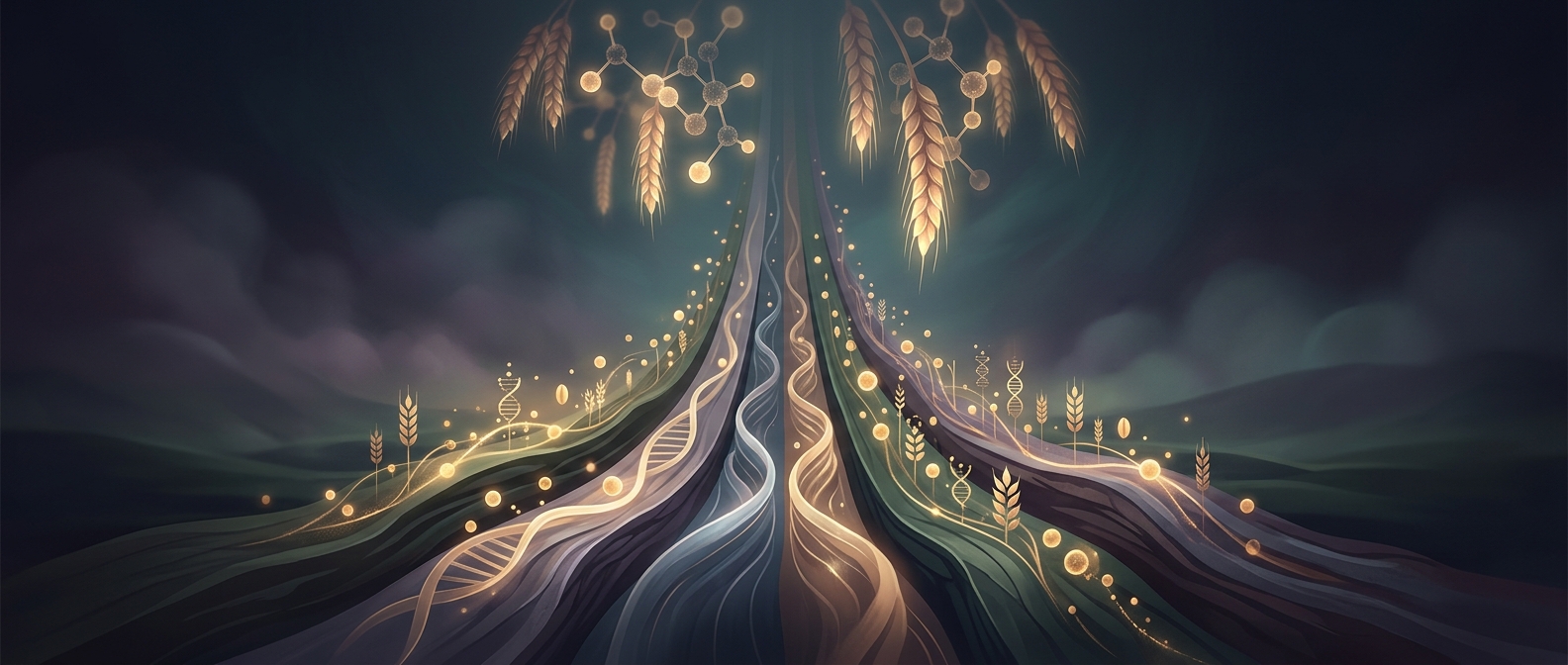
Bread wheat is hexaploid: its cells contain six sets of chromosomes, arranged as three related pairs of ancestral genomes. The sets did not arrive all at once. In wheat’s evolutionary history, grasses hybridized—crossed and combined their inherited DNA. When chromosome sets doubled in the hybrids, the plants could reproduce with a complete, paired set of chromosomes rather than passing on an uneven mix.
The result is not six exact copies of every gene. The three ancestral genomes are similar, but each carries its own versions of many genes. In a wheat cell, those versions can act like parallel instructions for building a plant.
A genetic buffer—and a breeding toolkit
That overlap can make wheat more tolerant of change. If one gene version is damaged or works less well, related versions may still perform some of its job. The same redundancy can also make some genetic changes harder to see: a useful or harmful effect in one copy may be muted by the others.
For breeders, the extra versions create options. Traits such as disease resistance, stress tolerance, or grain characteristics may be found in different ancestral genomes and combined through crossing and selection. But identifying the useful version takes care, because similar genes can be difficult to distinguish and one copy’s effect may depend on the others.
So wheat’s expanded genome is neither a simple advantage nor a burden. It is a layered inheritance: a reserve of variation that breeders can draw on, but must learn to navigate.