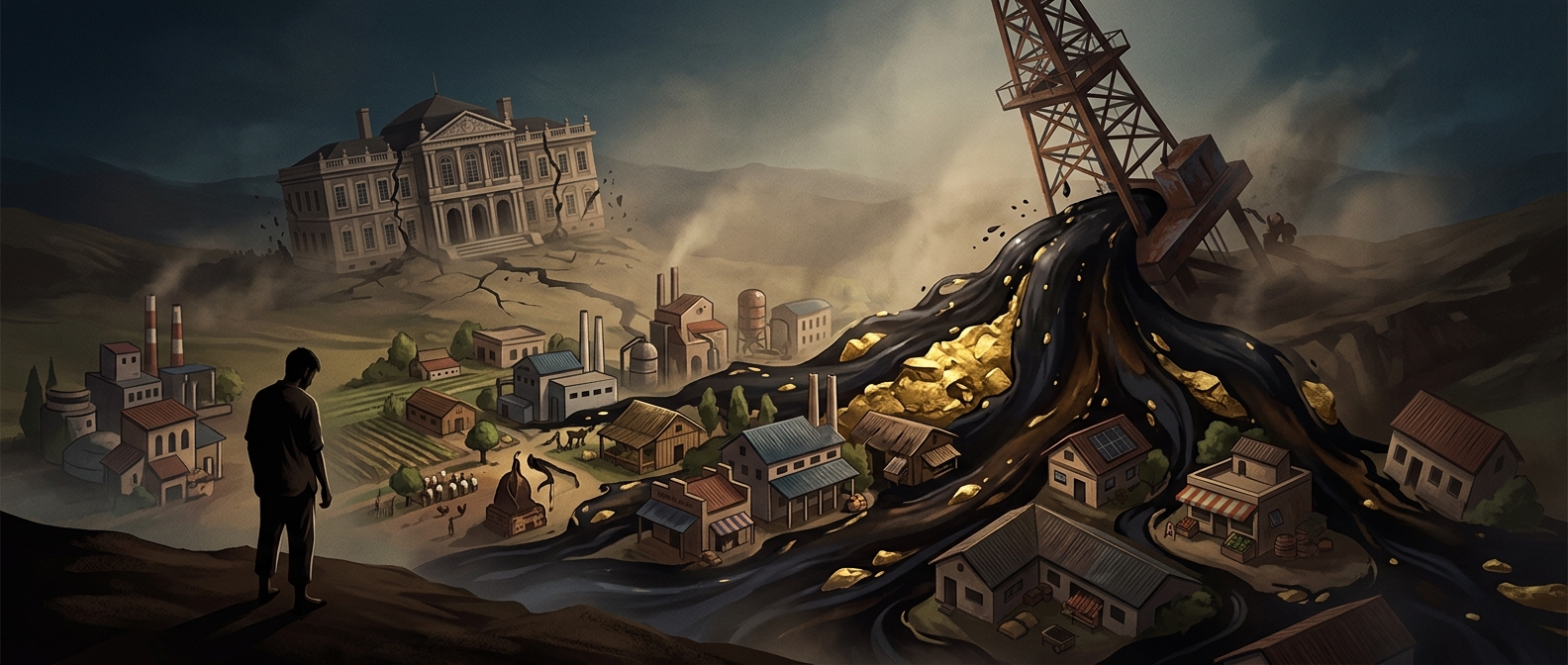
How oil revenue can crowd out other work
Oil can bring in large sums from a relatively small part of the economy. When exports earn foreign currency and governments collect royalties or taxes, public budgets and national spending can become tied to one commodity. That can make oil more attractive than building industries that require many firms, workers, and years of investment.
There is also a price effect. A surge in oil exports can strengthen a country's currency, making locally produced goods more expensive for foreign buyers and imported goods cheaper at home. Manufacturers and farmers may then find it harder to compete. Economists call this pattern Dutch disease: growth in one export sector can weaken other tradable industries, even without anyone intending that result.
Volatility shapes government choices
Oil prices rise and fall, but public services, salaries, and infrastructure projects are difficult to scale up and down quickly. If a government builds its budget around high prices, a downturn can leave it short of funds. Borrowing or sudden cuts may follow, while businesses that depend on predictable demand face uncertainty.
This can also shape political incentives. In countries where the state receives much of its revenue directly from oil, leaders may rely less on broad taxes paid by citizens and firms. That can weaken the pressure to explain how public money is collected and spent. Large contracts and revenue streams concentrated in a few institutions can create opportunities for favoritism or theft, though oil wealth does not make corruption inevitable.
The choice is how to manage the windfall
Oil income can finance roads, schools, and skills that support a wider economy. But that requires choices that keep spending steady through price swings and make public revenue visible and accountable. Without those safeguards, the oil sector can dominate not only exports but also budgets and political attention—leaving other industries with less room to grow just when the country appears richest.