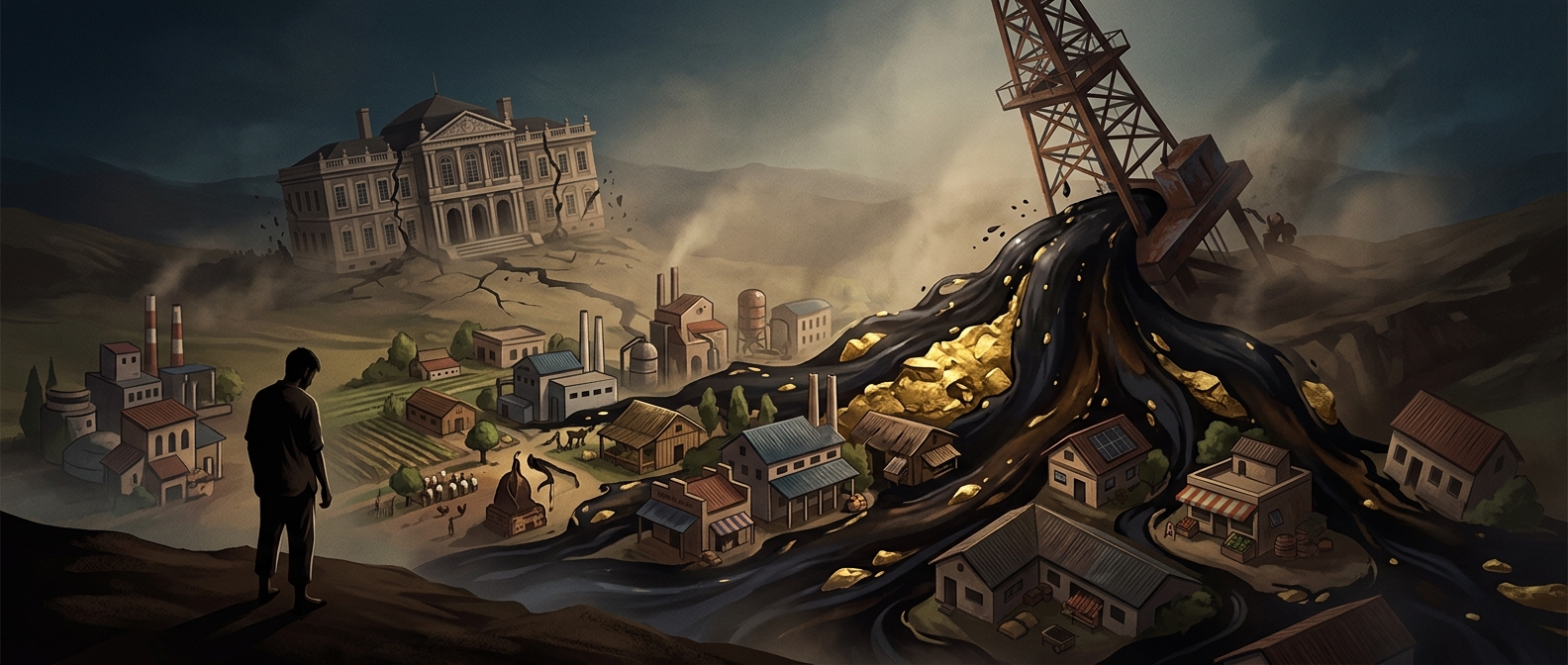
How a gas boom can squeeze other industries
A large gas discovery brings money into a country, but it can also change the prices that every other business faces. In the Netherlands, gas exports brought in foreign currency. When those earnings were exchanged for Dutch currency, demand for the guilder rose, helping make it more valuable. That shift made Dutch-made goods more expensive for overseas customers and foreign goods cheaper for Dutch buyers.
The pressure did not stop at exchange rates. Gas production attracted investment and workers, while the new income increased demand for local services such as construction and retail. Those businesses could often charge more at home, making it harder for manufacturers and other exporters to compete for workers and capital. Unlike gas, they could not simply sell a newly abundant resource at high world-market prices.
Why the pattern is called “Dutch disease”
Economists use Dutch disease for this kind of boom-and-squeeze pattern: a successful resource or export sector can weaken the competitiveness of other sectors. The name comes from the Netherlands’ experience after the discovery and development of its Groningen natural-gas field. It does not mean that gas automatically ruins an economy; the outcome depends on how the windfall is managed and on the strength of other industries.
The damage can be difficult to reverse. Export businesses may lose customers, suppliers, and skilled workers, and rebuilding those networks takes time even if the currency later falls. A resource boom can therefore raise national income while leaving the economy more dependent on the resource and less capable of earning abroad through a broad range of products. That is the central tradeoff: the gas brings wealth in, but the way the boom reshapes costs can make the rest of the economy less able to compete.