Why a Bite Once Seemed Like a Test
Gold is softer than many metals, so a hard bite can leave a dent in a piece of nearly pure gold. In an era when coins and other valuables circulated by weight, that offered a quick, crude way to check whether a piece might be gold rather than a harder substitute. The test was never definitive: a gold-plated object could conceal a different metal underneath, and biting could damage the object or a person’s teeth.
Why It Tells You Little About a Medal
Olympic medals are not simply lumps of solid gold. A gold medal’s outer layer gives it its color, while its main body is silver. That means a tooth mark—or the absence of one—cannot establish that the medal is made of gold. More broadly, softness alone is a poor way to identify a metal: mixtures of metals behave differently from pure gold, and a thin coating can mask what lies beneath.
A Test Becomes a Picture
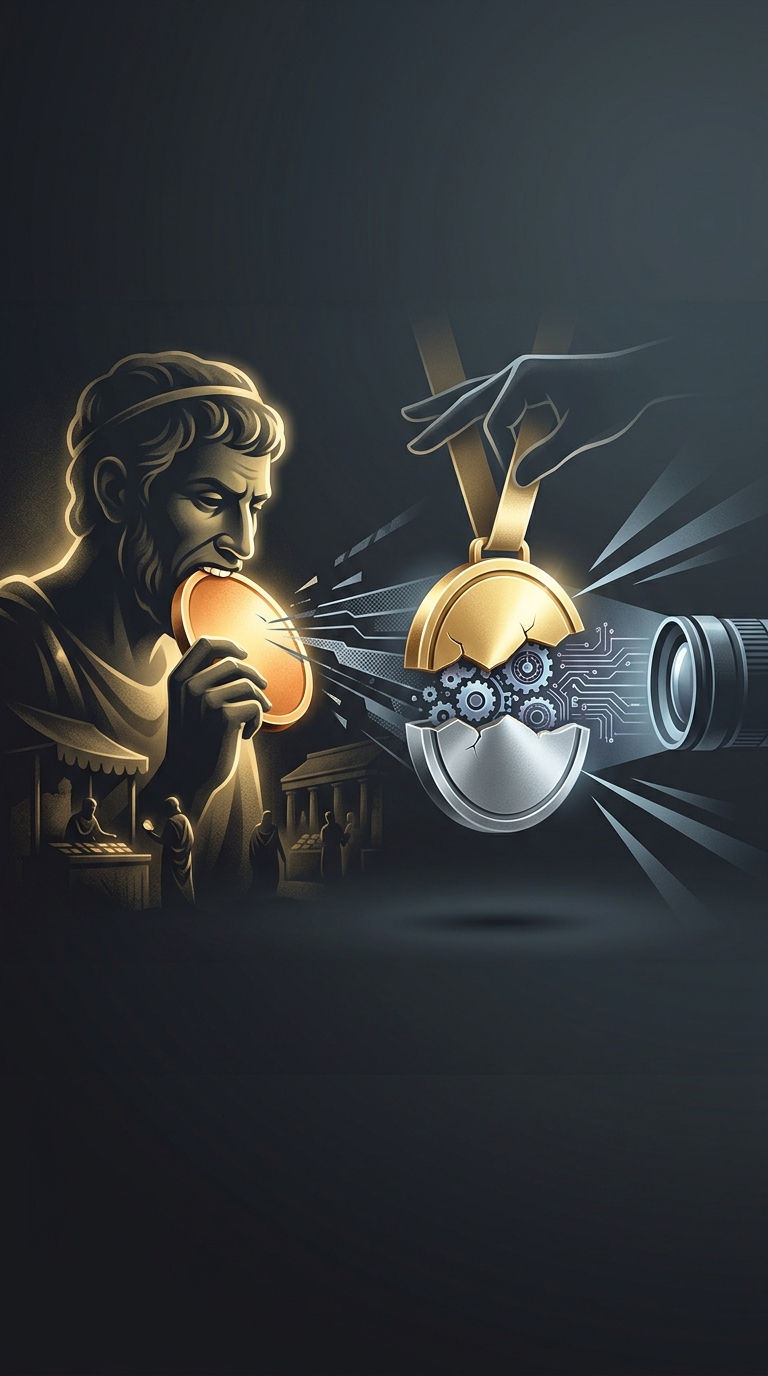
The bite outlasted its practical purpose because it makes an unmistakable image. Athletes have long been photographed holding a medal between their teeth, and the gesture reads instantly as a playful display of triumph. It also echoes the old idea that precious metal should be tested, even when the object being tested is not what the old test was meant to assess.
So the pose is less a quality check than a bit of visual shorthand: a modern medal, an ancient-sounding test, and a camera-ready celebration compressed into one gesture.