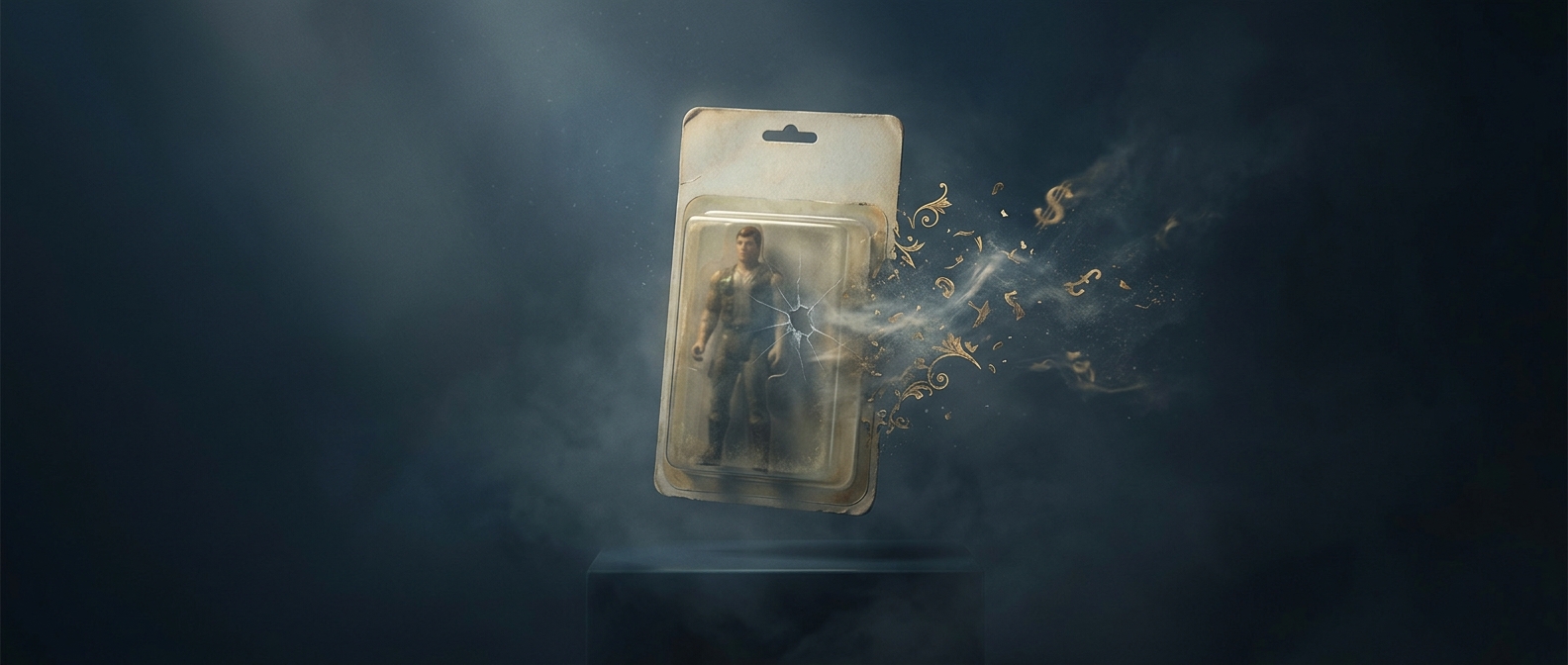
Why the box can be part of the toy
For some vintage action figures, collectors are buying more than the character. The original package preserves the toy in the state it left the factory—and provides evidence that it has not been played with, repaired, or assembled from mismatched parts. A sealed package can therefore function like a record of condition and originality.
The packaging may also be collectible in its own right. A card’s artwork, printed logo, or design from a particular release is part of the object’s history. If the card is torn or the plastic bubble is crushed, the toy may be intact while the complete collectible is not.
How opening changes the market
A seal narrows uncertainty for a buyer: the figure and its accessories have not been handled or separated from the package. Once opened, the toy must be assessed on its own condition, and small details—missing accessories, worn paint, or a loose joint—can matter. The package, meanwhile, may be damaged or discarded, removing something another buyer wanted.
That changes who is willing to pay. Buyers seeking an untouched display piece may compete for sealed examples, while opened figures appeal to people who want to display or handle the toy. Fewer interested buyers for a particular version can mean a lower resale price.
Valuable does not mean worthless when opened
Opening a package does not erase a toy’s value. A scarce figure can still attract collectors, especially if it is complete and in good condition. But its price depends on what buyers prize: the toy alone, or the toy preserved with its original packaging. With vintage collectibles, the cardboard and plastic are not always disposable wrapping; sometimes they are part of what is being collected.