Kupari’s resort built for a privileged few
Just south of Dubrovnik, Kupari was developed as a seaside retreat for Yugoslav military officials and their families. Its hotels turned a sheltered stretch of coast into a purpose-built holiday destination: guests could stay close to the water, with the facilities of a resort gathered in one place. Josip Broz Tito, Yugoslavia’s longtime leader, was among the visitors.
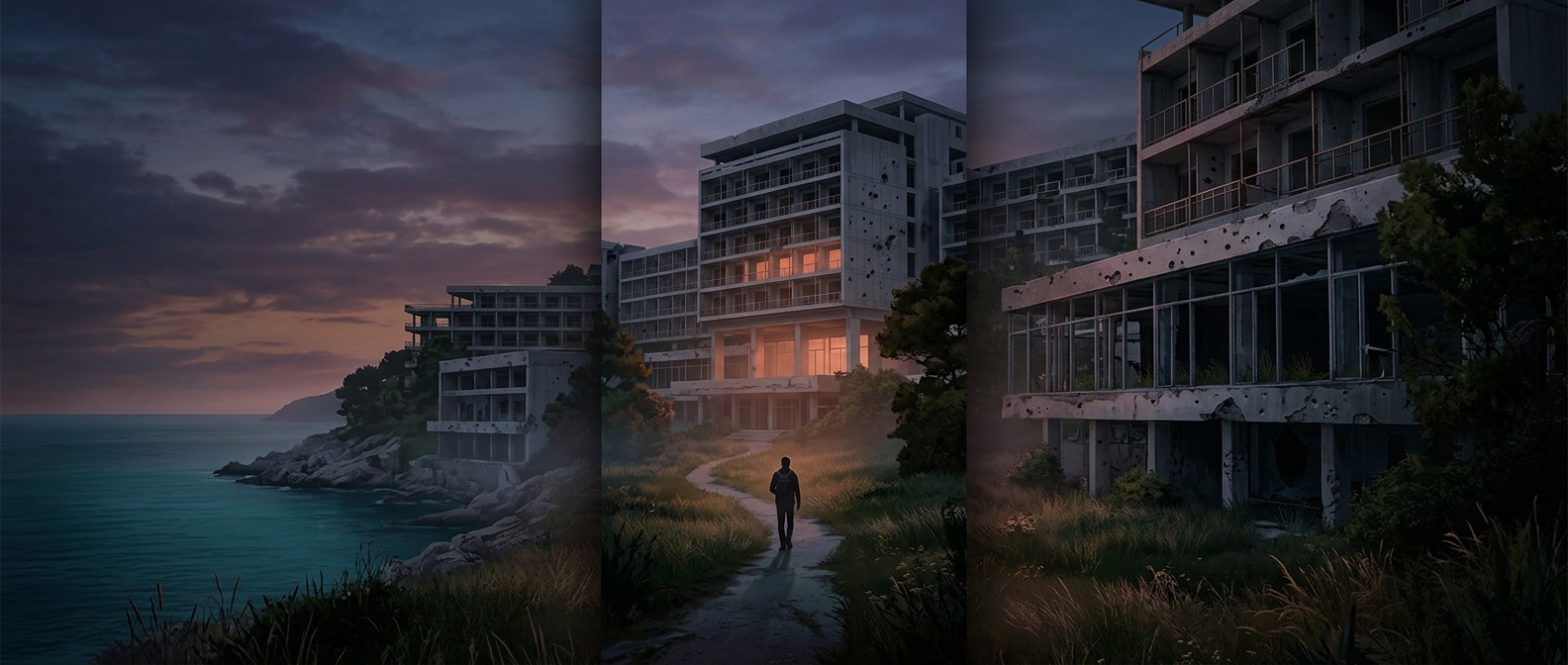
That history helps explain the contrast travelers encounter now. The buildings were not ordinary seaside houses gradually left to decay; they were the remains of a large, planned hospitality complex, once reserved for a connected circle of guests.
A war changed the destination, not the shoreline
The Croatian War of Independence, which began in 1991, left the hotels badly damaged. They were not restored as the resort they had been, and their concrete shells remain beside a beach that still draws visitors. The sea and pebbled shore can serve as a place to swim or sit, while the hotels stand as visible evidence of how abruptly the area’s purpose changed.
That juxtaposition is what makes Kupari striking: a beach day takes place beneath structures marked by conflict. The ruins are not a themed attraction or a reconstructed historical scene. They are part of the actual landscape, where the leisure use of the coast continued even as the buildings that once organized it fell silent.