Isolation did not stop ordinary social life
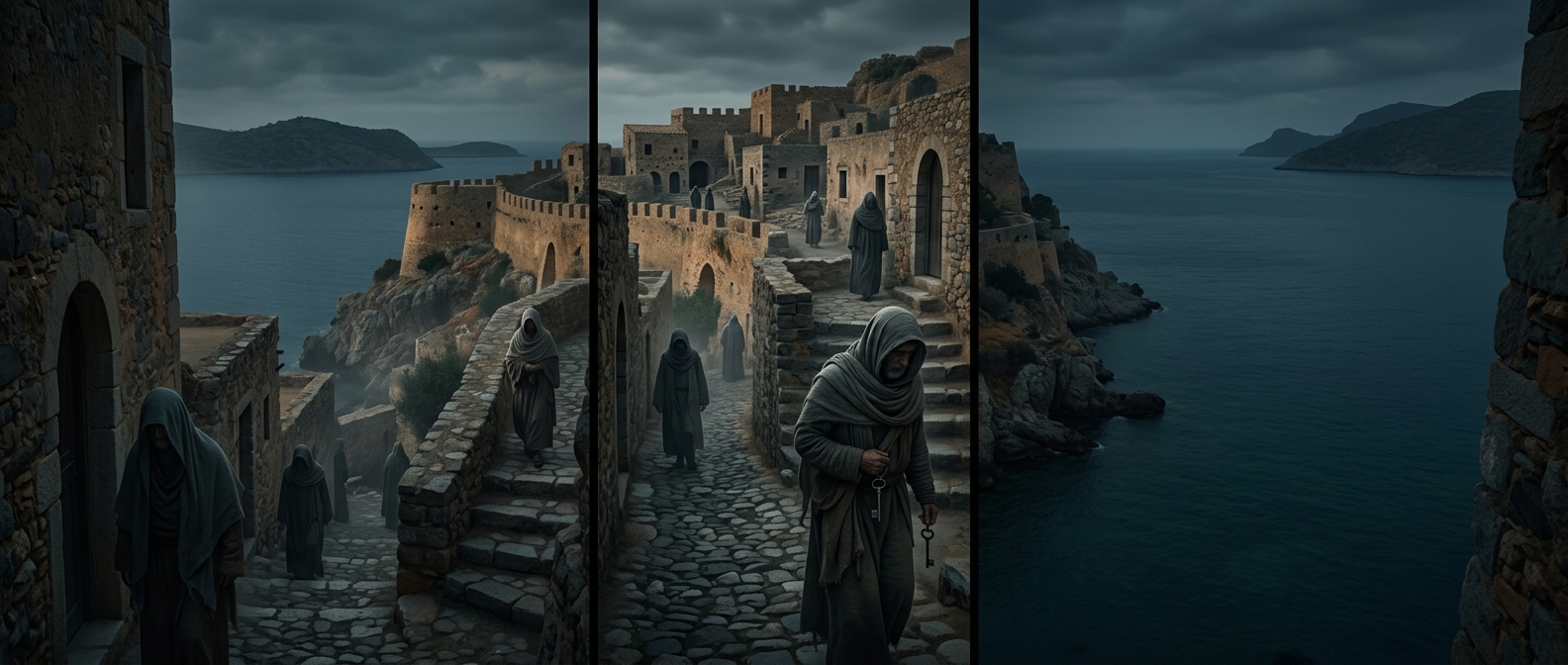
Spinalonga lies just off Crete’s northeastern coast. For decades, people diagnosed with leprosy were sent there under a policy of enforced separation. The boundary was physical: the sea kept residents apart from the mainland, while quarantine restricted their contact with the wider population. But separation did not mean that life on the island consisted only of illness and confinement.
Residents created places to meet and ways to share information. A café offered a setting for conversation; a cinema made watching films a communal event. Underground newspapers gave residents a way to circulate news and ideas beyond the official channels available to them. These were not merely amenities. They helped people maintain social ties and a sense of community in a place defined by isolation.
What the island’s everyday institutions reveal
The existence of these gathering places complicates the image of Spinalonga as only a medical quarantine site. Its residents were not simply waiting behind a barrier: they built routines and a public life within the limits imposed on them. A café or cinema could not undo separation from family and the mainland, but it could make daily life more connected and self-directed.
The colony remained open until 1957. Its history is striking not just because people were confined there, but because they made a community in the very place meant to keep them apart.