How an imagined companion can feel independent
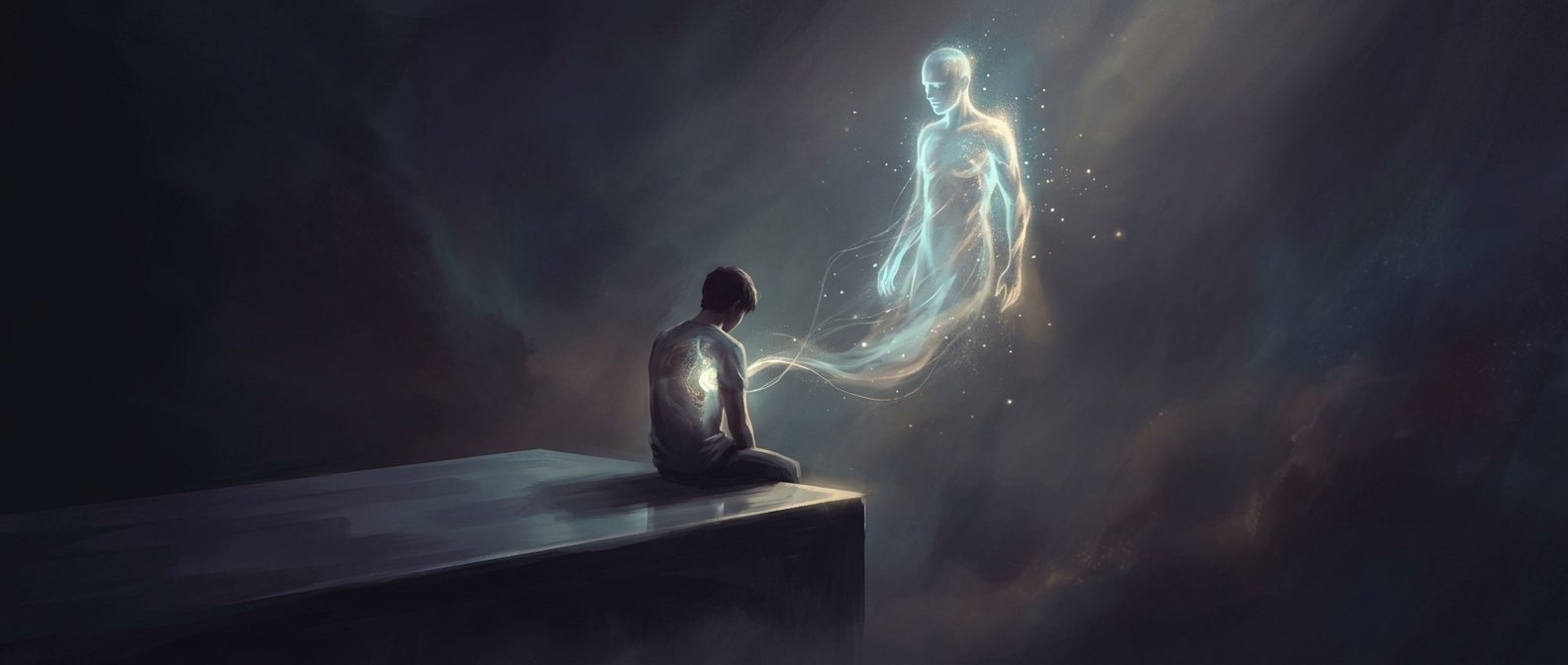
In modern tulpa practice, a tulpa is an imagined companion that a person deliberately develops through attention, visualization, and repeated interaction. Practitioners may picture the companion, imagine its voice, and build a personality for it. Over time, some report that its thoughts or responses seem to arise without conscious planning. They describe this as autonomy—not necessarily as an outside being, but as an experience of encountering a distinct presence in their own mind.
Rehearsal can make a response feel spontaneous
The process draws on familiar mental abilities: people can picture scenes, simulate conversations, and generate inner speech. When someone repeatedly imagines how a companion might react, those responses can become easier to produce and less deliberate. A reply that arrives before the person has consciously worked out what to say may feel surprising, as if it came from someone else.
That feeling can be meaningful and vivid without establishing that the imagined companion has consciousness independent of its creator. “Sentience” is a stronger claim than a distinct personality or an apparently spontaneous reply, and accounts of tulpa practice do not prove it. The striking part is how sustained imagination can make an inner conversation feel less like scripting both sides and more like meeting another point of view.