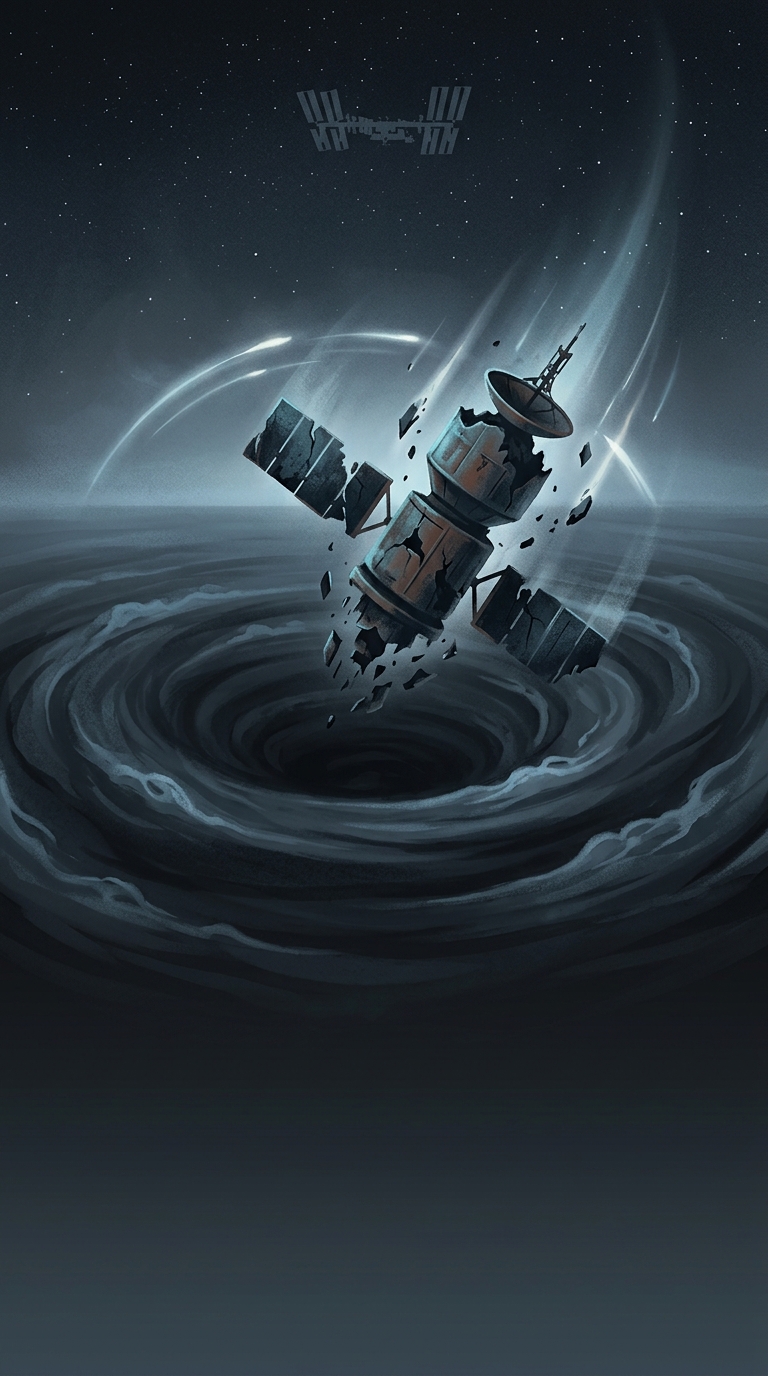
A point defined by what is farthest away
Point Nemo is not an island or a marked spot on the sea. It is the oceanic pole of inaccessibility: the place in the Pacific farthest from any land. Its remoteness comes from the geometry of the surrounding coastlines. The nearest land lies in three different directions, and all three are about the same great distance away.
That makes “nearest” an unusual idea here. On the ocean’s surface, the closest possible neighbors are thousands of kilometers away. But distance is three-dimensional: an object overhead can be much closer than anything on the horizon.
When the sky is the nearer neighborhood
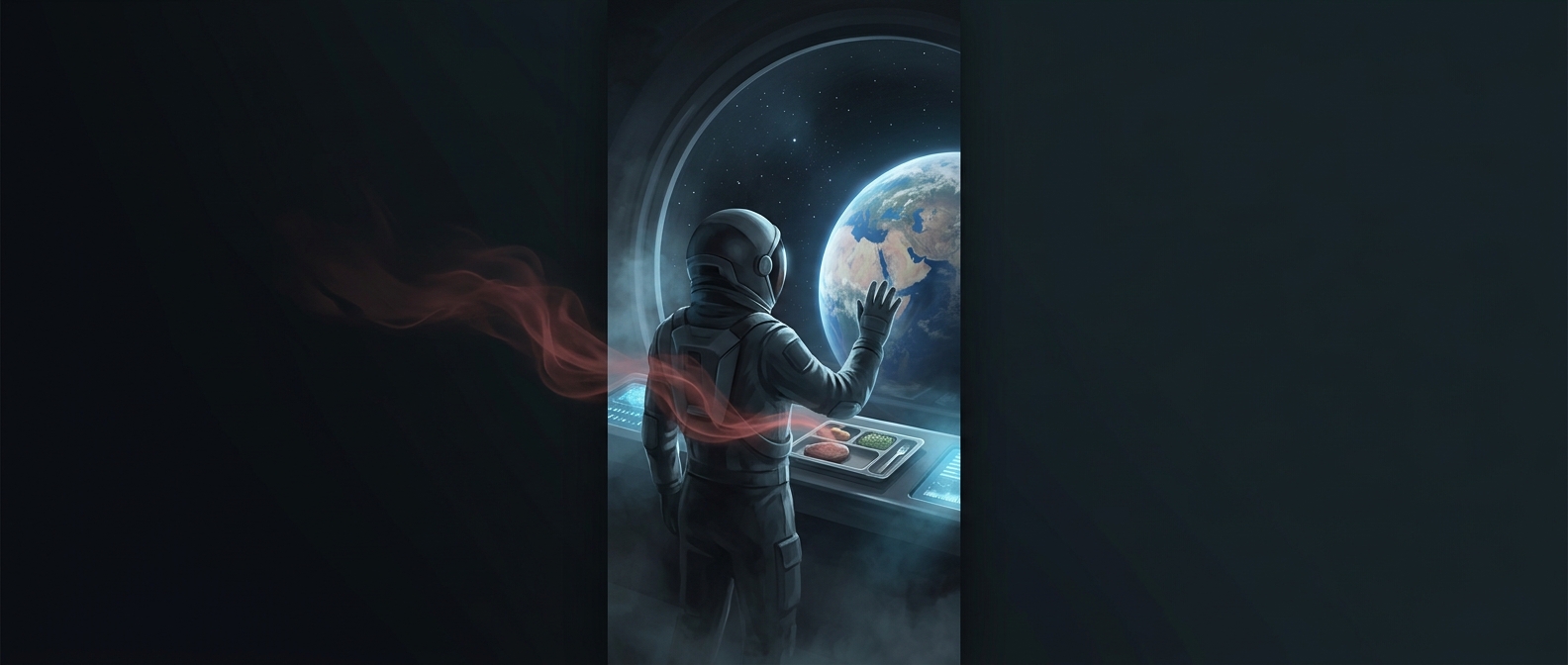
The International Space Station orbits a few hundred kilometers above Earth. When its path carries it near Point Nemo, the station’s occupants may be closer to the ocean point than people standing on the nearest land. The comparison depends on the station’s position at that moment; it is not permanently above the spot.
This is why a map can give a misleading sense of isolation. A flat map emphasizes the vast stretches of water around Point Nemo, while the shortest route to a nearby traveler may be straight up. The remote Pacific can have a closer human neighbor in orbit than on any shore.