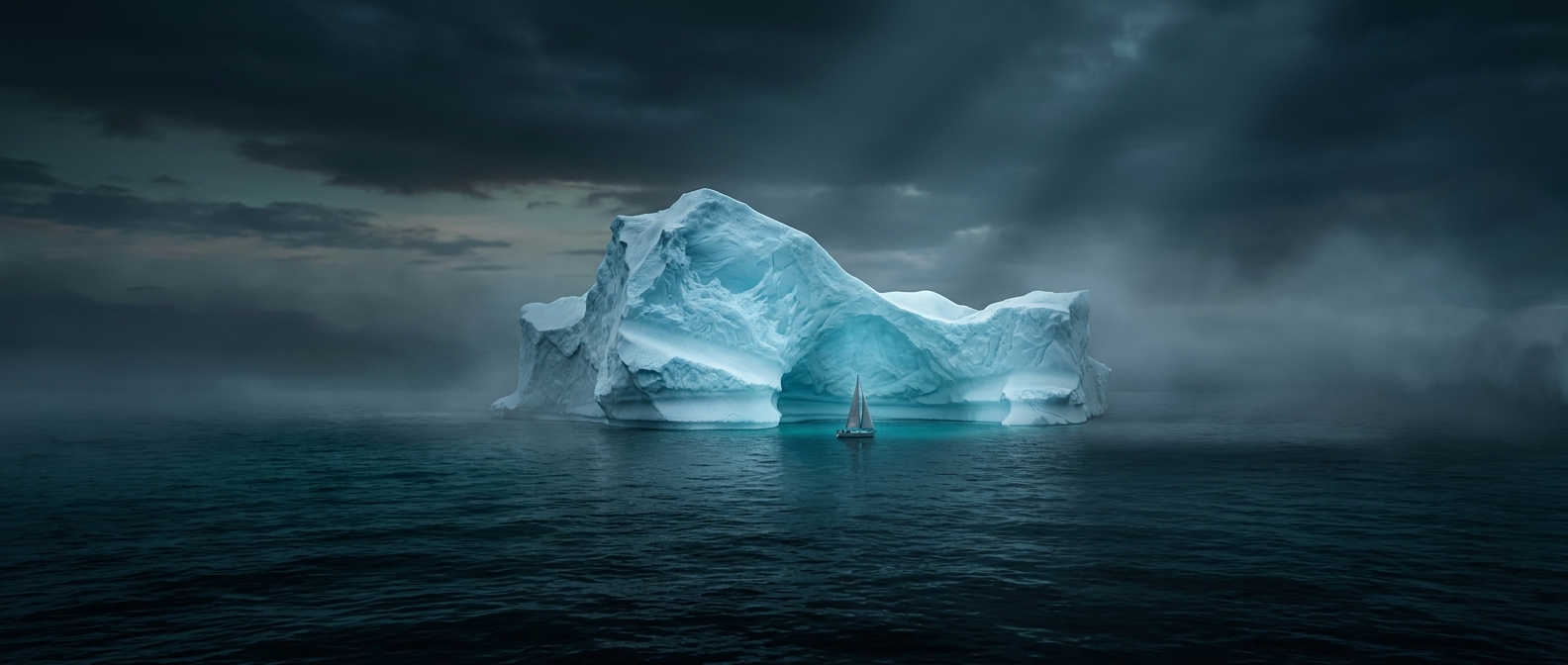
How Snow Becomes an Iceberg
An iceberg begins as snow that falls on land, often far inland. Over many years, new layers bury older snow and squeeze it into dense glacier ice. As a glacier flows toward the coast, pieces can break away into the sea—a process called calving. Because the ice formed from snow rather than seawater, it contains very little salt.
That origin distinguishes an iceberg from sea ice, which forms when ocean water freezes. Sea ice can contain trapped brine, or salty water; glacier ice is mostly fresh water. The distinction matters even when both kinds of ice appear to drift across the same cold sea.
A Floating Store of Water
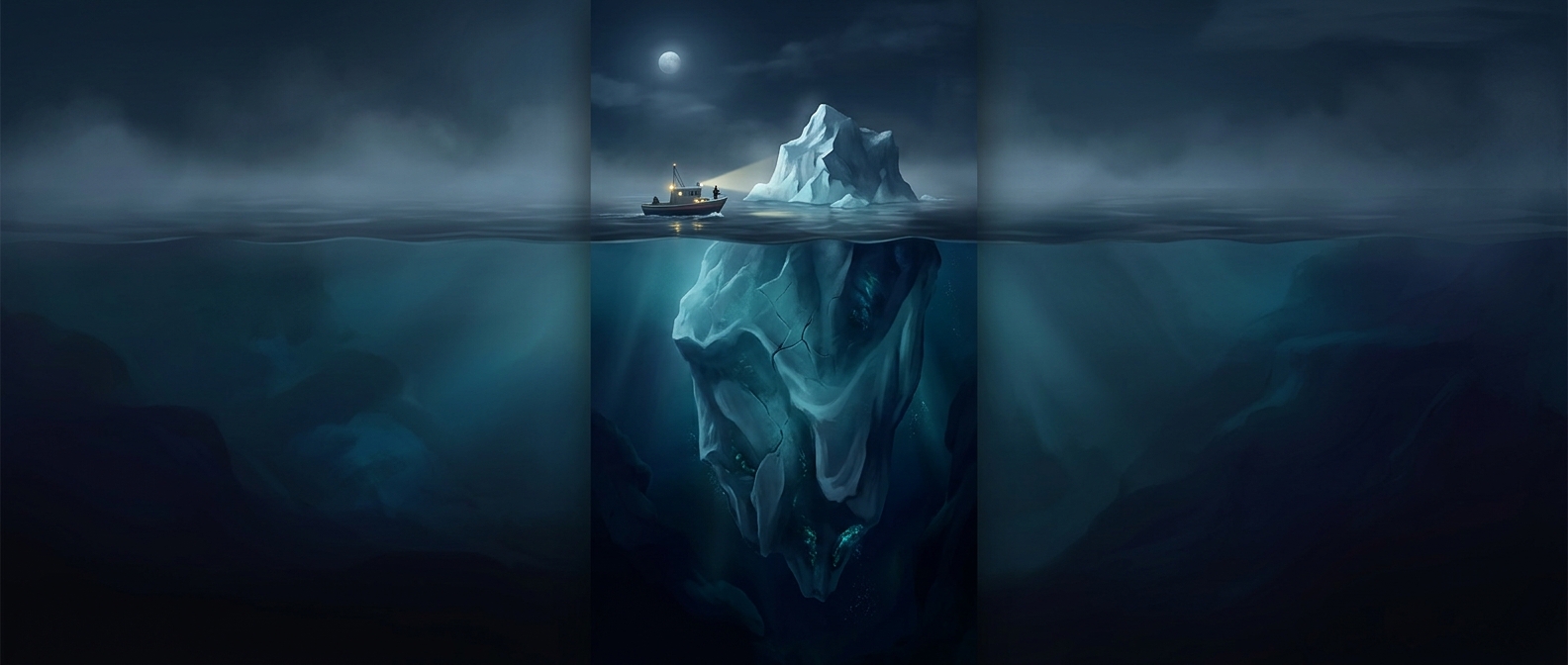
Ice is less dense than liquid water, so a berg floats with most of its volume below the surface. When it melts, the resulting fresh water mixes into the surrounding ocean. In polar regions, that freshwater can affect local salinity—the concentration of dissolved salt—and therefore influence how seawater circulates.
For travelers, the iceberg’s visible tip is only a small part of the story: the submerged mass is also the product of years of snowfall and glacier movement, carried out to sea in a single drifting fragment.