Why the Sea Stays Liquid Below 0°C
Pure water freezes at 0°C (32°F), but dissolved salt lowers seawater’s freezing point. Salt ions disrupt the orderly arrangement water molecules need to form ice crystals, so ocean water must cool further before freezing begins.
Ice Leaves Most of the Salt Behind
When seawater does freeze, its crystals are made mostly of water. Most dissolved salt is pushed into the surrounding liquid, making that remaining water even saltier and harder to freeze. This is why sea ice is not simply a solid block of frozen seawater: it contains pockets and channels of salty brine, especially when it is young.
What Travelers Can Notice
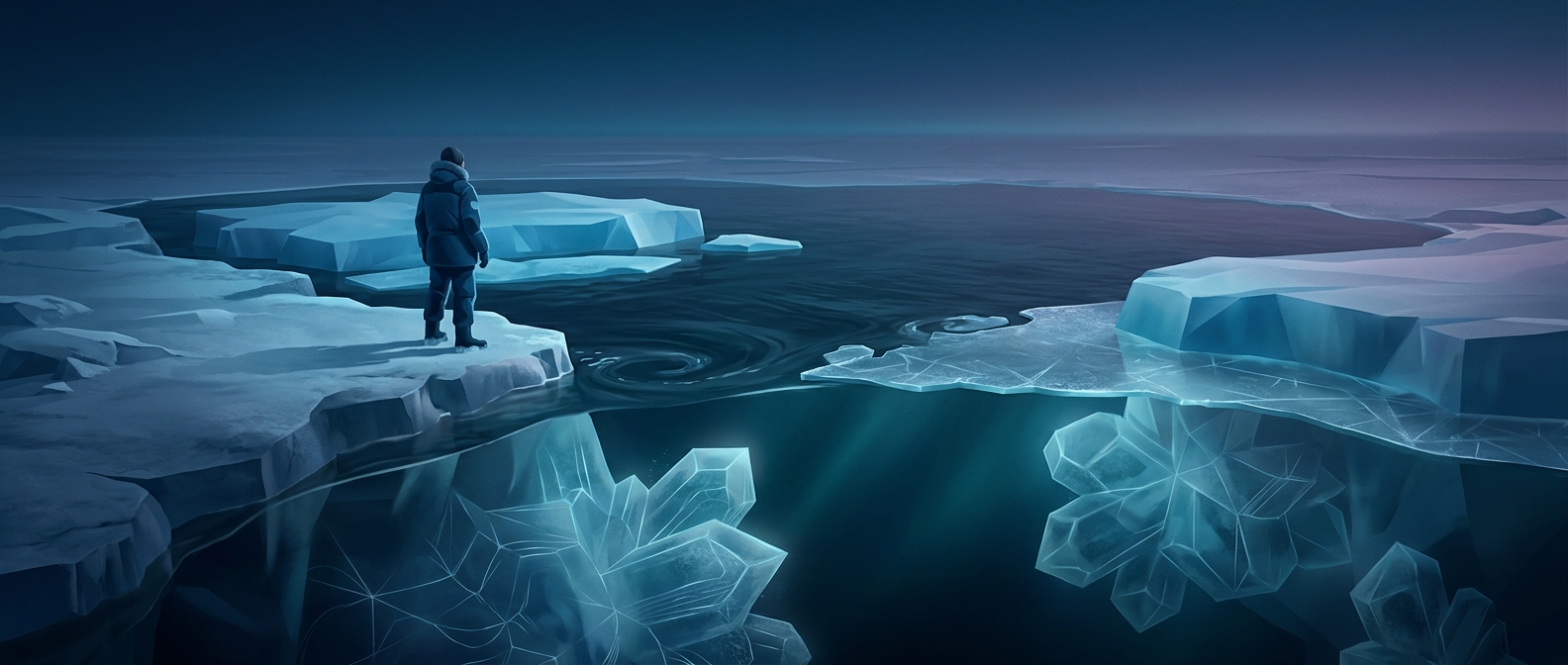
In polar regions, the ocean can form a floating skin of ice while deeper water remains liquid. The ice insulates the sea below from the cold air, and its relatively fresh surface can provide habitat for organisms adapted to life among the brine channels. The visible ice is therefore both a record of the ocean’s cooling and a selective filter: much of the salt stays in the water beneath it.